
Environmental engineering is a professional engineering discipline related to environmental science. It encompasses broad scientific topics like chemistry, biology, ecology, geology, hydraulics, hydrology, microbiology, and mathematics to create solutions that will protect and also improve the health of living organisms and improve the quality of the environment. Environmental engineering is a sub-discipline of civil engineering and chemical engineering. While on the part of civil engineering, the Environmental Engineering is focused mainly on Sanitary Engineering.

Greywater refers to domestic wastewater generated in households or office buildings from streams without fecal contamination, i.e., all streams except for the wastewater from toilets. Sources of greywater include sinks, showers, baths, washing machines or dishwashers. As greywater contains fewer pathogens than blackwater, it is generally safer to handle and easier to treat and reuse onsite for toilet flushing, landscape or crop irrigation, and other non-potable uses. Greywater may still have some pathogen content from laundering soiled clothing or cleaning the anal area in the shower or bath.

Water treatment is any process that improves the quality of water to make it appropriate for a specific end-use. The end use may be drinking, industrial water supply, irrigation, river flow maintenance, water recreation or many other uses, including being safely returned to the environment. Water treatment removes contaminants and undesirable components, or reduces their concentration so that the water becomes fit for its desired end-use. This treatment is crucial to human health and allows humans to benefit from both drinking and irrigation use.

Water pollution is the contamination of water bodies, usually as a result of human activities, so that it negatively affects its uses. Water bodies include lakes, rivers, oceans, aquifers, reservoirs and groundwater. Water pollution results when contaminants mix with these water bodies. Contaminants can come from one of four main sources: sewage discharges, industrial activities, agricultural activities, and urban runoff including stormwater. Water pollution is either surface water pollution or groundwater pollution. This form of pollution can lead to many problems, such as the degradation of aquatic ecosystems or spreading water-borne diseases when people use polluted water for drinking or irrigation. Another problem is that water pollution reduces the ecosystem services that the water resource would otherwise provide.

Water conservation includes all the policies, strategies and activities to sustainably manage the natural resource of fresh water, to protect the hydrosphere, and to meet the current and future human demand. Population, household size and growth and affluence all affect how much water is used. Factors such as climate change have increased pressures on natural water resources especially in manufacturing and agricultural irrigation. Many countries have already implemented policies aimed at water conservation, with much success. The key activities to conserve water are as follows: any beneficial reduction in water loss, use and waste of resources, avoiding any damage to water quality; and improving water management practices that reduce the use or enhance the beneficial use of water. Technology solutions exist for households, commercial and agricultural applications. Water conservation programs involved in social solutions are typically initiated at the local level, by either municipal water utilities or regional governments.

Wastewater treatment is a process which removes and eliminates contaminants from wastewater and converts this into an effluent that can be returned to the water cycle. Once returned to the water cycle, the effluent creates an acceptable impact on the environment or is reused for various purposes. The treatment process takes place in a wastewater treatment plant. There are several kinds of wastewater which are treated at the appropriate type of wastewater treatment plant. For domestic wastewater, the treatment plant is called a Sewage Treatment. For industrial wastewater, treatment either takes place in a separate Industrial wastewater treatment, or in a sewage treatment plant. Further types of wastewater treatment plants include Agricultural wastewater treatment and leachate treatment plants.
John Todd is a Canadian biologist working in the general field of ecological design. He addresses problems of food production and wastewater processing by using ecosystems technologies that incorporate plants, animals and bacteria. Todd has developed "Arks" or "bioshelters", ecologically closed "life-support systems" with the goal of sustainable functioning. He combines alternative technologies for renewable energy, organic farming, aquaculture, hydroponics and architecture to create "living machines" or "eco-machines".

Water reclamation is the process of converting municipal wastewater (sewage) or industrial wastewater into water that can be reused for a variety of purposes. Types of reuse include: urban reuse, agricultural reuse (irrigation), environmental reuse, industrial reuse, planned potable reuse, de facto wastewater reuse. For example, reuse may include irrigation of gardens and agricultural fields or replenishing surface water and groundwater. Reused water may also be directed toward fulfilling certain needs in residences, businesses, and industry, and could even be treated to reach drinking water standards. The injection of reclaimed water into the water supply distribution system is known as direct potable reuse, however, drinking reclaimed water is not a typical practice. Treated municipal wastewater reuse for irrigation is a long-established practice, especially in arid countries. Reusing wastewater as part of sustainable water management allows water to remain as an alternative water source for human activities. This can reduce scarcity and alleviate pressures on groundwater and other natural water bodies.

Waste stabilization ponds are ponds designed and built for wastewater treatment to reduce the organic content and remove pathogens from wastewater. They are man-made depressions confined by earthen structures. Wastewater or "influent" enters on one side of the waste stabilization pond and exits on the other side as "effluent", after spending several days in the pond, during which treatment processes take place.
Onsite sewage facilities (OSSF), also called septic systems, are wastewater systems designed to treat and dispose of effluent on the same property that produces the wastewater, in areas not served by public sewage infrastructure.

Secondary treatment is the removal of biodegradable organic matter from sewage or similar kinds of wastewater. The aim is to achieve a certain degree of effluent quality in a sewage treatment plant suitable for the intended disposal or reuse option. A "primary treatment" step often precedes secondary treatment, whereby physical phase separation is used to remove settleable solids. During secondary treatment, biological processes are used to remove dissolved and suspended organic matter measured as biochemical oxygen demand (BOD). These processes are performed by microorganisms in a managed aerobic or anaerobic process depending on the treatment technology. Bacteria and protozoa consume biodegradable soluble organic contaminants while reproducing to form cells of biological solids. Secondary treatment is widely used in sewage treatment and is also applicable to many agricultural and industrial wastewaters.

Sanitary engineering, also known as public health engineering or wastewater engineering, is the application of engineering methods to improve sanitation of human communities, primarily by providing the removal and disposal of human waste, and in addition to the supply of safe potable water. Traditionally a branch of civil engineering and now a subset of environmental engineering, in the mid-19th century, the discipline concentrated on the reduction of disease, then thought to be caused by miasma. This was accomplished mainly by the collection and segregation of sewerage flow in London specifically, and Great Britain generally. These and later regulatory improvements were reported in the United States as early as 1865.

Water Corporation is the principal supplier of water, wastewater and drainage services throughout the state of Western Australia. It is the seventh successive agency to deal with the services in Perth, Western Australia.

Sewage treatment is a type of wastewater treatment which aims to remove contaminants from sewage to produce an effluent that is suitable to discharge to the surrounding environment or an intended reuse application, thereby preventing water pollution from raw sewage discharges. Sewage contains wastewater from households and businesses and possibly pre-treated industrial wastewater. There are a high number of sewage treatment processes to choose from. These can range from decentralized systems to large centralized systems involving a network of pipes and pump stations which convey the sewage to a treatment plant. For cities that have a combined sewer, the sewers will also carry urban runoff (stormwater) to the sewage treatment plant. Sewage treatment often involves two main stages, called primary and secondary treatment, while advanced treatment also incorporates a tertiary treatment stage with polishing processes and nutrient removal. Secondary treatment can reduce organic matter from sewage, using aerobic or anaerobic biological processes.
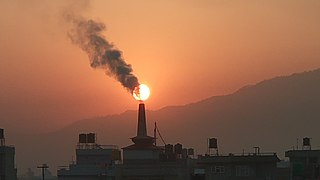
Sewage is a type of wastewater that is produced by a community of people. It is typically transported through a sewer system. Sewage consists of wastewater discharged from residences and from commercial, institutional and public facilities that exist in the locality. Sub-types of sewage are greywater and blackwater. Sewage also contains soaps and detergents. Food waste may be present from dishwashing, and food quantities may be increased where garbage disposal units are used. In regions where toilet paper is used rather than bidets, that paper is also added to the sewage. Sewage contains macro-pollutants and micro-pollutants, and may also incorporate some municipal solid waste and pollutants from industrial wastewater.

The Swiss Federal Institute of Aquatic Science and Technology is a Swiss water research institute and an internationally networked institution. As part of the Swiss Federal Institutes of Technology Domain, it is an institution of the Federal Department of Home Affairs of the Swiss Confederation. The Eawag is based in Dübendorf near Zurich and Kastanienbaum near Lucerne.
Veolia Water is the water division of the French company Veolia Environnement and the world's largest supplier of water services.

A rotating biological contactor or RBC is a biological fixed-film treatment process used in the secondary treatment of wastewater following primary treatment. The primary treatment process involves removal of grit, sand and coarse suspended material through a screening process, followed by settling of suspended solids. The RBC process allows the wastewater to come in contact with a biological film in order to remove pollutants in the wastewater before discharge of the treated wastewater to the environment, usually a body of water. A rotating biological contactor is a type of secondary (biological) treatment process. It consists of a series of closely spaced, parallel discs mounted on a rotating shaft which is supported just above the surface of the wastewater. Microorganisms grow on the surface of the discs where biological degradation of the wastewater pollutants takes place.
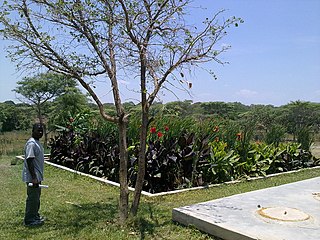
Decentralized wastewater systems convey, treat and dispose or reuse wastewater from small and low-density communities, buildings and dwellings in remote areas, individual public or private properties. Wastewater flow is generated when appropriate water supply is available within the buildings or close to them.

Despo C. Fatta-Kassinos is a chemical and environmental engineer, academic and author. She is a professor in the Department of Civil and Environmental Engineering and the first director of Nireas-International Water Research Center (Nireas-IWRC) at the University of Cyprus (2010–2022). She has been named a Highly Cited Researcher by Web of Science, Clarivate Analytics.

