Related Research Articles

Andrew David Lansley, Baron Lansley, is a British Conservative politician who previously served as Secretary of State for Health and Leader of the House of Commons. He was Member of Parliament (MP) for South Cambridgeshire from 1997 to 2015.

The National Institute for Health and Care Excellence (NICE) is an executive non-departmental public body, in England, of the Department of Health and Social Care, that publishes guidelines in four areas:

Philip James Hammond is a British physician, broadcaster, comedian and commentator on health issues in the United Kingdom. He is best known for his humorous commentary on the National Health Service. He first came into the public spotlight writing a column for The Independent newspaper, where he wrote with a strong pro-patient rights line and as Private Eye's medical correspondent "MD".

The Norfolk and Norwich University Hospital (NNUH) is a large National Health Service academic teaching hospital in the Norwich Research Park on the western outskirts of Norwich, England.
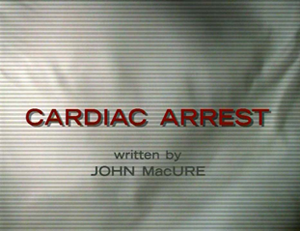
Cardiac Arrest is a British medical drama series produced by World Productions for BBC One. It aired from April 1994 to June 1996. The show focused on the lives and challenges of junior doctors working in a hospital setting and was known for its realistic and sometimes dark portrayal of the medical profession. The series was controversial owing to its cynical depiction of doctors, nurses and the National Health Service (NHS), although it has often topped polls of the UK medical profession as the best medical drama of all time.
The Cartwright Inquiry was a committee of inquiry held in New Zealand from 1987 to 1988 that was commissioned by the Minister of Health, Michael Bassett, to investigate whether, as alleged in an article in Metro magazine, there had been a failure to treat patients adequately with cervical carcinoma in situ (CIS) at National Women’s Hospital (NWH) by Herbert Green, a specialist obstetrician and gynaecologist and associate professor at the Postgraduate School of Obstetrics and Gynaecology, University of Auckland. The inquiry was headed by District Court Judge Silvia Cartwright, later High Court Justice, Dame and Governor-General of New Zealand. The Report of the Cervical Cancer Inquiry was released on 5 August 1988.

Queen Elizabeth Hospital is a hospital in Woolwich in the Royal Borough of Greenwich. It was opened in March 2001 and serves patients from the Royal Borough of Greenwich and the London Borough of Bexley. The hospital was built to accommodate the services previously provided at Greenwich District Hospital and Brook General Hospital, and is a Private Finance Initiative hospital. It is managed by the Lewisham and Greenwich NHS Trust.
A virtual ward allows patients to get the care they need at home safely and conveniently, rather than being in hospital.
Dr Foster Intelligence is a provider of healthcare information in the United Kingdom, monitoring the performance of the National Health Service and providing information to the public. It was launched in February 2006 and is owned by Telstra. Dr Foster aims to improve the quality and efficiency of health and social care. It monitors the performance of the National Health Service and provides information to the public. In 2010, the Dr Foster 2010 Hospital Guide was launched in The Observer newspaper and on the BBC.
The NHS Connecting for Health (CFH) agency was part of the UK Department of Health and was formed on 1 April 2005, having replaced the former NHS Information Authority. It was part of the Department of Health Informatics Directorate, with the role to maintain and develop the NHS national IT infrastructure. It adopted the responsibility of delivering the NHS National Programme for IT (NPfIT), an initiative by the Department of Health to move the National Health Service (NHS) in England towards a single, centrally-mandated electronic care record for patients and to connect 30,000 general practitioners to 300 hospitals, providing secure and audited access to these records by authorised health professionals.
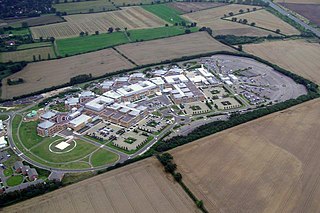
The National Health Service (NHS) is the publicly funded healthcare system in England, and one of the four National Health Service systems in the United Kingdom. It is the second largest single-payer healthcare system in the world after the Brazilian Sistema Único de Saúde. Primarily funded by the government from general taxation, and overseen by the Department of Health and Social Care, the NHS provides healthcare to all legal English residents and residents from other regions of the UK, with most services free at the point of use for most people. The NHS also conducts research through the National Institute for Health and Care Research (NIHR).
IWantGreatCare is a service which allows NHS and private health care patients to rate individual GPs, hospital doctors and nursing staff on the care that they provide.
Croydon PCT was the primary care trust with responsibility for the London Borough of Croydon, which covered parts of south west London and north Surrey. It was responsible for planning and funding healthcare, and for public health in Croydon. It was accountable to NHS London, the strategic health authority for London.

The Health and Social Care Act 2012 is an act of the Parliament of the United Kingdom. It provided for the most extensive reorganisation of the structure of the National Health Service in England to date. It removed responsibility for the health of citizens from the Secretary of State for Health, which the post had carried since the inception of the NHS in 1948. It abolished primary care trusts (PCTs) and strategic health authorities (SHAs) and transferred between £60 billion and £80 billion of "commissioning", or healthcare funds, from the abolished PCTs to several hundred clinical commissioning groups, partly run by the general practitioners (GPs) in England. A new executive agency of the Department of Health, Public Health England, was established under the act on 1 April 2013.

Spire Healthcare Group plc is the second-largest provider of private healthcare in the United Kingdom. It is listed on the London Stock Exchange and is a constituent of the FTSE 250 Index.
Healthcare in the city of Bristol, England and the surrounding area is largely provided by the National Health Service (NHS). Until July 2022, this was provided through the Bristol, North Somerset and South Gloucestershire clinical commissioning group. Facilities include a large teaching hospital – Bristol Royal Infirmary – which offers nationally commissioned specialist cardiac, cancer and children's services from its city-centre campus to patients in the southwest of England and beyond.
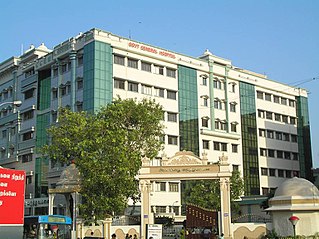
Healthcare in Chennai is provided by both government-run and private hospitals. Chennai attracts about 45 percent of health tourists from abroad arriving in the country and 30 to 40 percent of domestic health tourists. The city has been termed India's health capital. Multi- and super-specialty hospitals across the city bring in an estimated 150 international patients every day. Factors behind the tourists' inflow in the city include low costs, little to no waiting period, and facilities offered at the speciality hospitals in the city.
Wye Valley NHS Trust was established in 2011 by a merger of Hereford Hospitals NHS Trust with Herefordshire PCT community services and Herefordshire Council’s Adult Social Care services. It runs Hereford County Hospital, Bromyard Community Hospital, Leominster Community Hospital and Ross Community Hospital, in Herefordshire, England.

Great Ormond Street Hospital for Children NHS Foundation Trust runs Great Ormond Street Hospital. It is closely associated with University College London (UCL) and in partnership with the UCL Institute of Child Health, which it is located adjacent to, is the largest centre for research and postgraduate teaching in children’s health in Europe. It is part of both the Great Ormond Street Hospital/UCL Institute of Child Health Biomedical Research Centre and the UCL Partners academic health science centre.
Healthcare in London, which consumes about a fifth of the NHS budget in England, is in many respects distinct from that in the rest of the United Kingdom, or England.
References
- ↑ Hammond, Dr Phil (20 September 2010). "Dr Phil's Private Eye Column, Issue 1271 September 15". Private Eye. Retrieved 18 April 2014.
- ↑ "Former Croydon public health chief Peter Brambleby's letter to Andrew Lansley, in full". Croydon Advertiser. 13 July 2012. Retrieved 18 April 2014.
- ↑ "Patient welfare damaged by blackhole claims former NHS boss Dr. Peter Brambleby". Croydon Guardian. 26 September 2012. Retrieved 18 April 2014.
- ↑ "Dr Peter Brambleby and the N&N PFI Flagship". Medical Harm. Retrieved 18 April 2014.
 | This article needs additional or more specific categories .(May 2024) |