The Common Foreign and Security Policy (CFSP) is the organised, agreed foreign policy of the European Union (EU) for mainly security and defence diplomacy and actions. CFSP deals only with a specific part of the EU's external relations, which domains include mainly Trade and Commercial Policy and other areas such as funding to third countries, etc. Decisions require unanimity among member states in the Council of the European Union, but once agreed, certain aspects can be further decided by qualified majority voting. Foreign policy is chaired and represented by the EU's High Representative, currently Josep Borrell.

Francisco Javier Solana de Madariaga CYC is a Spanish physicist and PSOE politician. After serving in the Spanish government as Foreign Affairs Minister under Felipe González (1992–1995) and as the Secretary General of NATO (1995–1999), leading the alliance during Operation Allied Force, he was appointed the European Union's High Representative for Common Foreign and Security Policy, Secretary General of the Council of the European Union and Secretary-General of the Western European Union and held these posts from October 1999 until December 2009.
The European Union has a number of relationships with foreign states. According to the European Union's official site, and a statement by Commissioner Günter Verheugen, the aim is to have a ring of countries, sharing EU's democratic ideals and joining them in further integration without necessarily becoming full member states.

The Barcelona Centre for International Affairs (CIDOB) is a Spanish think tank headquartered in Barcelona, devoted to research in the field of international relations. It defines itself as an "independent institution" that studies specifically "global issues that affect governance at different levels, from international to local". Legally, CIDOB is a private foundation endowed with a board of trustees made up of the main public institutions and universities of Barcelona and Catalonia. Both the centre and the foundation are governed by statutes, a code of ethics, and a master plan. At present, CIDOB is the oldest think tank in Spain and one of the most influential in its area, at the European level.

The European Neighbourhood Policy (ENP) is a foreign relations instrument of the European Union (EU) which seeks to tie those countries to the east and south of the European territory of the EU to the Union. These countries include some who seek to one day become either a member state of the European Union, or become more closely integrated with the European Union. The ENP does not apply to neighbours of the EU's outermost regions, specifically France's territories in South America, but only to those countries close to EU member states' territories in mainland Europe.

Giannis Valinakis is a Greek politician and university professor. He is the former Greek Deputy Minister of Foreign Affairs. He is currently President of the Jean Monnet European Centre of Excellence at the University of Athens, Jean Monnet Professor ad Personam, and a member of the Executive Board of the Centre for European Studies in Brussels.

The Finnish Institute of International Affairs is an independent research institute that produces topical information and research on international relations and the European Union. It also publishes the journal Ulkopolitiikka. It is located in Helsinki.

The Kingdom of Spain and the Republic of Turkey maintain diplomatic relations. Spain has an embassy in Ankara and a consulate general in Istanbul. Turkey has an embassy in Madrid and a consulate general in Barcelona.
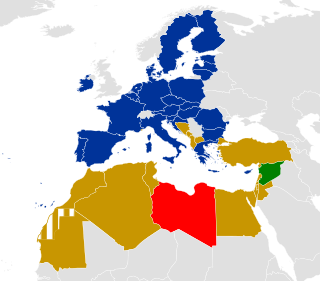
The Union for the Mediterranean is an intergovernmental organization of 43 member states from Europe and the Mediterranean Basin: the 27 EU member states and 16 Mediterranean partner countries from North Africa, Western Asia and Southern Europe. It was founded on 13 July 2008 at the Paris Summit for the Mediterranean, with an aim of reinforcing the Euro-Mediterranean Partnership (Euromed) that was set up in 1995 as the Barcelona Process. Its general secretariat is located in Barcelona, Catalonia, Spain.
Elena Korosteleva is a dissident academic researcher and principal investigator focusing on governance, democratisation, complexity and resilience. She is Professor of Politics and Global Sustainable Development and Director of the Institute for Global Sustainable Development at the University of Warwick and is visiting professor at the Oxford Belarus Observatory at the Oxford University.
Álvaro de Vasconcelos was the Director of the European Union Institute for Security Studies between May 2007 and May 2012.

The Institut Barcelona d'Estudis Internacionals (IBEI) is an inter-university research institute and postgraduate education center located in Barcelona of Spain. It was established in 2004 as a joint initiative between the Barcelona Centre for International Affairs and five universities in the Barcelona metropolitan area, as a center for international studies. The President of the institute is Narcís Serra, former Minister of Defense and former Vice President of Spain, and the Director is Jacint Jordana, Professor of Political Science at the Pompeu Fabra University.

EGMONT – The Royal Institute for International Relations, also known as the Egmont Institute, is an independent and non-profit Brussels-based think tank dedicated to interdisciplinary research on international relations. The main activities of the Egmont Institute include research, the organisation of events, and training for civil servants. The Institute is associated to the Foreign Ministry of Belgium, from which it receives a substantial part of its funding. The Egmont Institute furthermore receives funding from EU Institutions, membership fees and private partners.

Angelina Julietta Francisca Eichhorst is a Dutch diplomat and European civil servant, currently the managing director for Europe and Central Asia at the European External Action Service in Brussels, Belgium.
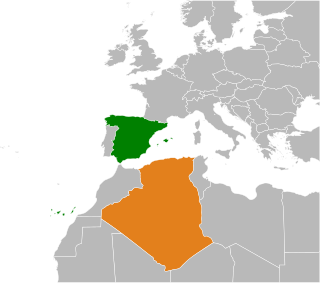
Algeria and Spain are full members of the Union for the Mediterranean.
The Latvian Institute of International Affairs is an oldest research center and think tank in Latvia. Founded on May 20, 1992, the organization seeks to provide “Latvia's decision-makers, experts, and the wider public with analysis, recommendations, and information about international developments, regional security issues, and foreign policy strategy and choices.” The Institute develops and publishes research, organises high-level international conferences and promotes cooperation with Latvian and foreign research institutions. The LIIA is a nonprofit and does not receive regular government funding. LIIA’s funding is project-based. Its projects are funded through close cooperation with a range of other organisations and foundations, both Latvian and foreign. The Institute implements international cooperation projects within the European Commission's Horizon Europe and Erasmus+ programs. International projects are also funded by such recognisable supporters as the National Endowment for Democracy, Freedom House, the German Marshall Fund of the United States, the Nordic Council of Ministers, the Konrad Adenauer Stiftung, EEA and Norway Grants. LIIA’s research focuses on important topics such as Latvian foreign policy; transatlantic relations; security issues in the Baltic Sea region; European Union policies, including its neighborhood policy and Eastern Partnership; and multilateral and bilateral relations with Russia.

Tunisia–European Union relations are the foreign relations between the country of Tunisia and the European Union.

Egypt–European Union relations are the foreign relations between the country of Egypt and the European Union.
Maria Cristina Russo is a Director for Global Approach & International Partnerships at the Directorate-General for Research and Innovation of the European Commission. She has been in a similar role since 2013. Before that she had been Head of Unit for Policy Coordination, Relations with the European Parliament and the European Council and Member of Cabinet of European Commissioner Philippe Busquin.
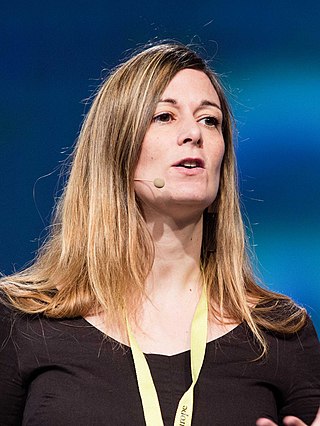
Gemma Galdón-Clavell is a Spanish technology policy analyst who specializes in ethics and algorithmic accountability. She is a senior adviser to the European Commission and she has also provided advice to other international organisations. Forbes Magazine described her as “a leading voice on tech ethics and algorithmic accountability”.

