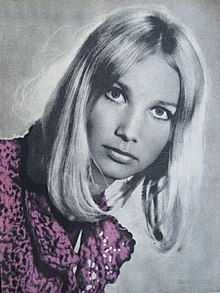
Ida Kamińska was a Polish actress and director. Known mainly for her work in the theatre, she was the daughter of Avrom Yitshok Kaminski and Ester Rachel Kamińska, known as the Mother of the Jewish Stage. The Jewish Theatre in Warsaw, Poland is named in their honor. In her long career Kamińska produced more than 70 plays, and performed in more than 150 productions. She also wrote two plays of her own and translated many works in Yiddish. World War II disrupted her career, and she later immigrated to the United States where she continued to act. In 1967, she directed herself in the lead role of Mother Courage and Her Children on Broadway. In 1973, she released her autobiography, titled My Life, My Theater.

Eugeniusz Bodo was a film director, producer, and one of the most popular Polish actors and comedians of the interwar period. He starred in some of the most popular Polish film productions of the 1930s, including His Excellency, The Shop Assistant, Czy Lucyna to dziewczyna?, and Pieśniarz Warszawy.

Elżbieta Justyna Czyżewska was a Polish actress active in both Poland and the United States.

Krystyna Zofia Feldman was a Polish actress.

Krystyna Jolanta Janda is a Polish film and theatre actress, director, and singer. She is best known internationally for playing leading roles in several films by Polish film director Andrzej Wajda, including Man of Marble and Man of Iron. She is widely considered one of the most popular and successful Polish actresses of her generation and an icon of Polish cinema.

Agata Kulesza is a Polish actress who has appeared on film, television, and stage. She made her film debut playing the leading role in the 1993 comedy-drama Czlowiek z... and later appeared in films Poznań '56 (1996), The Spring to Come (2001), Moje pieczone kurczaki (2002), Expecting Love (2008) and Suicide Room (2011), for which she received Złota Kaczka Award for Best Actress.

Ida is a 2013 drama film directed by Paweł Pawlikowski and written by Pawlikowski and Rebecca Lenkiewicz. Set in Poland in 1962, it follows a young woman on the verge of taking vows as a Catholic nun. Orphaned as an infant during the German occupation of World War II, she must meet her aunt, a former Communist state prosecutor and only surviving relative, who tells her that her parents were Jewish. The two women embark on a road trip into the Polish countryside to learn the fate of their relatives.
Julia Krynke is a multilingual Polish actress, voice over artist and trained classical musician based in London, UK. She has had minor supporting roles in the UK in TV series Spooks, Holby City and The Street, and has had a successful career in cinema, theatre and TV in Germany, Poland and Ireland. She is fluent in Polish, English and German.

Magdalena Jadwiga Boczarska is a Polish actress who has appeared in more than 25 feature films since 2001.

Emilia Krakowska (born 20 February 1940 in Poznań) is Polish entertainer, film and theater actress.
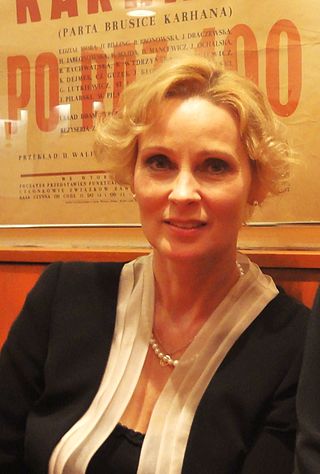
Maria Gładkowska is a Polish film, stage, and television actress. She gained critical acclaim in the 1980s that culminated in her Zbigniew Cybulski Award (1988). Gładkowska portrayed Daisy, Princess of Pless, her breakthrough performance in Magnat (1987), which was included in the list of 100 Best Polish Films of all time.

Alina Janowska was a Polish actress. She appeared in more than 35 films and television shows between 1946 and 2017.
Alina Obidniak was a Polish theatre director and actress.

Marta Mazurek is a Polish film actress. She made her debut role performance in the Gabriela Zapolska's play Ich czworo in 2012 directed for Radio Kraków by Jerzy Stuhr.

Tomasz Konina was a Polish theatre and opera director and stage designer.

Anna Jekiełek-Ciesielska was a Polish set and costume designer.
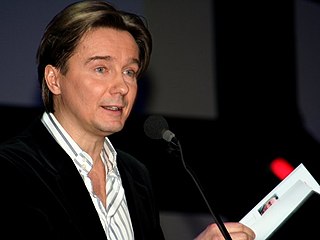
Mariusz Treliński is a Polish opera, theatre and film director as well as the artistic director of the Grand Theatre in Warsaw.
Leokadia Serafinowicz was an artist and promoter of Polish puppet theater and Theater for Young Audiences (TYA). She was a puppeteer, director, scenographer, and a writer of scenarios as well as theater and film adaptations. She served as director and art director at the Teatr Lalki i Aktora "Marcinek" in Poznań from 1960 to 1976, making it one of the most prestigious puppet theaters of its time. She was a co-founder and the first president of ASSITEJ Poland (1981–1982), and an honorary member of UNIMA.

Jan Tadeusz Komasa is a Polish film director, screenwriter, and producer best known for directing Suicide Room (2011), Warsaw 44 (2014), and Corpus Christi (2019), which was nominated for the Best International Feature Film at the 92nd Academy Awards. His previous works premiered and won awards at Tribeca Film Festival, Berlin Film Festival, Cannes, and Venice.

Urszula Kenar is a Polish theatrical set designer.