Psychology is the study of mind and behavior. Its subject matter includes the behavior of humans and nonhumans, both conscious and unconscious phenomena, and mental processes such as thoughts, feelings, and motives. Psychology is an academic discipline of immense scope, crossing the boundaries between the natural and social sciences. Biological psychologists seek an understanding of the emergent properties of brains, linking the discipline to neuroscience. As social scientists, psychologists aim to understand the behavior of individuals and groups.
Positive psychology studies the conditions that contribute to the optimal functioning of people, groups, and institutions. It studies "positive subjective experience, positive individual traits, and positive institutions... it aims to improve quality of life."
Learned helplessness is the behavior exhibited by a subject after enduring repeated aversive stimuli beyond their control. It was initially thought to be caused by the subject's acceptance of their powerlessness, by way of their discontinuing attempts to escape or avoid the aversive stimulus, even when such alternatives are unambiguously presented. Upon exhibiting such behavior, the subject was said to have acquired learned helplessness.
Clinical psychology is an integration of human science, behavioral science, theory, and clinical knowledge for the purpose of understanding, preventing, and relieving psychologically-based distress or dysfunction and to promote subjective well-being and personal development. Central to its practice are psychological assessment, clinical formulation, and psychotherapy, although clinical psychologists also engage in research, teaching, consultation, forensic testimony, and program development and administration. In many countries, clinical psychology is a regulated mental health profession.

Martin Elias Peter Seligman is an American psychologist, educator, and author of self-help books. Seligman is a strong promoter within the scientific community of his theories of well-being and positive psychology. His theory of learned helplessness is popular among scientific and clinical psychologists. A Review of General Psychology survey, published in 2002, ranked Seligman as the 31st most cited psychologist of the 20th century.
A medical intuitive is an alternative medicine practitioner who claims to be able to use their intuitive abilities to find the cause of a physical or emotional condition through the use of insight rather than modern medicine. Other terms for such a person include medical clairvoyant or medical psychic.

Locus of control is the degree to which people believe that they, as opposed to external forces, have control over the outcome of events in their lives. The concept was developed by Julian B. Rotter in 1954, and has since become an aspect of personality psychology. A person's "locus" is conceptualized as internal or external.
A behavior modification facility is a residential educational and treatment institution enrolling adolescents who are perceived as displaying antisocial behavior, in an attempt to alter their conduct.
Explanatory style is a psychological attribute that indicates how people explain to themselves why they experience a particular event, either positive or negative.
The Dodo bird verdict is a controversial topic in psychotherapy, referring to the claim that all empirically validated psychotherapies, regardless of their specific components, produce equivalent outcomes. It is named after the Dodo character in Alice in Wonderland. The conjecture was introduced by Saul Rosenzweig in 1936, drawing on imagery from Lewis Carroll's novel Alice's Adventures in Wonderland, but only came into prominence with the emergence of new research evidence in the 1970s.
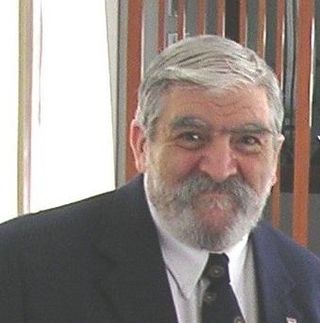
Daniel Nicholas Robinson was an American psychologist who was a professor of psychology at Georgetown University and later in his life became a fellow of the faculty of philosophy at Oxford University.
Exposure therapy is a technique in behavior therapy to treat anxiety disorders.

Irving Kirsch is an American psychologist and academic. He is the Associate Director of the Program in Placebo Studies and a lecturer in medicine at the Harvard Medical School and Beth Israel Deaconess Medical Center. He is also professor emeritus of psychology at the Universities of Hull and Plymouth in the United Kingdom, and the University of Connecticut in the United States. Kirsch is a leading researcher within the field of placebo studies who is noted for his work on placebo effects, antidepressants, expectancy, and hypnosis. He is the originator of response expectancy theory, and his analyses of clinical trials of antidepressants have influenced official treatment guidelines in the United Kingdom. He is the author of the 2009 book The Emperor's New Drugs, which argued most antidepressant medication is effective primarily due to placebo effects.

Donald H. Baucom, is a clinical psychology faculty member at the University of North Carolina-Chapel Hill. He is recognized for founding the field of Cognitive-Behavioral Couples Therapy. Baucom is also recognized as one of the top marital therapists and most prolific researchers in this field. Currently, Baucom's National Cancer Institute funded study, CanThrive, has the largest observationally coded sample of any couples study to date.
Vernon Lewis Quinsey is a Canadian psychologist. He has studied violent crime offenders, sex offenders, sexually violent predators, juvenile delinquency, and ways to predict, assess, and manage individuals with these tendencies. He testified in court that a rapist, Allen Edward Bullock, was "erotically attracted to that kind of behavior".

Jonathan Stuart Abramowitz is an American clinical psychologist and Professor in the Department of Psychology and Neuroscience at the University of North Carolina at Chapel Hill (UNC-CH). He is an expert on obsessive-compulsive disorder (OCD) and anxiety disorders whose work is highly cited. He maintains a research lab and currently serves as the Director of the UNC-CH Clinical Psychology PhD Program. Abramowitz approaches the understanding and treatment of psychological problems from a cognitive-behavioral perspective.
Judy Garber is a clinical psychologist known for her research on emotional dysregulation and mood disorders, with a focus on cognitive-behavioral interventions for adolescents who have depression. Garber is Cornelius Vanderbilt Professor of Psychology and Human Development at Vanderbilt University.
Cynthia D. Belar is a scientist known for her contributions to clinical psychology with specific focus on health psychology, clinical service, and education. She is a Professor Emerita at the University of Florida Health Science Center.
Steven D. Hollon is an American psychologist, academic and researcher. He is the Gertrude Conaway Vanderbilt Professor of Psychology at Vanderbilt University.
Therapeutic Lifestyle Change (TLC) is a treatment for depression which was developed by Dr. Stephen Ilardi and several graduate students at the University of Kansas. The TLC program is drug-free and relies on six lifestyle changes. The program has been found to be an effective treatment for depression, with 70-75% of patients experiencing a significant reduction in depressive symptoms.


