Related Research Articles

Günter Blobel was a Silesian German and American biologist and 1999 Nobel Prize laureate in Physiology for the discovery that proteins have intrinsic signals that govern their transport and localization in the cell.

Bert Sakmann is a German cell physiologist. He shared the Nobel Prize in Physiology or Medicine with Erwin Neher in 1991 for their work on "the function of single ion channels in cells," and the invention of the patch clamp. Bert Sakmann was Professor at Heidelberg University and is an Emeritus Scientific Member of the Max Planck Institute for Medical Research in Heidelberg, Germany. Since 2008 he leads an emeritus research group at the Max Planck Institute of Neurobiology.

Hartmut Michel is a German biochemist, who received the 1988 Nobel Prize in Chemistry for determination of the first crystal structure of an integral membrane protein, a membrane-bound complex of proteins and co-factors that is essential to photosynthesis.

Ingo Potrykus is Professor Emeritus of Plant Sciences at the Institute of Plant Sciences of the Swiss Federal Institute of Technology (ETH), Zurich from which he retired in 1999. His research group applied gene technology to contribute to food security in developing countries. Together with Peter Beyer, he is one of the co-inventors of golden rice. In 2014 he was chairman of the Golden Rice Humanitarian Board.

Juan Ignacio Cirac Sasturain, known professionally as Ignacio Cirac, is a Spanish physicist. He is one of the pioneers of the field of quantum computing and quantum information theory. He is the recipient of the 2006 Prince of Asturias Award in technical and scientific research.
The Max Planck Institute of Molecular Plant Physiology is a German research institute for molecular plant physiology, based in the Golm district of Potsdam, Brandenburg. Founded on 1 January 1994, the MPIMP focuses on the study of the dynamics of plant metabolism and how that relates to the entire plant system. The institution is one of the 80 institutes in the Max Planck Society (Max-Planck-Gesellschaft).

Ralf Reski is a German professor of plant biotechnology and former dean of the Faculty of Biology of the University of Freiburg. He is also affiliated to the French École supérieure de biotechnologie Strasbourg (ESBS) and Senior Fellow at the Freiburg Institute for Advanced Studies.

Joachim Wilhelm "Jo" Messing was a German-American biologist who was a professor of molecular biology and the fourth director of the Waksman Institute of Microbiology at Rutgers University.

Ernst Pöppel is a German psychologist and neuroscientist. He is the father of Dr. David Poeppel.
Hans Robert Schöler is a molecular biologist and stem cell researcher. He is director at the Max Planck Institute for Molecular Biomedicine in Münster.
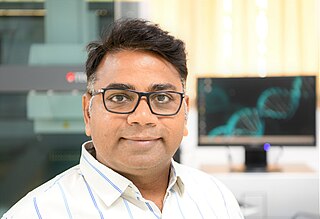
Rajeev Kumar Varshney is an Indian agricultural scientist, specializing in genomics, genetics, molecular breeding and capacity building in developing countries. Varshney is currently serving as Director, Western Australian State Agricultural Biotechnology Center; Director, Centre for Crop & Food Innovation; and International Chair in Agriculture & Food Security with the Food Futures Institute at Murdoch University, Australia since Feb 2022. Before joining Murdoch University, Australia he served International Crops Research Institute for the Semi-Arid Tropics (ICRISAT), a global agriculture R&D institute, for more than 16 years in different scientific and research leadership roles including Research Program Director for three global research programs– Grain Legumes, Genetic Gains and Accelerated Crop Improvement Program. He has the onus of establishing and nurturing the Center of Excellence in Genomics & Systems Biology (CEGSB), a globally recognized center for genomics research at ICRISAT that made impacts on improving agriculture and development of human resources in several countries including India, China, Kenya, Ethiopia, Tanzania, Nigeria, Ghana, Mali, Senegal, Burkina Faso, etc. Varshney holds Adjunct/Honorary/Visiting Professor positions at 10 academic institutions in Australia, China, Ghana, Hong Kong and India, including The University of Western Australia, University of Queensland, West Africa Centre for Crop Improvement, University of Hyderabad, Chaudhary Charan Singh University and Professor Jayashankar Telangana State Agricultural University.

Faculty of Biology of the Belarusian State University was founded in 1931. It is a major biology research and teaching establishment in the country, which includes nine Departments and nine Research Laboratories. The Dean is Vadim V. Demidchyk, Docent, Doctor of Sciences

Roger Sidney Goody is an English biochemist who served as director at the Max Planck Institute for Molecular Physiology in Dortmund from 1993 until 2013. Since 2013 he is Emeritus Director of the institute.

Maria Leptin is a German developmental biologist and immunologist, and the current President of the European Research Council. She was the Director of the European Molecular Biology Organization from 2010 to 2021.
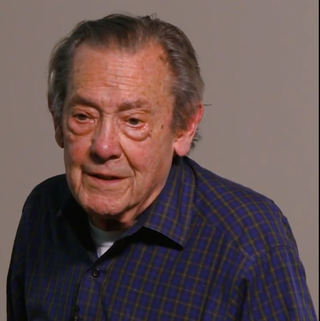
Winslow Russell Briggs was an American plant biologist who introduced techniques from molecular biology to the field of plant biology. Briggs was an international leader in molecular biological research on plant sensing, in particular how plants respond to light for growth and development and the understanding of both red and blue-light photoreceptor systems in plants. His work has made substantial contributions to plant science, agriculture and ecology.
Sudhir Kumar Sopory is an Indian educationist, plant physiologist, scientist and former vice chancellor of Jawaharlal Nehru University, New Delhi. He is known to be the first to purify a protein kinase C activity from plants and is credited with the identification of topoisomerase as a substrate of protein kinase C. He is an elected Fellow of several major Indian science academies and The World Academy of Sciences (TWAS) and is a recipient of many honours, including the 1987 Shanti Swarup Bhatangar Prize, the highest Indian award in the science and technology categories. The Government of India awarded him the fourth highest civilian honour of the Padma Shri, in 2007, for his contributions to science and technology.

Mathias Bähr is a German neurologist.
Akhilesh Kumar Tyagi is an Indian plant biologist and the former director of National Institute of Plant Genome Research. Known for his studies on plant genomics and biotechnology, Tyagi is an elected fellow of all the three major Indian science academies namely Indian Academy of Sciences, Indian National Science Academy and National Academy of Sciences, India as well as The World Academy of Sciences and the National Academy of Agricultural Sciences. The Department of Biotechnology of the Government of India awarded him the National Bioscience Award for Career Development, one of the highest Indian science awards, for his contributions to biosciences in 1999.
Anil Grover is an Indian molecular biologist, professor and the head of the Department of Plant Molecular Biology at the University of Delhi. He also heads the Anil Grover Lab of the department, serving as the principal investigator. Known for his research in the field of molecular biology of plants, Grover is an elected fellow of all the three major Indian science academies namely the National Academy of Sciences, India, the Indian Academy of Sciences and the Indian National Science Academy as well as the National Academy of Agricultural Sciences. The Department of Biotechnology of the Government of India awarded him the National Bioscience Award for Career Development, one of the highest Indian science awards, for his contributions to biosciences in 2002.
Regine Kahmann is a German microbiologist and was Director at the Max Planck Institute for Terrestrial Microbiology in Marburg from 2000 to 2019. She was made a Foreign Member of the Royal Society (ForMRS) in 2020.
References
- ↑ Armarego-Marriott, Tegan (2020). "Ralph Bock". The Plant Cell. 32 (1): 4–6. doi:10.1105/tpc.19.00894. ISSN 1040-4651. PMC 6961626 . PMID 31748332.
- ↑ "Prof. Dr Ralph Bock". www.mpimp-golm.mpg.de. Retrieved 2022-12-13.
- ↑ "Mitglieder Ralph Bock". Nationale Akademie der Wissenschaften Leopoldina (in German). Retrieved 2022-12-13.
| International | |
|---|---|
| National | |
| Academics | |
| Other | |
