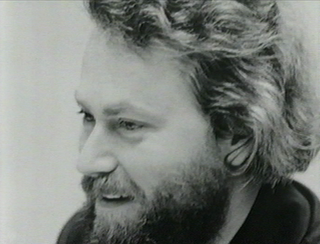
Donald Clarence Judd was an American artist associated with minimalism. In his work, Judd sought autonomy and clarity for the constructed object and the space created by it, ultimately achieving a rigorously democratic presentation without compositional hierarchy. He is generally considered the leading international exponent of "minimalism", and its most important theoretician through such writings as "Specific Objects" (1964). Judd voiced his unorthodox perception of minimalism in Arts Yearbook 8, where he says, "The new three dimensional work doesn't constitute a movement, school, or style. The common aspects are too general and too little common to define a movement. The differences are greater than the similarities."

Joaquim Monzó i Gómez, also known as Quim Monzó, is a contemporary Spanish writer of novels, short stories and discursive prose, mostly in Catalan. In the early 1970s, Monzó reported from Vietnam, Cambodia, Northern Ireland and East Africa for the Barcelona newspaper Tele/eXpres. He was one of the members of the Catalan literary collective, Ofèlia Dracs. He lives in Barcelona and publishes regularly in La Vanguardia.

The Museu Nacional d'Art de Catalunya, abbreviated as MNAC, is a museum of Catalan visual art located in Barcelona, Catalonia, Spain. Situated on Montjuïc hill at the end of Avinguda de la Reina Maria Cristina, near Pl Espanya, the museum is especially notable for its outstanding collection of romanesque church paintings, and for Catalan art and design from the late 19th and early 20th centuries, including modernisme and noucentisme. The museum is housed in the Palau Nacional, a huge, Italian-style building dating to 1929. The Palau Nacional, which has housed the Museu d'Art de Catalunya since 1934, was declared a national museum in 1990 under the Museums Law passed by the Catalan Government. That same year, a thorough renovation process was launched to refurbish the site, based on plans drawn up by the architects Gae Aulenti and Enric Steegmann, who were later joined in the undertaking by Josep Benedito. The Oval Hall was reopened for the 1992 Summer Olympic Games, and the various collections were installed and opened over the period from 1995 to 2004. The museum was officially inaugurated on 16 December 2004. It is one of the largest museums in Spain.

Félix de la Concha is a painter. Born in León, Spain, he resides in Pittsburgh and Madrid.

Josep Guinovart i Bertran was a Spanish painter best known for his informalist or abstract expressionist work.
Jordi Bosch i Palacios is a Spanish actor.

Isidre Nonell i Monturiol was a Catalan artist known for his expressive portrayal of socially marginalized individuals in late 19th-century Barcelona.
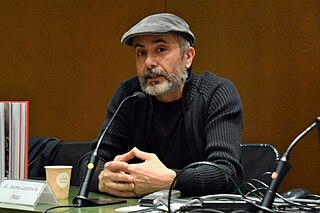
Kap was born in 1974 in Berga, Barcelona, Spain. He is a cartoonist and caricaturist in some journals of Barcelona: La Vanguardia and El Mundo Deportivo among others. He also draws for websites, such as El último mono Garabatolandia, and Kapdigital

Lluís Bagaria i Bou one of the most important Spanish caricaturists in the first half of the 20th century. His drawings, in a synthetic and decorative style, were published in the most important journals of Spain, including L'Esquella de la Torratxa and ¡Cu-Cut! between 1906 and 1940.

Pedro Madueño Palma is a Spanish photographer. He worked as a graphic reporter for the newspaper La Vanguardia (Barcelona) from 1983 to 2015. In 2015 he was appointed Deputy Director of La Vanguardia with responsibility for the image area of the newspaper. President of the jury of the Godó Prize for Photojournalism of the Conde de Barcelona Foundation. He has been associate professor at the University Pompeu Fabra, since 2008 he teaches graduate students at the Autonomous University of Barcelona. He is the author of the official image of Prince Felipe de Borbón y Grecia between 2002 and 2010, and he is also the author in 2010 of the official image of the President of the Generalitat de Catalunya, Artur Mas. He photographed Salvador Dalí during the last three years of the artist's life.

Eduard Arranz Bravo was a Catalan Spanish painter.

The Biblioteca Museu Víctor Balaguer is located in Vilanova i la Geltrú, province of Barcelona, Catalonia, Spain and was founded in 1884 by Víctor Balaguer so as to thank the city for its support during his politician career. Since 2000 the museum is part of the National Art Museum of Catalonia and the library is part of the National Library of Catalonia.

Over My Dead Body, 1893, is a painting by Ramon Casas, in the National Art Museum of Catalonia in Barcelona.
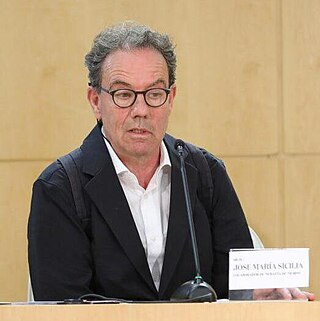
José María Sicilia is a Spanish abstractionist painter who currently resides in Paris and Sóller.

Xavier Gosé i Rovira was a Catalan painter and illustrator who worked in the Art Nouveau and Art Déco styles.
Gino Rubert is a Spanish artist. He lives and works in Barcelona, Berlin and Cuernavaca (Mexico). Rubert has worked in the media of painting, video and installation art.
María Freire was a Uruguayan painter, sculptor, and art critic. She was one of the leading figures in the development of concrete art and non-figurative art in Uruguay. She was a co-founder the Grupo de Arte No Figurativo.
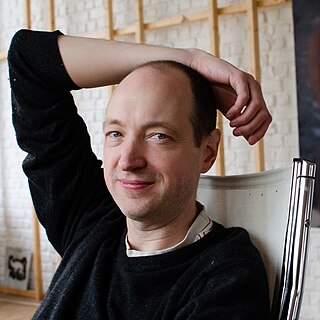
Philipp Fröhlich is a German painter who lives and works in Brussels. His figurative paintings are influenced by his studies of scenography in the class of Professor Karl Kneidl at Kunstakademie Düsseldorf and he frequently uses models for the composition of his works.
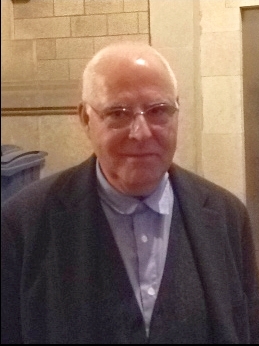
Antoni Llena is a Spanish artist.
Adrianus Hendrikus "Arie" “Jacques” Witjens was a Dutch painter known for his landscapes, cityscapes and figures of his native Netherlands and Argentina, where he lived after 1920.


