Related Research Articles

An abbey is a type of monastery used by members of a religious order under the governance of an abbot or abbess. Abbeys provides a complex of buildings and land for religious activities, work, and housing of Christian monks and nuns.

Reform Judaism is a major Jewish denomination that emphasizes the evolving nature of the faith, the superiority of its ethical aspects to the ceremonial ones, and belief in a continuous revelation, closely intertwined with human reason and intellect, and not centered on the theophany at Mount Sinai. A liberal strand of Judaism, it is characterized by a lessened stress on ritual and personal observance, regarding Jewish Law as non-binding and the individual Jew as autonomous, and a great openness to external influences and progressive values. The origins of Reform Judaism lie in 19th-century Germany, where its early principles were formulated by Rabbi Abraham Geiger and his associates. Since the 1970s, the movement has adopted a policy of inclusiveness and acceptance, inviting as many as possible to partake in its communities, rather than strict theoretical clarity. It is strongly identified with progressive political and social agendas, mainly under the traditional Jewish rubric Tikkun Olam, or "Repairing of the World". Tikkun Olam is a central motto of Reform Judaism, and action for its sake is one of the main channels for adherents to express their affiliation. The movement's greatest center today is in North America.

The Second Great Awakening was a Protestant religious revival during the early 19th century in the United States. The Second Great Awakening, which spread religion through revivals and emotional preaching, sparked a number of reform movements. Revivals were a key part of the movement and attracted hundreds of converts to new Protestant denominations. The Methodist Church used circuit riders to reach people in frontier locations. The Second Great Awakening led to a period of antebellum social reform and an emphasis on salvation by institutions. The outpouring of religious fervor and revival began in Kentucky and Tennessee in the 1790s and early 1800s among the Presbyterians, Methodists and Baptists. During the period, their American population was rapidly growing that the great leap westward characterized its territorial expansion. The awakening brought comfort in the face of uncertainty as a result of the socio-political changes in America.

The Carmelites, formally known as the Order of the Brothers of the Blessed Virgin Mary of Mount Carmel or sometimes simply as Carmel by synecdoche, is a Roman Catholic mendicant religious order for men and women. Historical records about its origin remain very uncertain, but it was probably founded in the 12th century on Mount Carmel in Israel in the Crusader States. Berthold of Calabria has traditionally been associated with the founding of the order, but few clear records of early Carmelite history have survived. The order of Carmelite nuns was formalised in 1452.

A nun is a member of a religious community of women, typically living under vows of poverty, chastity, and obedience in the enclosure of a monastery. Communities of nuns exist in numerous religious traditions, including Buddhism, Christianity, Jainism, and Taoism.

The Counter-Reformation, also called the Catholic Reformation or the Catholic Revival, was the period of Catholic resurgence that was initiated in response to the Protestant Reformation. It began with the Council of Trent (1545–63) and largely ended with the conclusion of the European wars of religion in 1648. Initiated to address the effects of the Protestant Reformation, the Counter-Reformation was a comprehensive effort composed of apologetic and polemical documents and ecclesiastical configuration as decreed by the Council of Trent. The last of these included the efforts of Imperial Diets of the Holy Roman Empire, exiling/forcibly converting Protestant populations, heresy trials and the Inquisition, anti-corruption efforts, spiritual movements, and the founding of new religious orders. Such policies had long-lasting effects in European history with exiles of Protestants continuing until the 1781 Patent of Toleration, although smaller expulsions took place in the 19th century.

The Trappists, officially known as the Order of Cistercians of the Strict Observance and originally named the Order of Reformed Cistercians of Our Lady of La Trappe, are a Catholic religious order of cloistered monastics that branched off from the Cistercians. They follow the Rule of Saint Benedict and have communities of both monks and nuns that are known as Trappists and Trappistines, respectively. They are named after La Trappe Abbey, the monastery from which the movement and religious order originated. The movement first began with the reforms that Abbot Armand Jean le Bouthillier de Rancé introduced in 1664, later leading to the creation of Trappist congregations, and eventually the formal constitution as a separate religious order in 1892.

The Barnabites, formally the Clerics Regular of Saint Paul, are a religious order of clerics regular founded in 1530 in the Catholic Church. They may use the postnominal initials of simply "B." or "C.R.S.P.". Associated to the members of the Order are the Angelic Sisters of St. Paul and the lay members of the Barnabite lay movement.

Mendicant orders are, primarily, certain Christian religious orders that have adopted a lifestyle of poverty, traveling, and living in urban areas for purposes of preaching, evangelization, and ministry, especially to the poor. At their foundation these orders rejected the previously established monastic model. This model prescribed living in one stable, isolated community where members worked at a trade and owned property in common, including land, buildings and other wealth. By contrast, the mendicants avoided owning property at all, did not work at a trade, and embraced a poor, often itinerant lifestyle. They depended for their survival on the goodwill of the people to whom they preached.
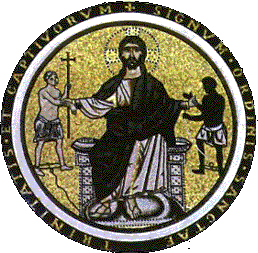
The Order of the Most Holy Trinity and of the Captives, also known as the Trinitarian Order or the Trinitarians, is a Catholic religious order founded in Cerfroid, outside Paris, in late 12th century. From the very outset, a special dedication to the mystery of the Holy Trinity has been a constitutive element of the order's life.

The term "Third Order" signifies, in general, lay members of religious orders, who do not necessarily live in community and yet can claim to wear the habit and participate in the good works of some great order. Roman Catholicism, Anglicanism, and Lutheranism all recognize Third Orders. They were a twelfth-century adaptation of the medieval monastic confraternities.

Canons regular are canons in the Catholic Church who live in community under a rule. They are often organised into religious orders. They are distinguished from clerics regular, a later form of religious life where members also live life under a rule, in that canons regular emphasise a life lived in community. Examples of religious orders of canons regular include the Crosiers, Premonstratensians, and some Augustinians.
The Cluniac Reforms were a series of changes within medieval monasticism of the Western Church focused on restoring the traditional monastic life, encouraging art, and caring for the poor. The movement began within the Benedictine order at Cluny Abbey, founded in 910 by William I, Duke of Aquitaine (875–918). The reforms were largely carried out by Saint Odo and spread throughout France, into England, and through much of Italy and Spain.
Tapa Gaccha is the largest Gaccha of Svetambara Jainism.
Prarthana Samaj or "Prayer Society" in Sanskrit, was a movement for religious and social reform in Bombay, India, based on earlier reform movements. Prarthana Samaj was founded by the Dadoba Pandurang and his brother Atmaram Pandurang in 1867 when Keshub Chandra Sen visited Maharashtra, with an aim to make people believe in one God and worship only one God. It became popular after Mahadev Govind Ranade joined. The main reformers were the intellectuals who advocated reforms of the social system of the Hindus. It was spread to southern India by noted Telugu reformer and writer, Kandukuri Veeresalingam.
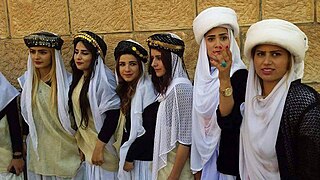
An ethnoreligious group is an ethnic group whose members are also unified by a common religious background.

Protestantism is the second-largest form of Christianity with a total of 800 million to 1 billion adherents worldwide or about 37% of all Christians. It originated with the 16th century Reformation, a movement against what its followers perceived to be errors in the Catholic Church. Protestants reject the Catholic doctrine of papal supremacy and sacraments, but disagree among themselves regarding the real presence of Christ in the Eucharist. They emphasize the priesthood of all believers, justification by faith alone rather than also by good works, and the highest authority of the Bible alone in faith and morals. The "five solae" summarise basic theological differences in opposition to the Catholic Church.

The orders, decorations, and medals of the Holy See include titles, chivalric orders, distinctions and medals honoured by the Holy See, with the Pope as the fount of honour, for deeds and merits of their recipients to the benefit of the Holy See, the Catholic Church, or their respective communities, societies, nations and the world at large.
References
- ↑ Huddleston, Gilbert (1913). . In Herbermann, Charles (ed.). Catholic Encyclopedia . New York: Robert Appleton Company.
 | This Catholic Church-related article is a stub. You can help Wikipedia by expanding it. |