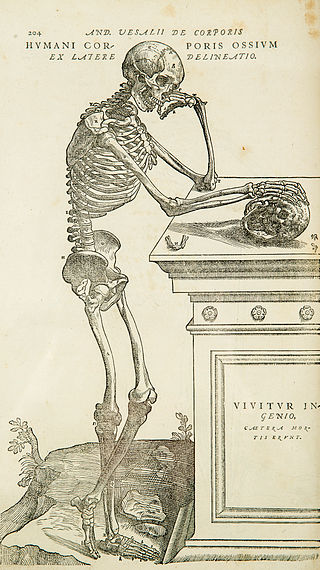
Anatomy is the branch of morphology concerned with the study of the internal structure of organisms and their parts. Anatomy is a branch of natural science that deals with the structural organization of living things. It is an old science, having its beginnings in prehistoric times. Anatomy is inherently tied to developmental biology, embryology, comparative anatomy, evolutionary biology, and phylogeny, as these are the processes by which anatomy is generated, both over immediate and long-term timescales. Anatomy and physiology, which study the structure and function of organisms and their parts respectively, make a natural pair of related disciplines, and are often studied together. Human anatomy is one of the essential basic sciences that are applied in medicine, and is often studied alongside physiology.
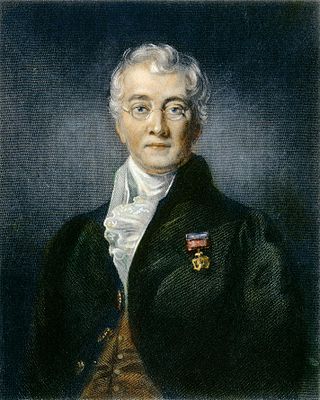
Sir Charles Bell was a Scottish surgeon, anatomist, physiologist, neurologist, artist, and philosophical theologian. He is noted for discovering the difference between sensory nerves and motor nerves in the spinal cord. He is also noted for describing Bell's palsy.

Henry Gray was a British anatomist and surgeon most notable for publishing the book Gray's Anatomy. He was elected a Fellow of the Royal Society (FRS) at the age of 25.
Professor Christopher Richard James Woodhouse, 6th Baron Terrington, is a British peer and Emeritus Professor of Adolescent Urology, University College London.
John Russell Napier, MRCS, LRCP, D.Sc. was a British primatologist, paleoanthropologist, and physician, who is notable for his work with Homo habilis and OH 7, as well as on human and primate hands/feet. During his life he was widely considered a leading authority on primate taxonomy, but is perhaps most famous to the general public for his research on Bigfoot.
Lall Ramnath Sawh CMT, FRCS (Edin), FACS is a Trinidadian urologist in the Caribbean and Latin America. Based in Trinidad and Tobago, Sawh was a pioneer of kidney transplantation in the Caribbean in 1988 and is a recognized leader in the field of urology.

Thomas Wharton Jones was a ophthalmologist and physiologist of the 19th century.

Richard Quain was an English anatomist and surgeon, born at Fermoy, Ireland, a brother of Jones Quain. He studied medicine in London and in Paris. He was appointed demonstrator in 1828 and professor of anatomy in 1832 at the University of London, resigning in 1850, and assistant surgeon in 1834 and surgeon in 1848 to the North London Hospital, from which he resigned in 1866. He was president of the Royal College of Surgeons in 1868.

Professor Harold Ellis CBE, Mch, FRCS is an English retired surgeon. He was Emeritus Professor of Surgery in the University of London and most recently a professor in the Department of Anatomy & Human Sciences at the King's College London School of Medicine. He qualified as a doctor from the University of Oxford in July 1948, the same month the National Health Service began. From 1950 to 1951 he undertook national service as a captain in the Royal Army Medical Corps, afterwards continuing his training as a surgical registrar in London, Sheffield and Oxford before taking up a post as senior lecturer in the University of London. In 1962, he took up the foundation chair of surgery at the Westminster Hospital, a post which he held until his retirement from practice in 1989. After a stint teaching anatomy in the University of Cambridge, he took up his present position in 1993.

Richard Trevor Turner-Warwick was a British urologist who was internationally known for his work on the surgical restoration of the structure and function of the genitourinary tract. He introduced video-cysto-urethrography.

Roger Sinclair Kirby FRCS(Urol), FEBU is a British retired prostate surgeon and professor of urology. He is prominent as a writer on men's health and prostate disease, the founding editor of the journal Prostate Cancer and Prostatic Diseases and Trends in Urology and Men's Health and a fundraiser for prostate disease charities, best known for his use of the da Vinci surgical robot for laparoscopic prostatectomy in the treatment of prostate cancer. He is a co-founder and president of the charity The Urology Foundation (TUF), vice-president of the charity Prostate Cancer UK, trustee of the King Edward VII's Hospital, and from 2020 to 2024 was president of the Royal Society of Medicine (RSM), London.
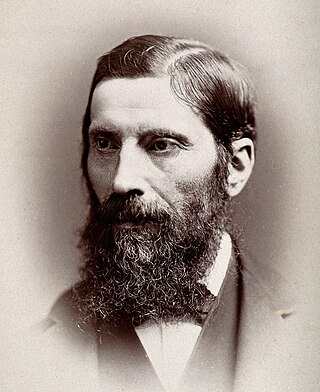
Sir George Murray Humphry, FRS was an English professor of physiology and anatomy at the University of Cambridge, surgeon, gerontologist and medical writer.

Sir Hugh Lett, 1st Baronet, was a British surgeon with a special interest in urology and headed the London Hospital's genito-urinary department for many years.

James Macartney was an Irish anatomist. He began life as an Irish volunteer in 1780, and was afterwards educated at the endowed classical school at Armagh, and then at a private school. He was associated for a time with the Sheares brothers and Lord Edward Fitzgerald, the United Irishmen but, being dissatisfied with their programme, he cut himself adrift and began to study medicine.

John Syer Bristowe (1827–1895) was an English physician.
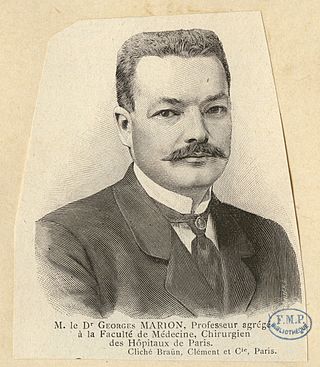
Georges Marion was a French surgeon and urologist.
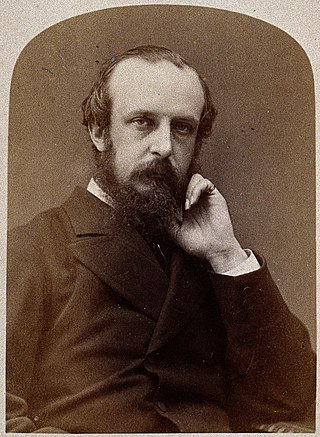
Christopher Heath FRCS was an English anatomist and general surgeon

John M. Fitzpatrick was an Irish urologist, emeritus professor of surgery at the University College Dublin School of Medicine & Medical Science and Head of Research at the Irish Cancer Society.
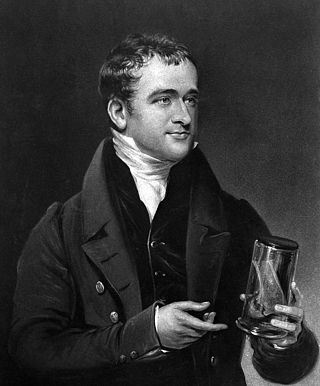
Herbert Mayo, M.D., was a British physiologist, anatomist and medical writer.
Extramural medical education in Edinburgh began over 200 years before the university medical faculty was founded in 1726 and extramural teaching continued thereafter for a further 200 years. Extramural is academic education which is conducted outside a university. In the early 16th century it was under the auspices of the Incorporation of Surgeons of Edinburgh (RCSEd) and continued after the Faculty of Medicine was established by the University of Edinburgh in 1726. Throughout the late 18th and 19th centuries the demand for extramural medical teaching increased as Edinburgh's reputation as a centre for medical education grew. Instruction was carried out by individual teachers, by groups of teachers and, by the end of the 19th century, by private medical schools in the city. Together these comprised the Edinburgh Extramural School of Medicine. From 1896 many of the schools were incorporated into the Medical School of the Royal Colleges of Edinburgh under the aegis of the RCSEd and the Royal College of Physicians of Edinburgh (RCPE) and based at Surgeons' Hall. Extramural undergraduate medical education in Edinburgh stopped in 1948 with the closure of the Royal Colleges' Medical School following the Goodenough Report which recommended that all undergraduate medical education in the UK should be carried out by universities.

