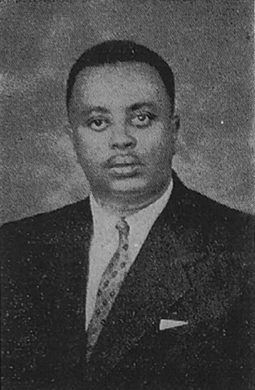
Prince Louis Rwagasore was a Burundian prince and politician, who was the second prime minister of Burundi for two weeks, from 28 September 1961 until his assassination on 13 October.

Kirundi, also known as Rundi, is a Bantu language and the national language of Burundi. It is a dialect of Rwanda-Rundi dialect continuum that is also spoken in Rwanda and adjacent parts of Tanzania, the Democratic Republic of the Congo, Uganda, as well as in Kenya. Kirundi is mutually intelligible with Kinyarwanda, the national language of Rwanda, and the two form parts of the wider dialect continuum known as Rwanda-Rundi.

Sylvestre Ntibantunganya is a Burundian politician. He was President of the National Assembly of Burundi from 23 December 1993 to 30 September 1994, and President of Burundi from 6 April 1994 to 25 July 1996.
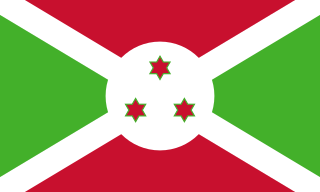
The culture of Burundi is based on local tradition and common influence with its neighbors.
Alexis Sinduhije is a Burundian journalist and politician. After founding Radio Publique Africaine during the Burundi Civil War, Sinduhije received a CPJ International Press Freedom Award and was named to the Time 100 list of most influential people. In 2007, he left journalism to run for president, but was arrested in 2008 on a charge of "insulting the president," Pierre Nkurunziza, drawing protests on his behalf from the U.S., U.K., and Amnesty International. He was found not guilty and released in 2009. The film "Kamenge, Northern Quarters" follows Sinduhije before, during, and after his incarceration.

Education is compulsory in Burundi for the six years between the ages of seven and 13. Theoretically, primary education is free at point of use.
Joseph Cimpaye was a Burundian politician and writer who served as the first prime minister of Burundi for a brief term in 1961 and is considered to have written the first Burundian novel.
Burundi, officially the Republic of Burundi, is a landlocked country in the Great Rift Valley at the junction between the African Great Lakes region and Southeast Africa, with population of over 14 million people. It is bordered by Rwanda to the north, Tanzania to the east and southeast, and the Democratic Republic of the Congo to the west; Lake Tanganyika lies along its southwestern border. The capital city is Gitega and the largest city is Bujumbura.
Jean-Claude Kavumbagu is a Burundian Internet journalist who has been arrested on multiple occasions for issues related to his reporting. In 2011, he was charged with treason in a high-profile trial and named a prisoner of conscience by Amnesty International.

The commune of Buyenzi is a historic commune (District) of Bujumbura Mairie Province in western Burundi. The district is known for its Swahili heritage and influence not just in Bujumbura but Burundi as a whole. Buyenzi communie is laid on a grid plan and has 25 horizontal numbered streets.

On 13 May 2015, army general Godefroid Niyombare said that he was "dismissing President Pierre Nkurunziza" following the 2015 Burundian unrest. However, the presidency tweeted that the "situation is under control" and there is "no coup".
Hafsa Mossi was a Burundian politician, journalist, and member of President Pierre Nkurunziza's ruling CNDD–FDD political party. Mossi served as Minister of Information, Communications and Government Spokesperson from 2005 to 2007, as well as Minister of Regional Integration from 2009 to 2011, in Nkurunziza's Council of Ministers. She then served as a member of the East African Legislative Assembly (EALA), representing Burundi, from 12 June 2012 until her assassination in 2016. Her current term in the EALA would have expired in 2017.

Baho! is a novel by Roland Rugero published in France in 2012, and translated into English by Christopher Schaefer in 2015. It is the first Burundian novel to be translated into English. The story is set in the fictional village of Hariho, following a young mute boy named Nyamuragi. When his attempts to find a bathroom are misunderstood as sexual advances, Nyamuragi finds himself voiceless due both to his disability and the hasty persecution of his wrongful convictions.

The Ikiza, or the Ubwicanyi (Killings), was a series of mass killings—often characterised as a genocide—which were committed in Burundi in 1972 by the Tutsi-dominated army and government, primarily against educated and elite Hutus who lived in the country. Conservative estimates place the death toll of the event between 100,000 and 150,000 killed, while some estimates of the death toll go as high as 300,000.
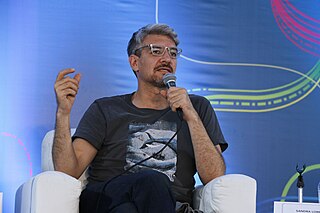
Emiliano Monge is a Mexican short story writer and novelist. Three of his novels, The Arid Sky, Among the Lost and What goes unsaid have been translated into English.
Marie-Louise Sibazuri is a Burundian women's rights activist and teacher who has devoted her time to writing since 1993. In addition to becoming a prolific playwright, she is widely known as the author of the popular radio series Umumbanyi Niwe Muryango, a soap opera which sets out to improve relations between Tutsis and Hutus following the conflicts of the mid-1990s. After spending several years in Belgium where she was active in the theatre, she has now moved to Australia with her second husband, Hilaire Bucumi. She is currently writing collections of Burundian folk tales.

Alain-Guillaume Bunyoni is a Burundian politician who was Prime Minister of Burundi from 23 June 2020 to 7 September 2022. Before that, from 2015 until 2020, he served as Minister of Internal Security in the Cabinet of Burundi.
Gilles Bimazubute was a Burundian politician.
Gervais Ndirakobuca is a Burundian politician, former police officer and rebel commander serving as the Prime Minister of Burundi since 7 September 2022. Prior to that, he was the Minister of Interior, Public Security, and Community Development. He is known for his violent crackdown of the 2015 civil protest in Burundi and was under United States and European Union sanctions for human rights violations when President Évariste Ndayishimiye appointed him security minister.
Pierre-Claver Nuwinkware was a Burundian politician.

