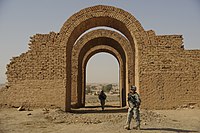
At the height of its power, in the 10th century AD, the dioceses of the Church of the East numbered well over a hundred and stretched from Egypt to China. These dioceses were organised into six interior provinces in Mesopotamia, in the Church's Iraqi heartland, and a dozen or more second-rank exterior provinces. Most of the exterior provinces were located in Iran, Central Asia, India and China, testifying to the Church's remarkable eastern expansion in the Middle Ages. A number of East Syriac dioceses were also established in the towns of the eastern Mediterranean, in Palestine, Syria, Cilicia and Egypt.
Dioceses of the Church of the East, 1318–1552 were metropolitan provinces and dioceses of the Church of the East, during the period from 1318 to 1552. They were far fewer in number than during the period of the Church's greatest expansion in the tenth century. Between 1318 and 1552, the geographical horizons of the Church of the East, which had once stretched from Egypt to China, narrowed drastically. By 1552, with the exception of a number of East Syriac communities in India, the eccesiastical jurisdiction of the Church of the East was confined to its original heartland in northern Mesopotamia.
The Metropolitanate of Maishan or Maysan was an East Syriac metropolitan province of the Church of the East between the fifth and thirteenth centuries. The historical region of Maishan or Maysan is situated in southern Iraq and Kuwait. The metropolitans of Maishan sat at Prath d'Maishan, and for most of its history the province had three suffragan dioceses, at Karka d'Maishan, Rima and Nahargur. The last metropolitan of Maishan, the noted East Syriac author Shlemun (Solomon) of Basra, is attested in 1222, and it is not clear when the province ceased to exist.

Metropolitanate of Beth Garmai was an East Syriac metropolitan province of the Church of the East between the fifth and fourteenth centuries. The region of Beth Garmai is situated in northern Iraq, bounded by the Little Zab and Diyala Rivers and centered on the town of Karka d'Beth Slokh. Several bishops and metropolitans of Beth Garmaï are mentioned between the fourth and fourteenth centuries, residing first at Shahrgard, then at Karka d'Beth Slokh, later at Shahrzur and finally at Daquqa. The known suffragan dioceses of the metropolitan province of Beth Garmaï included Shahrgard, Lashom (ܠܫܘܡ), Khanijar, Mahoze d'Arewan, Radani, Hrbath Glal (ܚܪܒܬܓܠܠ), Tahal and Shahrzur. The suffragan dioceses of 'Darabad' and 'al-Qabba', mentioned respectively by Eliya of Damascus and Mari, are probably to be identified with one or more of these known dioceses. The diocese of Gawkaï, attested in the eighth and ninth centuries, may also have been a suffragan diocese of the province of Beth Garmaï. The last known metropolitan of Beth Garmaï is attested in the thirteenth century, and the last known bishop in 1318, though the historian ʿAmr continued to describe Beth Garmai as a metropolitan province as late as 1348. It is not clear when the province ceased to exist, but the campaigns of Timur Leng between 1390 and 1405 offer a reasonable context.

The Patriarchal Province of Seleucia-Ctesiphon was an ecclesiastical province of the Church of the East, with see in Seleucia-Ctesiphon. It was attested between the fifth and thirteenth centuries. As its name entails, it was the province of the church's Patriarch. The province consisted of a number of dioceses in the region of Beth Aramaye, between Basra and Kirkuk, which were placed under the patriarch's direct supervision at the synod of Yahballaha I in 420.
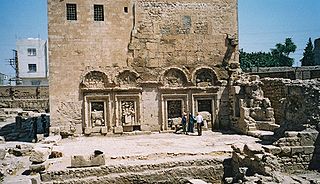
The Metropolitanate of Nisibis was an East Syriac metropolitan province of the Church of the East, between the fifth and seventeenth centuries. The ecclesiastical province of Nisibis had a number of suffragan dioceses at different periods in its history, including Arzun, Beth Rahimaï, Beth Qardu, Beth Zabdaï, Qube d’Arzun, Balad, Shigar (Sinjar), Armenia, Beth Tabyathe and the Kartawaye, Harran and Callinicus (Raqqa), Maiperqat, Reshʿaïna, Qarta and Adarma, Qaimar and Hesna d'Kifa. Aoustan d'Arzun and Beth Moksaye were also suffragan dioceses in the fifth century.
Metropolitanate of Beth Huzaye ܒܝܬ ܗܘܙܝܐ was an East Syriac metropolitan province of the Church of the East, between the fifth and fourteenth centuries. The metropolitans of Beth Huzaye sat at Beth Lapat (Jundishapur). The metropolitan province of Beth Huzaye had a number of suffragan dioceses at different periods in its history, including Karka d’Ledan, Hormizd Ardashir, Shushter, Susa, Ispahan, Mihraganqadaq and Ram Hormizd. The diocese of Shahpur Khwast may also have been a suffragan diocese of the province of Beth Huzaye.
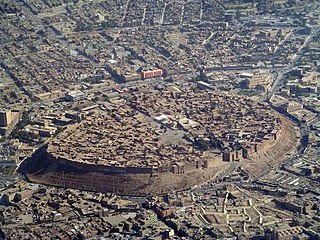
Metropolitanate of Adiabene was an East Syriac metropolitan province of the Church of the East between the 5th and 14th centuries, with more than fifteen known suffragan dioceses at different periods in its history. Although the name Hadyab normally connoted the region around Erbil and Mosul in present-day Iraq, the boundaries of the East Syriac metropolitan province went well beyond the Erbil and Mosul districts. Its known suffragan dioceses included Beth Bgash and Adarbaigan, well to the east of Adiabene proper.
Metropolitanate of Hulwan was an East Syriac metropolitan province of the Church of the East between the eighth and twelfth centuries, with suffragan dioceses for Dinawar, Hamadan, Nihawand and al-Kuj. The city of Hulwan was one of the chief towns in the western Iranian province of Media. Metropolitanate of Hulwan was ranked among the 'exterior provinces', so called to distinguish them from the province of the patriarch and the five core Mesopotamian 'interior' provinces.
The Metropolitanate of Merv was an East Syriac metropolitan province of the Church of the East, between the fifth and eleventh centuries, with several known suffragan dioceses.
The Metropolitanate of Rai was an East Syriac metropolitan province of the Church of the East, between the eighth and twelfth centuries. The province of Rai had a suffragan diocese for Gurgan.

Dioceses of the Syriac Orthodox Church: In the period of its greatest expansion, in the tenth century, the Syriac Orthodox Church had around 20 metropolitan dioceses and a little over a hundred suffragan dioceses. By the seventeenth century only 20 dioceses remained, reduced in the twentieth century to 10. The seat of Syriac Orthodox Patriarch was at Mardin before the First World War, and thereafter in Deir Zaʿfaran, from 1932 in Homs, and finally from 1959 in Damascus.
DINAmadiya was a separate eparchy (diocese) of the Chaldean Catholic Church until it was united with the Chaldean Catholic Eparchy of Zakho in 2013.
The Chaldean Catholic Archeparchy of Kirkuk is an archeparchy of the Chaldean Catholic Church in communion with the Pope in Rome. The archdeparchy was created in the early years of the nineteenth century. Its present ordinary, Archbishop Yousif Thomas Mirkis, was consecrated in 2014.
The Diocese of Tirhan was an East Syriac diocese of the Church of the East, within the central ecclesiastical Province of the Patriarch. The diocese is attested between the sixth and fourteenth centuries.

The Diocese of Marga was an East Syriac diocese of the Church of the East. The diocese was included in the metropolitan province of Adiabene, and is attested between the eighth and fourteenth centuries. Towards the end of the thirteenth century the name of the diocese was changed to 'Tella and Barbelli'.
Diocese of Kashkar, sometimes called Kaskar, was the senior diocese in the Church of the East's Province of the Patriarch. It see was in the city of Kashkar. The diocese is attested between the fourth and the twelfth centuries. The bishops of Kashkar had the privilege of guarding the patriarchal throne during the interregnum between the death of a patriarch and the appointment of his successor. As a result, they are often mentioned by name in the standard histories of the Nestorian patriarchs, so that a relatively full list of the bishops of the diocese has survived.
Timothy II was Patriarch of the Church of the East from 1318 to ca. 1332. He became leader of the church at a time of profound external stress due to loss of favor with the Mongol rulers of Persia.
The Diocese of Salakh was an East Syriac diocese of the Church of the East in the metropolitan province of Adiabene, attested in the eighth and ninth centuries.
Diocese of Armenia was an East Syriac diocese of the Church of the East between the fifth and fourteenth centuries. The diocese served members of the Church of the East in Armenia, and its bishops sat at Halat. The diocese is last mentioned in 1281, and probably lapsed in the fourteenth century during the disorders that attended the fragmentation of the Mongol empire.