Berwari was an East Syriac diocese of the Church of the East between the sixteenth and twentieth centuries.
The East Syriac Rite or East Syrian Rite, also called Assyrian Rite, Persian Rite, Chaldean Rite, or Syro-Oriental Rite is an Eastern Christian liturgical rite that uses the East Syriac dialect as its liturgical language. It is one of two main liturgical rites of Syriac Christianity.
The Church of the East, also known as the Nestorian Church and the Persian Church, was an Eastern Christian denomination that in 410 organised itself within the Sasanian Empire and in 424 declared its leader independent of other Christian leaders. From the Persian Empire it spread to other parts of Asia in late antiquity and the Middle Ages.
Before the fourteenth century the Berwari region, sometimes called Julmar (probably after the town of Julamerk) or Beth Tannura (the name of a large Jewish village in the Beduh valley) in Syriac colophons, was part of the diocese of Dasen. Nothing is known of the region's history in the fourteenth and fifteenth centuries, but a diocese of Berwari is mentioned in a manuscript of 1514 by the scribe Sabrishoʿ bar Galalin, 'brother of the bishop Yahballaha of Julmar'. A manuscript of 1575 contains several poems composed at an unknown date by the metropolitan Sabrishoʿ of Berwari.
After the schism of 1552 the region appears to have been contested by the Eliya and Shimun lines for several decades. Manuscripts were copied at Alqosh in 1562 and in the Berwari monastery of Mar Qayyoma in 1602 by bishop Yahballaha of the Pinyanish village of Azyanish which mention the patriarchs Eliya VII and Eliya VIII respectively. Bishop Yahballaha of Beth Tannura, also dependent on the patriarch Eliya VIII and almost certainly the same man, is mentioned in the report of 1607. On the other hand, a metropolitan Sabrishoʿ 'of Julmar' is also mentioned in the report of 1607, almost certainly to be identified with the metropolitan Sabrishoʿ of Berwari listed among the hierarchy of Shemʿon X in the report of 1610.
The Schism of 1552 was an important event in the history of the Church of the East. It divided the church into two factions, of which one entered into communion with Rome becoming part of the Catholic Church at this time and the other remained independent until the 19th century. Although the Eliya line, which emerged as a result of this schism, did eventually enter into communion with Rome, various Spiritual Christian sects with their origins in the Church of the East emerged as a result of this schism. Ironically, the Shimon line whose entry into full communion with Rome caused this schism, in fact became independent again by the 17th century. The circumstances of the 1552 schism were controversial at the time and have been disputed ever since.
Alqōsh, alternatively spelled Alkosh, Al-qosh or Alqush, is an Assyrian town in northern Iraq and is within Nineveh Plains. It is located 50 kilometres (31 mi) north of Mosul.
Eliya VII was Patriarch of the Church of the East from 1558 to 1591, with residence in Rabban Hormizd Monastery, near Alqosh, in modern Iraq.
There are no further references to bishops of Berwari for more than a century, but the region was claimed by Mar Shimon XI Ishoʿyahb in 1653. In 1731 a manuscript was commissioned from Alqosh by bishop Yahballaha, Therefore, suggesting that he was possibly dependent on the Mosul patriarch Eliya XII.
The metropolitan Ishoʿyahb of 'Beth Tannura, who was dependent on the Qodshanis patriarchate, is mentioned in manuscripts dating from 1817, 1829 and 1831. Considering those dates, He was probably the "elderly metropolitan Ishoʿyahb of Berwari" mentioned by British missionaries Ainsworth in 1841 and Badger in 1850.
William Francis Ainsworth was an English surgeon, traveller, geographer and geologist, known also as a writer and editor.
George Percy Badger (1815–1888) was an English Anglican missionary, and a scholar of oriental studies. He is mainly known for his doctrinal and historical studies about the Church of the East.
Ishoʿyahb, already elderly in 1850, probably died shortly afterwards. By 1868 Berwari had three bishops: Ishoʿyahb's young natar kursyas Yahballaha and Ishoʿyahb, who had been jointly consecrated after his death and resided together in the same house at Dure, and a bishop named Yonan, who resided in the village of ʿAqri. A petition in 1868 to the Archbishop of Canterbury was signed by Yonan 'of ʿAqri' and Ishoʿyahb 'of Dure', and all three men were mentioned by the Anglican missionary Edward Cutts in 1877. Yahballaha died before 1884, but Ishoʿyahb and Yonan are included in Maclean's hierarchy in 1884, and Riley's in 1888. Yonan is last mentioned in 1903 as a Catholic sympathiser by Rhétoré. Ishoʿyahb converted to Chaldean Catholicism on 31 March 1903 in a public ceremony in ʿAmadiya, but reverted to Nestorianism shortly afterwards. In 1907 he was deposed by Shimun XXI Benyamin, who consecrated the eighteen-year-old Yalda Yahballaha as bishop of Berwari in his place. The consecration of a 'boy of slight education' offended the Anglican Mission, which was trying to persuade the young patriarch to reform the clergy and episcopate, but it did not protest. Yalda Yahballaha was one of the few surviving members of the Qudshanis hierarchy after the First World War, and remained bishop of Berwari until his death in 1950.
Dooreh is an Assyrian village in the Barwari region of Dohuk of northern Iraq. The town is very old, with its church purported to have been founded in 909 AD, although it was mostly destroyed in 1975, with a newer church being built in the 90s on its remaining foundation. The village is located on the slope of a mountain in a large valley, where the villages fields are located. The village has two churches, the one which was rebuilt in the 90s and another one, a cave church, in a gorge lying north of the village.
Amadiya is a Kurdish town and popular summer resort and Hill station along a tributary to the Great Zab in the Dahuk Governorate of Iraqi Kurdistan. The city is situated 4,600 feet (1,400 m) above sea level.
The episcopal family of Mar Yahballaha was maintained by Mar Yosip Khanisho. After Yalda's death, two nephews Andreos and Shallita aspired to the office, but neither was old enough in 1951 to be consecrated. The see remained vacant for six years; then Mar Khananisho consecrated Andreos (at age 19) as Bishop. Andreos Yahballaha served as Bishop until his death in June 1973 at the age of 35. It has been theorized that his young death was due to assassination as a result of the role he played in the Kurdish wars against the Iraqi government.
However, Andreos consecration caused division in the community as some expected Shallita to be consecrated due to his seniority. Shallita and followers did not want to become Catholic, but aspired a union between Syrians and Assyrians. Timothaus Mar Shallita Yahballaha ended up joining the Syriac Orthodox Church as a result, and was consecrated Archbishop by Patriarch Ignatius Yaqub III on October 23, 1958, in Beirut. However, He did not join the Holy Synod and still kept contact with the Patriarchate of the Assyrian Church of the East and even returned to Barwari-Bala after his consecration and stayed there until war broke out in 1963, relocating to the Patriarchate in Damascus. In 1967 he was invited to Germany by the World Council of Churches, where he has remained since. Shallita ceased his relationship with the Syrian Orthodox Church later on. In 1969 he joined the Ancient Church of the East and recognized Mar Addai II as patriarch, joining its holy synod in 1995, being appointed as Metropolitan of Europe with his see in Mainz-Kastel. He also played a prominent role in Assyrian refugee aid for well over 20 years, and advocated successfully for Assyrians looking to gain asylum in Europe.
In 1999, Mar Isaac Yousif was consecrated bishop by Mar Dinkha IV, assigning him the new Diocese of Dohuk-Arbil, which has been considered a modern revival of the diocese of Berwari.
The diocese of Berwari included twenty-seven East Syrian villages in Berwari itself and in the adjacent Sapna and Nerwa districts, containing 348 families, 18 priests and 20 churches in 1850 (Badger). In 1841, according to Ainsworth, it also included the Berwari villages of Alqoshta, Musakan, Robara and Dargeli, the Sapna villages of Meristak and Inishk (a Chaldean village shortly afterwards), and the Zibar village of Erdil. [1] Musakan, though not included in his statistics, was also mentioned as a village in the diocese of Berwari in 1843 by Badger, in which a number of villagers from the Lower Tiyari town of Ashitha had taken refuge after the massacre earlier in the year. [2]
A recently published book by Youel Baaba has supplied the Syriac names of the villages in the diocese of Berwari. [3]
East Syrian communities in the diocese of Berwari, 1850
| Name of Village | Name in Syriac | No. of Families | No. of Priests | No. of Churches | Name of Village | Name in Syriac | No. of Families | No. of Priests | No. of Churches |
|---|---|---|---|---|---|---|---|---|---|
| ʿAmadiya | ܥܡܝܕܝܐ | 25 | 1 | 0 | ʿAina d'Nune | 20 | 1 | 1 | |
| Deiri | 12 | 0 | 1 | Hayyat | 5 | 1 | 1 | ||
| Komane | ܟܘܡܢܐ | 13 | 0 | 1 | Beth Shmiyaye | 6 | 1 | 1 | |
| Dirgini | 40 | 2 | 1 | Dure | 20 | 4 | 2 | ||
| Bilejan | 8 | 0 | 0 | Helwa | ܗܠܘܐ | 7 | 1 | 1 | |
| Bebadi | 20 | 1 | 1 | Malaktha | ܡܠܐܟܬܐ | 5 | 0 | 0 | |
| Hamziyya | ܗܡܙܝܐ | 6 | 0 | 1 | ʿAqri | 20 | 1 | 1 | |
| Dehe | 10 | 0 | 1 | Beth Baloka | 10 | 1 | 1 | ||
| Tarshish | 20 | 1 | 1 | Hayyis | 15 | 1 | 1 | ||
| Jdida | 5 | 0 | 0 | Qaru | 10 | 1 | 1 | ||
| Beth Kolke | 5 | 0 | 0 | ʿAlih | 2 | 0 | 1 | ||
| Tutha Shamaya | 10 | 0 | 0 | Bash | 12 | 1 | 1 | ||
| Maya | 15 | 0 | 0 | Wila | 10 | 1 | 1 | ||
| Derishke | 15 | 0 | 0 | Total | 348 | 18 | 20 |
Mar Yohannan VIII Hormizd (1760–1838) was the last hereditary patriarch of the Eliya line of the Church of the East and the first patriarch of a united Chaldean Church. After succeeding his uncle Eliya XII Denha in 1780 as patriarch of Mosul, he made a Catholic profession of faith and was recognised in 1783 by the Vatican as patriarchal administrator and archbishop of Mosul. His career as patriarchal administrator was controversial, and was marked by a series of conflicts with his own bishops and also with the Vatican. Suspended from his functions in 1812 and again in 1818, he was reinstated by the Vatican in 1828. In 1830, following the death of the Amid patriarchal administrator Augustine Hindi, he was recognised by the Vatican as patriarch of Babylon of the Chaldeans and the Mosul and Amid patriarchates were united under his leadership. This event marked the birth of the since unbroken patriarchal line of the Chaldean Catholic Church. Yohannan Hormizd died in 1838 and his successor Nicholas I Zayʿa was chosen by the Vatican, ending the centuries-old practice of hereditary succession in the Eliya line of the Church of the East.
Dioceses of the Church of the East, 1318–1552 were metropolitan provinces and dioceses of the Church of the East, during the period from 1318 to 1552. They were far fewer in number than during the period of the Church's greatest expansion in the tenth century. Between 1318 and 1552, the geographical horizons of the Church of the East, which had once stretched from Egypt to China, narrowed drastically. By 1552, with the exception of a number of East Syriac communities in India, the eccesiastical jurisdiction of the Church of the East was confined to its original heartland in northern Mesopotamia.
Metropolitanate of Beth Garmai was an East Syriac metropolitan province of the Church of the East between the fifth and fourteenth centuries. The region of Beth Garmai is situated in northern Iraq, bounded by the Little Zab and Diyala Rivers and centered on the town of Karka d'Beth Slokh. Several bishops and metropolitans of Beth Garmaï are mentioned between the fourth and fourteenth centuries, residing first at Shahrgard, then at Karka d'Beth Slokh, later at Shahrzur and finally at Daquqa. The known suffragan dioceses of the metropolitan province of Beth Garmaï included Shahrgard, Lashom (ܠܫܘܡ), Khanijar, Mahoze d'Arewan, Radani, Hrbath Glal (ܚܪܒܬܓܠܠ), Tahal and Shahrzur. The suffragan dioceses of 'Darabad' and 'al-Qabba', mentioned respectively by Eliya of Damascus and Mari, are probably to be identified with one or more of these known dioceses. The diocese of Gawkaï, attested in the eighth and ninth centuries, may also have been a suffragan diocese of the province of Beth Garmaï. The last known metropolitan of Beth Garmaï is attested in the thirteenth century, and the last known bishop in 1318, though the historian ʿAmr continued to describe Beth Garmai as a metropolitan province as late as 1348. It is not clear when the province ceased to exist, but the campaigns of Timur Leng between 1390 and 1405 offer a reasonable context.
The Patriarchal Province of Seleucia-Ctesiphon was an ecclesiastical province of the Church of the East, with see in Seleucia-Ctesiphon. It was attested between the fifth and thirteenth centuries. As its name entails, it was the province of the church's Patriarch. The province consisted of a number of dioceses in the region of Beth Aramaye, between Basra and Kirkuk, which were placed under the patriarch's direct supervision at the synod of Yahballaha I in 420.
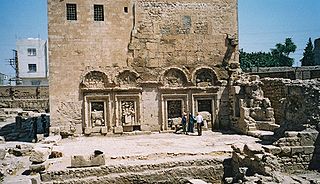
The Metropolitanate of Nisibis was an East Syriac metropolitan province of the Church of the East, between the fifth and seventeenth centuries. The ecclesiastical province of Nisibis had a number of suffragan dioceses at different periods in its history, including Arzun, Beth Rahimaï, Beth Qardu, Beth Zabdaï, Qube d’Arzun, Balad, Shigar (Sinjar), Armenia, Beth Tabyathe and the Kartawaye, Harran and Callinicus (Raqqa), Maiperqat, Reshʿaïna, Qarta and Adarma, Qaimar and Hesna d'Kifa. Aoustan d'Arzun and Beth Moksaye were also suffragan dioceses in the fifth century.
Metropolitanate of Beth Huzaye ܒܝܬ ܗܘܙܝܐ was an East Syriac metropolitan province of the Church of the East, between the fifth and fourteenth centuries. The metropolitans of Beth Huzaye sat at Beth Lapat (Jundishapur). The metropolitan province of Beth Huzaye had a number of suffragan dioceses at different periods in its history, including Karka d’Ledan, Hormizd Ardashir, Shushter, Susa, Ispahan, Mihraganqadaq and Ram Hormizd. The diocese of Shahpur Khwast may also have been a suffragan diocese of the province of Beth Huzaye.
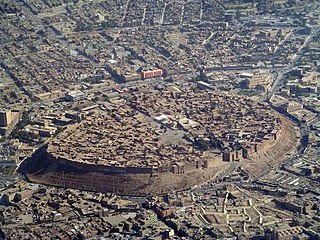
Metropolitanate of Adiabene was an East Syriac metropolitan province of the Church of the East between the 5th and 14th centuries, with more than fifteen known suffragan dioceses at different periods in its history. Although the name Hadyab normally connoted the region around Erbil and Mosul in present-day Iraq, the boundaries of the East Syriac metropolitan province went well beyond the Erbil and Mosul districts. Its known suffragan dioceses included Beth Bgash and Adarbaigan, well to the east of Adiabene proper.
For much of the nineteenth and twentieth centuries the district of Salmas in northwest Iran was an archdiocese of the Chaldean Catholic Church, now apart of the Chaldean Catholic Archeparchy of Urmyā.
The Metropolitanate of Shemsdin, created after the 1552 schism in the Church of the East, was the second most important ecclesiastical province of the Qudshanis patriarchate after the province of the patriarch himself. The metropolitans or mutrans of Shemsdin traditionally took the name Hnanishoʿ and lived in the Shemsdin village of Mar Ishoʿin the sub-district of Rustaqa. There were around twelve metropolitans of Shemsdin between the sixteenth and twentieth centuries, most of whom were chosen by hereditary succession. The last metropolitan of Shemsdin, Mar Yosip Khnanisho died in Iraq in 1977, and the office of mutran lapsed on his death.
After the schism of 1552 of the Church of the East, the secessions the Chaldean Catholic Church and the Assyrian Church of the East each had around twelve dioceses each by the end of the 19th century.
DINAmadiya was a separate eparchy (diocese) of the Chaldean Catholic Church until it was united with the Chaldean Catholic Eparchy of Zakho in 2013.
Aqra, properly ʿAqra, is a diocese of the Chaldean Church founded in the mid-19th century.
Seert was a diocese of the Chaldean Church during the eighteenth, nineteenth and early-twentieth centuries. The diocese was ruined during the First World War.
Mardin was a diocese of the Chaldean Church from the sixteenth to the twentieth century. The diocese lapsed in 1941. Prior to this, it was a diocese of the Assyrian Church of the East, from which the Chaldean Catholic Church originated.
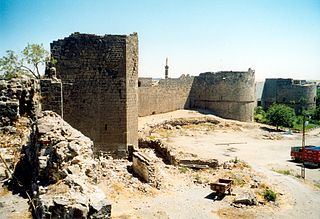
The Diocese of Amid (Diyarbakir) was a diocese or archdiocese of the Chaldean Church from the sixteenth to the twentieth century. From at least the 13th century the city of Amid had been part of the Diocese of Maiperqat of the Church of the East; following the schism of 1552 it became the seat of its own diocese in the Chaldean Church.
The Chaldean diocese of Gazarta, named for the town of Jezira, known in Syriac as Gazarta d'Beth Zabdai, was established on a stable basis in the early nineteenth century. Many of the Assyrians of the Gazarta region, including the bishop of Gazarta Pilipus Yaqub Orahim, were killed during the Assyrian Genocide during 1914-1918, and the diocese lapsed after the First World War.
Conventional lists of Patriarchs of the Church of the East include around 130 patriarchs. A number of these patriarchs are legendary, or invented, or have been included in the standard lists on dubious evidence. This article sets out the historical evidence for the patriarchal succession in the Church of the East and its successor churches, the Assyrian Church of the East, the Chaldean Catholic Church, and the Ancient Church of the East.
Metropolitanate of India was an East Syriac ecclesiastical province of the Church of the East, from the seventh to the sixteenth century. The Malabar Coast of India had long been home to a thriving Eastern Christian community, known as the St. Thomas Christians. The community traces its origins to the evangelical activity of Thomas the Apostle in the 1st century. The Christian communities in India were using East Syriac Rite, the traditional liturgical rite of the Church of the East. They also adopted some aspects of Nestorianism, in accordance with theology of the Church of the East. Initially, they belonged to the metropolitan province of Fars, but were detached from that province in the 7th century, and again in the 8th, and given their own metropolitan bishop.