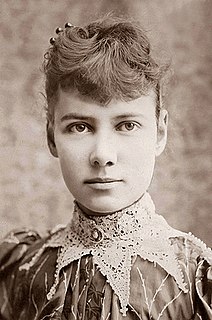
Elizabeth Cochrane Seaman, better known by her pen name Nellie Bly, was an American journalist, industrialist, inventor, and charity worker who was widely known for her record-breaking trip around the world in 72 days, in emulation of Jules Verne's fictional character Phileas Fogg, and an exposé in which she worked undercover to report on a mental institution from within. She was a pioneer in her field and launched a new kind of investigative journalism.

HM Prison Pentonville is an English Category B men's prison, operated by Her Majesty's Prison Service. Pentonville Prison is not in Pentonville, but is located further north, on the Caledonian Road in the Barnsbury area of the London Borough of Islington, north London. In 2015 the justice secretary, Michael Gove, described Pentonville as "the most dramatic example of failure" within the prisons estate.
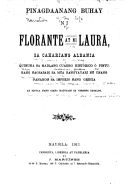
Florante at Laura is an 1838 awit written by Tagalog poet Francisco Balagtas. It is considered one of the masterpieces of Philippine literature. Balagtas wrote the epic during his imprisonment. He dedicated it to his former sweetheart María Asuncion Rivera, whom he nicknamed "M.A.R." and is referenced to as "Selya" in the dedication "Kay Selya".
Schapelle Leigh Corby is an Australian woman who was convicted of smuggling cannabis into Indonesia. She spent nine years imprisoned on the Indonesian island of Bali in Kerobokan Prison. Since her arrest Corby has publicly maintained that the drugs were planted in her bodyboard bag and that she did not know about them. Her trial and conviction were a major focus of attention for the Australian media.

Lozen was a warrior and prophet of the Chihenne Chiricahua Apache. She was the sister of Victorio, a prominent chief. Born into the Chihenne band during the 1840s, Lozen was, according to legends, able to use her powers in battle to learn the movements of the enemy. According to James Kaywaykla, Victorio introduced her to Nana, "Lozen is my right hand ... strong as a man, braver than most, and cunning in strategy. Lozen is a shield to her people".

Shoshana Nyree Johnson is a Panamanian-born former United States soldier, and the first black female prisoner of war in the military history of the United States. Johnson was a Specialist of the U.S. Army 507th Maintenance Company, 5/52 ADA BN, 11th ADA Brigade. During the Battle of Nasiriyah, she suffered bullet wounds to both of her ankles and was captured by Iraqi forces. She was held prisoner in Iraq for 22 days along with five other members of her unit. She was freed in a rescue mission conducted by United States Marine Corps units on April 13, 2003.
A contact high is a psychological phenomenon that occurs in otherwise sober people and animals who come into contact with someone who is under the influence of recreational drugs. It involves a supposed transfer of the physiological state of intoxication. A glossary of drug users' language from the 1970s describes the term as "a psychogenic 'trip' without taking drugs by being close to somebody while he or she is on drugs. The term is often incorrectly used to describe the high obtained by inhaling the smoke of other marijuana smokers."

She Shoulda Said No! is a 1949 exploitation film that follows in the spirit of morality tales such as the 1936 films Reefer Madness and Marihuana. Directed by Sam Newfield and starring Lila Leeds, it was originally produced to capitalize on the arrest of Leeds and Robert Mitchum on a charge of marijuana conspiracy.

The Council House Fight, often referred to as the Council House Massacre, was a decidedly lopsided fight between soldiers and officials of the Republic of Texas and a delegation of Comanche chiefs during a peace conference in San Antonio on March 19, 1840. The meeting took place under an observed truce with the purpose of negotiating the exchange of captives and ultimately facilitating peace after two years of war. The Comanches sought to obtain recognition of the boundaries of the Comancheria, their homeland, while the Texians wanted the release of Texian and Mexican citizens held prisoner by the Comanches.

Around the World in Seventy-Two Days is an 1890 book by journalist Elizabeth Jane Cochrane, writing under her pseudonym, Nellie Bly. The chronicle details her 72-day trip around the world, which was inspired by the 1873 book Around the World in Eighty Days by Jules Verne. She carried out the journey for Joseph Pulitzer's tabloid newspaper, the New York World.

Banged Up Abroad is a British documentary/docudrama television series created by Bart Layton that was produced for Channel 5 and that premiered in March 2006. Most episodes feature stories of people who have been arrested while travelling abroad, usually for trying to smuggle illegal drugs, although some episodes feature people who were either kidnapped or captured while they were either travelling or living in other countries. Some episodes have featured real-life stories that first became well known when they were made the subject of a film: films that have been 're-made' in this way include Midnight Express, Goodfellas, The Devil's Double, Argo, Mr Nice and, to a lesser extent, Casino.

Ten Days in a Mad-House is a book by American journalist Nellie Bly. It was initially published as a series of articles for the New York World; Bly later compiled the articles into a book, being published by Ian L. Munro in New York City in 1887.
Magdalena Solís, known as The High Priestess of Blood, was a Mexican serial killer and cult leader responsible for orchestrating several murders which involved the drinking of the victims' blood. The murders were committed in Yerba Buena, San Luis Potosí, a small community located near Monterrey, Nuevo León, during the early 1960s.

The Black Hole of Calcutta was a dungeon in Fort William, Calcutta, measuring 4.30 × 5.50 metres, in which troops of Siraj ud-Daulah, the Nawab of Bengal, held British prisoners of war on the night of 20 June 1756. John Zephaniah Holwell, one of the British prisoners and an employee of the East India Company, said that, after the fall of Fort William, the surviving British soldiers, Indian sepoys, and Indian civilians were imprisoned overnight in conditions so cramped that many people died from suffocation and heat exhaustion, and that 120 of 146 prisoners of war imprisoned there died. Modern historians believe that 64 prisoners were sent into the Hole, and that 43 died there.
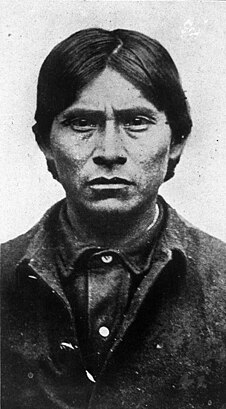
Haskay-bay-nay-ntayl, better known as the Apache Kid, was born in Aravaipa Canyon into one of the three local groups of the Aravaipa/Arivaipa Apache Band of San Carlos Apache, one subgroup of the Western Apache people. As a member of what the U.S. government called the "SI band", Kid developed important skills, became a famous and respected scout and later a notorious renegade active in the borderlands of the U.S. states of Arizona and New Mexico in the late 19th and possibly the early 20th centuries.
NellieFrancisca Ernestina Campobello Luna was a Mexican writer, notable for having written one of the few chronicles of the Mexican Revolution from a woman's perspective. Cartucho chronicles her experience as a young girl in Northern Mexico at the height of the struggle between forces loyal to Pancho Villa and those who followed Venustiano Carranza. She moved to Mexico City in 1923, where she spent the rest of her life and associated with many of the most famous Mexican intellectuals and artists of the epoch. Like her half-sister Gloria, a well-known ballet dancer, she was also known as a dancer and choreographer. She was the director of the Mexican National School of Dance.

Elizabeth Bisland Wetmore was an American journalist and author, perhaps now best known for her 1889–1890 race around the world against Nellie Bly, which drew worldwide attention. The majority of her writings were literary works. She published all of her works as Elizabeth Bisland.
People v. Turner, formally The People of the State of California v. Brock Allen Turner (2015), is a criminal case in which Brock Allen Turner was convicted by jury trial of three counts of felony sexual assault.
Ellen "Nelly" or "Nellie" Crocker (1872–1962) was a British suffragette, and a cousin of Emmeline Pethick-Lawrence.

The Girl Puzzle Monument honoring activist and journalist Elizabeth Cochrane Seaman, pen name Nellie Bly (1864-1922), is a public sculptural installation by American artist Amanda Matthews, CEO/Partner of Prometheus Art Bronze Foundry and Metal Fabrication. The installation will be located on the northern tip of Roosevelt Island in Lighthouse Park in the New York City borough of Manhattan. The location is significant because of its proximity to the remains of the old Blackwell Island Asylum - The Octagon is the last remnant of the original building where Nellie Bly went undercover as a patient while working as a reporter at the New York World. Nellie Bly wrote of the mistreatment of patients at the asylum in a series of articles and then in 1887 had them compiled into a book, Ten Days in a Mad-House.


