
A zamindar in the Indian subcontinent was an autonomous or semi-autonomous feudal ruler of a zamindari. The term itself came into use during the reign of Mughals, and later the British began using it as a native synonym for "estate". The term means landowner in Persian. They were typically hereditary and held the right to collect tax on behalf of imperial courts or for military purposes.

The Adivasi are heterogeneous tribal groups across the Indian subcontinent. The term is a Sanskrit word coined in the 1930s by political activists to give the tribal people an indigenous identity by claiming an indigenous origin. The Constitution of India does not use the word Adivasi, instead referring to Scheduled Tribes and Janjati. The government of India does not officially recognise tribes as indigenous people. The country ratified the International Labour Organization (ILO) Convention 107 on Indigenous and Tribal Peoples of the United Nations (1957) and refused to sign the ILO Convention 169. Most of these groups are included in the Scheduled Tribe category under constitutional provisions in India.

Dalit is a term first coined by the Indian social reformer Jyotirao Phule for untouchables and outcasts, who represented the lowest stratum of the castes in the Indian subcontinent. Dalits were excluded from the fourfold varna of the caste hierarchy and were seen as forming a fifth varna, also known by the name of Panchama. Several scholars have drawn parallels between Dalits and the Burakumin of Japan, the Baekjeong of Korea and the peasant class of the medieval European feudal system.

Kunbi is a generic term applied to several castes of traditional farmers in Western India. These include the Dhonoje, Ghatole, Masaram, Hindre, Jadav, Jhare, Khaire, Lewa, Lonare and Tirole communities of Vidarbha. The communities are largely found in the state of Maharashtra but also exist in the states of Madhya Pradesh, Gujarat, Karnataka, Kerala and Goa. Kunbis are included among the Other Backward Classes (OBC) in Maharashtra.
The caste systems in Sri Lanka are social stratification systems found among the ethnic groups of the island since ancient times. The models are similar to those found in Continental India, but are less extensive and important for various reasons. Modern times Sri Lanka is often considered to be a casteless society in south asia.
Anti-Brahminism is a term used in opposition to caste based hierarchal social order which places Brahmins at its highest position. Initial expressions of Anti-Brahminism emerged from instances of pre-colonial opposition to the caste system in India, ideological influences during the colonial period, and from a colonialist Protestant Christian understanding of religion in the 19th century, which viewed "Brahminism" as a corrupted religion imposed on the Indian population.
The caste system in Kerala differed from that found in the rest of India. While the Indian caste system generally divided the four-fold Varna division of the society into Brahmins, Kshatriyas, Vaishyas and Shudras, in Kerala, there existed only two varnas: Brahmins and Shudras, out of these four, while others were classified as Avarna. The Malayali Brahmins formed the priestly class. Brahmins labeled all other castes as "Sat-sudra", "Shudra" and "Avarna" based on their origin and ritual rank. The exception to this were Kings in Kerala like of Travancore and Cochin, who were ritually promoted to the status of Kshatriya by means of the Hiranyagarbha ceremony.

The caste system in India is the paradigmatic ethnographic instance of social classification based on castes. It has its origins in ancient India, and was transformed by various ruling elites in medieval, early-modern, and modern India, especially in the aftermath of the collapse of the Mughal Empire and the establishment of the British Raj. It is today the basis of affirmative action programmes in India as enforced through its constitution. The caste system consists of two different concepts, varna and jati, which may be regarded as different levels of analysis of this system.
Bathgama a Sri Lankan caste predominantly in the Kandyan provinces, the traditional occupation of which was the cultivation of rice paddy. Hence the name Bath (rice) and Gama (village) in the Sinhala language.
Mahishya is a Bengali Hindu traditionally agrarian caste, and formed the largest caste in undivided Bengal. Mahisyas were, and still are, extremely diverse caste consisting of all possible classes in terms of material conditions and ranks.
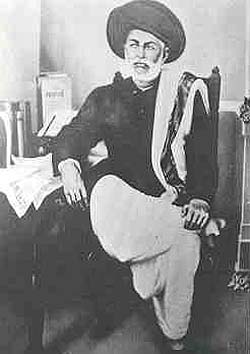
Satyashodhak Samaj was a social reform society founded by Jyotiba Phule in Pune, Maharashtra, on 24 September 1873. The society endeavoured to mitigate the distress and sufferings of Dalits and women. It espoused a mission of education and increased social rights and political access for underprivileged groups, focused especially on women, peasants, and Dalits, in Maharashtra. Jyotirao's wife Savitribai was the head of women's section of the society. The Samaj disbanded during the 1930s as leaders left to join the Indian National Congress party.

Kashmiri Muslims are ethnic Kashmiris who practice Islam and are native to the Kashmir Valley of Indian-administered Jammu and Kashmir. The majority of Kashmiri Muslims are Sunni, while Shias form a minority. They refer to themselves as "Koshur" in the Kashmiri language.
Social class in Sri Lanka is often described as casteless, though caste is still found on the island in both a symbolic and a practical sense. Caste is also used in an analogous sense to refer to the new social class divisions that have appeared in recent decades. The combination of ethnic nationalist movements that saw caste as an island-wide dividing tool, strong emphasis on providing access to education and healthcare regardless of background, and historic lack of discrimination among the colonial civil service played a factor in eradicating the caste system in most sectors of the island's society. Although the Buddhist culture actively fought against all forms of class discrimination, many Buddhist organizations used caste as a method to extract surplus from temple property.
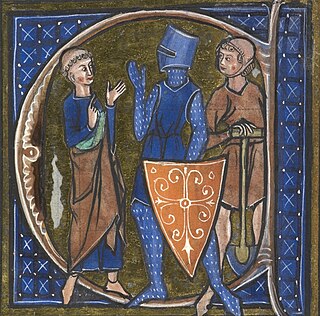
Gentry are "well-born, genteel and well-bred people" of high social class, especially in the past. Gentry, in its widest connotation, refers to people of good social position connected to landed estates, upper levels of the clergy, or "gentle" families of long descent who in some cases never obtained the official right to bear a coat of arms. The gentry largely consisted of landowners who could live entirely from rental income or at least had a country estate; some were gentleman farmers. In the United Kingdom, the term gentry refers to the landed gentry: the majority of the land-owning social class who typically had a coat of arms but did not have a peerage. The adjective "patrician" describes in comparison other analogous traditional social elite strata based in cities, such as the free cities of Italy and the free imperial cities of Germany, Switzerland, and the Hanseatic League. The concept of gentries have often been one of aristocracy and often under autocratic hierarchies.

Since the 1870s, various pieces of colonial legislation in India during British rule were collectively called the Criminal Tribes Act (CTA). This criminalised entire communities by designating them as habitual criminals.
Bangladesh did not exist as a distinct geographic and ethnic unity until independence. The region had been a part of Bangla, Bengali: বাংলা/বঙ্গ, whose history dates back to four millennia, and during the British period it formed the Bengal province, the eastern part of the British Indian Empire, which was dominated by the British rulers and Hindu professional, commercial, and landed elites. After the establishment of Pakistan in 1947, present-day Bangladesh came under the hegemony of the non-Bengali Muslim elites of the West Wing of Pakistan. The establishment of Bangladesh, therefore, implied the formation of both a new nation and a new social order.
Rajputs in Bihar are members of the Rajput community living in the eastern Indian state of Bihar. They traditionally formed part of the feudal elite in Bihari society. Rajputs were pressed with the Zamindari abolition and Bhoodan movement in post-independence India; along with other Forward Castes, they lost their significant position in Bihar's agrarian society, leading to the rise of Other Backward Classes (OBCs).

The Zamindars of Bihar were the autonomous and semi-autonomous rulers and administrators of the subah of Bihar during Mughal rule and later during British rule. They formed the landed aristocracy that lasted until Indian independence in 1947. The zamindars of Bihar were numerous and could be divided into small, medium and large depending on how much land they controlled. Within Bihar, the zamindars had both economic and military power. Each zamindari would have their own standing army which was typically composed of their own clansmen.
The Backward Caste movement in Bihar can be traced back to the formation of Triveni Sangh, a caste coalition and political party, in the 1930s, which was revived after the introduction of land reforms in the 1950s aimed at removing intermediaries from agrarian society. But, this drive could not succeed in bringing long-lasting changes in the condition of lower strata of society, as they lacked political representation and economic power. The period since land reform included caste conflicts and the class struggle which eventually led to a transfer of absolute political power in the hands of Backward Castes, who had been kept away from it earlier. The class struggle succeeded the struggle of some of the Upper Backward Castes against the sacerdotal authorities for improvement in their ritual status. By the 1990s, the conflict between upper-castes and the lower-castes continued, with nearly 17 massacres taking place during this time period. But with the advent of politics of social justice and the Janata Dal in the 1990s, the lower caste became more active politically.

Dalits in Bihar are a social group composed of many Scheduled Castes, placed at the bottom of the "caste-based social order". The Dalits also include some of the erstwhile untouchable castes, who suffered various forms of oppression in the feudal-agrarian society of Bihar. Some of the Dalit castes have specific cultural practices, which differ from those of orthodox Hinduism.


