Related Research Articles

A fin is a thin component or appendage attached to a larger body or structure. Fins typically function as foils that produce lift or thrust, or provide the ability to steer or stabilize motion while traveling in water, air, or other fluids. Fins are also used to increase surface areas for heat transfer purposes, or simply as ornamentation.
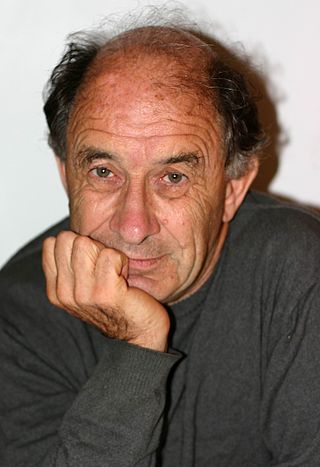
Vladimir Igorevich Arnold was a Soviet and Russian mathematician. While he is best known for the Kolmogorov–Arnold–Moser theorem regarding the stability of integrable systems, he made revolutionary and deep contributions in several areas including geometrical theory of dynamical systems theory, algebra, catastrophe theory, topology, algebraic geometry, symplectic geometry, symplectic topology, differential equations, classical mechanics, differential geometric approach to hydrodynamics, geometric analysis and singularity theory, including posing the ADE classification problem, since his first main result—the solution of Hilbert's thirteenth problem in 1957 at the age of 19. He co-founded two new branches of mathematics—KAM theory, and topological Galois theory. He is widely regarded as one of greatest mathematicians of all time.

Biomechanics is the study of the structure, function and motion of the mechanical aspects of biological systems, at any level from whole organisms to organs, cells and cell organelles, using the methods of mechanics. Biomechanics is a branch of biophysics.

Sir Michael James Lighthill was a British applied mathematician, known for his pioneering work in the field of aeroacoustics and for writing the Lighthill report on artificial intelligence.
George Keith Batchelor FRS was an Australian applied mathematician and fluid dynamicist.
Applied mechanics is the branch of science concerned with the motion of any substance that can be experienced or perceived by humans without the help of instruments. In short, when mechanics concepts surpass being theoretical and are applied and executed, general mechanics becomes applied mechanics. It is this stark difference that makes applied mechanics an essential understanding for practical everyday life. It has numerous applications in a wide variety of fields and disciplines, including but not limited to structural engineering, astronomy, oceanography, meteorology, hydraulics, mechanical engineering, aerospace engineering, nanotechnology, structural design, earthquake engineering, fluid dynamics, planetary sciences, and other life sciences. Connecting research between numerous disciplines, applied mechanics plays an important role in both science and engineering.
Steven Alan Orszag was an American mathematician.
Stephen Ray Wiggins is a Cherokee-American applied mathematician also of British heritage best known for his contributions in nonlinear dynamics, chaos theory and nonlinear phenomena, with applications to Lagrangian aspects of fluid transport and mixing and phase space aspects of theoretical chemistry.
Roger Meyer Temam is a French applied mathematician working in numerical analysis, nonlinear partial differential equations and fluid mechanics. He graduated from the University of Paris – the Sorbonne in 1967, completing a doctorate under the direction of Jacques-Louis Lions. He has published over 400 articles, as well as 12 books.
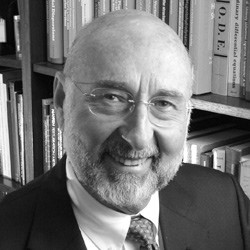
Stephen Howard Davis was an American applied mathematician working in the fields of fluid mechanics and materials science. Davis was the McCormick School Institute Professor and the Walter P. Murphy Professor of Applied Mathematics at Northwestern University. Davis has been listed as an ISI Highly Cited researcher in Engineering. His work was acknowledged in festschrifts in 2002.
Geomathematics is the application of mathematical methods to solve problems in geosciences, including geology and geophysics, and particularly geodynamics and seismology.

John Stewart Turner FAA FRS was an Australian geophysicist.
Andrei Sergeevich Monin was a Russian physicist, applied mathematician, and oceanographer. Monin was known for his contributions to statistical theory of turbulence and atmospheric physics. He served as the Director of the P.P. Shirshov Institute of Oceanology of the USSR Academy of Sciences. He was instrumental in developing the Shirshov Institute into one of the largest scientific centers for ocean and earth science studies.
Stanley Corrsin was an American physicist, fluid dynamicist, and Theophilus Halley Smoot Professor of Engineering at the Johns Hopkins University. He was known for his contributions in the field of fluid dynamics in general and turbulence in particular. He was a recipient of Fluid Dynamics Prize in 1983. Corrsin died of cancer on 2 June 1986 at the age of 66.
In fluid dynamics, wave–current interaction is the interaction between surface gravity waves and a mean flow. The interaction implies an exchange of energy, so after the start of the interaction both the waves and the mean flow are affected.
Reza Nakhaie Jazar also known as Reza N. Jazar is a professor of Mechanical engineering at RMIT University.
The Arnold–Beltrami–Childress (ABC) flow or Gromeka–Arnold–Beltrami–Childress (GABC) flow is a three-dimensional incompressible velocity field which is an exact solution of Euler's equation. Its representation in Cartesian coordinates is the following:

Tadashi Tokieda is a Japanese mathematician, working in mathematical physics. He is a professor of mathematics at Stanford University; previously he was the Director of Studies in Mathematics at Trinity Hall, Cambridge. He is also very active in inventing, collecting, and studying toys that uniquely reveal and explore real-world surprises of mathematics and physics. In comparison with most mathematicians, he had an unusual path in life: he started as a painter, and then became a classical philologist, before switching to mathematics.
Michael Ghil is an American and European mathematician and physicist, focusing on the climate sciences and their interdisciplinary aspects. He is a founder of theoretical climate dynamics, as well as of advanced data assimilation methodology. He has systematically applied dynamical systems theory to planetary-scale flows, both atmospheric and oceanic. Ghil has used these methods to proceed from simple flows with high temporal regularity and spatial symmetry to the observed flows, with their complex behavior in space and time. His studies of climate variability on many time scales have used a full hierarchy of models, from the simplest ‘toy’ models all the way to atmospheric, oceanic and coupled general circulation models. Recently, Ghil has also worked on modeling and data analysis in population dynamics, macroeconomics, and the climate–economy–biosphere system.
References
- ↑ "Erosion has a point, and an edge". ScienceDaily. Archived from the original on 2020-11-12. Retrieved 2022-06-25.
- ↑ "How do birds breathe better? Researchers' discovery will throw you for a loop". 16 March 2021.
- ↑ Wednesday, 15 January 2014 Anna SallehABC (January 15, 2014). "'Jellyfish' flying machine keeps upright". www.abc.net.au. Archived from the original on 9 August 2020. Retrieved 25 June 2022.
- ↑ "Applied Math Lab - People". math.nyu.edu. Archived from the original on 2021-05-15. Retrieved 2022-06-27.
- ↑ Childress, Stephen (June 25, 1981). Mechanics of Swimming and Flying. Cambridge University Press. doi:10.1017/CBO9780511569593. ISBN 9780521236133. Archived from the original on January 30, 2022. Retrieved June 25, 2022.
- ↑ Topics in Geophysical Fluid Dynamics: Atmospheric Dynamics, Dynamo Theory, and Climate Dynamics. Applied Mathematical Sciences. Vol. 60. 1987. doi:10.1007/978-1-4612-1052-8. ISBN 978-0-387-96475-1. Archived from the original on 2022-01-30. Retrieved 2022-06-25– via link.springer.com.
- ↑ "Childress: An Introduction to Theoretical Fluid Mechanics". American Mathematical Society. Archived from the original on 2021-01-27. Retrieved 2022-06-25.
- ↑ Natural Locomotion in Fluids and on Surfaces. The IMA Volumes in Mathematics and its Applications. Vol. 155. 2012. doi:10.1007/978-1-4614-3997-4. ISBN 978-1-4614-3996-7. Archived from the original on 2022-03-03. Retrieved 2022-06-25– via link.springer.com.
- ↑ "Stephen Childress". John Simon Guggenheim Memorial Foundation. Archived from the original on 2021-05-16. Retrieved 2022-06-25.
- ↑ "APS Fellow Archive". Archived from the original on 2022-06-27. Retrieved 2022-06-26.


