
Nickel is a chemical element; it has symbol Ni and atomic number 28. It is a silvery-white lustrous metal with a slight golden tinge. Nickel is a hard and ductile transition metal. Pure nickel is chemically reactive, but large pieces are slow to react with air under standard conditions because a passivation layer of nickel oxide forms on the surface that prevents further corrosion. Even so, pure native nickel is found in Earth's crust only in tiny amounts, usually in ultramafic rocks, and in the interiors of larger nickel–iron meteorites that were not exposed to oxygen when outside Earth's atmosphere.

The chemical industry comprises the companies and other organizations that develop and produce industrial, specialty and other chemicals. Central to the modern world economy, it converts raw materials into commodity chemicals for industrial and consumer products. It includes industries for petrochemicals such as polymers for plastics and synthetic fibers; inorganic chemicals such as acids and alkalis; agricultural chemicals such as fertilizers, pesticides and herbicides; and other categories such as industrial gases, speciality chemicals and pharmaceuticals.

Nickel carbonyl (IUPAC name: tetracarbonylnickel) is a nickel(0) organometallic compound with the formula Ni(CO)4. This colorless liquid is the principal carbonyl of nickel. It is an intermediate in the Mond process for producing very high-purity nickel and a reagent in organometallic chemistry, although the Mond Process has fallen out of common usage due to the health hazards in working with the compound. Nickel carbonyl is one of the most dangerous substances yet encountered in nickel chemistry due to its very high toxicity, compounded with high volatility and rapid skin absorption.
Eastman Chemical Company is an American company primarily involved in the chemical industry. Once a subsidiary of Kodak, today it is an independent global specialty materials company that produces a broad range of advanced materials, chemicals and fibers for everyday purposes. Founded in 1920 and based in Kingsport, Tennessee, the company operates 36 manufacturing sites worldwide and employs approximately 14,000 people.
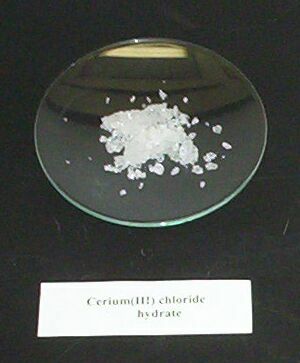
Cerium(III) chloride (CeCl3), also known as cerous chloride or cerium trichloride, is a compound of cerium and chlorine. It is a white hygroscopic salt; it rapidly absorbs water on exposure to moist air to form a hydrate, which appears to be of variable composition, though the heptahydrate CeCl3·7H2O is known. It is highly soluble in water, and (when anhydrous) it is soluble in ethanol and acetone.

Sir Geoffrey Wilkinson FRS was a Nobel laureate English chemist who pioneered inorganic chemistry and homogeneous transition metal catalysis.
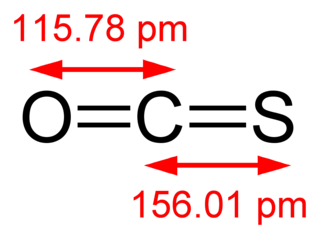
Carbonyl sulfide is the chemical compound with the linear formula O=C=S. It is a colorless flammable gas with an unpleasant odor. It is a linear molecule consisting of a carbonyl double bonded to a sulfur atom. Carbonyl sulfide can be considered to be intermediate between carbon dioxide and carbon disulfide, both of which are valence isoelectronic with it.
Sigma-Aldrich is an American chemical, life science, and biotechnology company owned by the multinational chemical conglomerate Merck Group.

Showa Denko K. K., founded in 1939 by the merger of Nihon Electrical Industries and Showa Fertilizers, both established by a Japanese entrepreneur Nobuteru Mori, is a Japanese chemical company producing chemical products and industrial materials.

Metal carbonyls are coordination complexes of transition metals with carbon monoxide ligands. Metal carbonyls are useful in organic synthesis and as catalysts or catalyst precursors in homogeneous catalysis, such as hydroformylation and Reppe chemistry. In the Mond process, nickel tetracarbonyl is used to produce pure nickel. In organometallic chemistry, metal carbonyls serve as precursors for the preparation of other organometallic complexes.
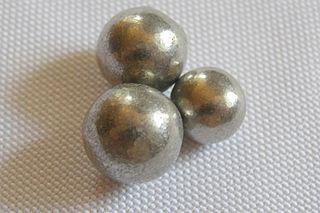
The Mond process, sometimes known as the carbonyl process, is a technique created by Ludwig Mond in 1890, to extract and purify nickel. The process was used commercially before the end of the 19th century, and particularly by the International Nickel Company in the Sudbury Basin. This process converts nickel oxides into nickel metal with very high purity being attainable in just a single step.

Dicobalt octacarbonyl is an organocobalt compound with composition Co2(CO)8. This metal carbonyl is used as a reagent and catalyst in organometallic chemistry and organic synthesis, and is central to much known organocobalt chemistry. It is the parent member of a family of hydroformylation catalysts. Each molecule consists of two cobalt atoms bound to eight carbon monoxide ligands, although multiple structural isomers are known. Some of the carbonyl ligands are labile.

A chemical substance is a unique form of matter with constant chemical composition and characteristic properties. Chemical substances may take the form of a single element or chemical compounds. If two or more chemical substances can be combined without reacting, they may form a chemical mixture. If a mixture is separated to isolate one chemical substance to a desired degree, the resulting substance is said to be chemically pure.

Cobalt(II) carbonate is the inorganic compound with the formula CoCO3. This reddish paramagnetic solid is an intermediate in the hydrometallurgical purification of cobalt from its ores. It is an inorganic pigment, and a precursor to catalysts. Cobalt(II) carbonate also occurs as the rare red/pink mineral spherocobaltite.
Alfa Aesar, headquartered in Ward Hill, Massachusetts, United States, is a supplier of reagents and materials for use in research and development, and analysis. They have facilities in many countries and manufacture many of the chemicals they sell.
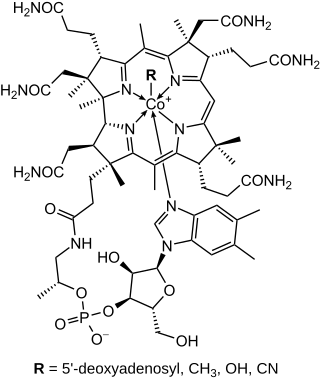
Organocobalt chemistry is the chemistry of organometallic compounds containing a carbon to cobalt chemical bond. Organocobalt compounds are involved in several organic reactions and the important biomolecule vitamin B12 has a cobalt-carbon bond. Many organocobalt compounds exhibit useful catalytic properties, the preeminent example being dicobalt octacarbonyl.

Matheson Tri-Gas, Inc. produces industrial, medical, and specialty gases, and associated gas handling equipment, in North America. MATHESON offers semiconductor, medical, welding, atmospheric gases, rare gases delivered via pipelines, onsite generators, bulk tanks, and in gas cylinders to customers using gases in their labs, semiconductor fabs, hospitals, chemical plants, manufacturing and many other processes. Furthermore, MATHESON also designs and manufactures gas purification systems, generators, delivery systems, filters, gas purifiers, detection equipment, control valves, and management accessories; and gas cylinder enclosures, source manifolds, and panels, as well as helium recovery solutions. In addition, the company provides support, engineering, and systems management services to analytical laboratories and semiconductor manufacturers worldwide.
GFS Chemicals Inc, formerly known as G. Frederick Smith Chemical Company, is a privately owned fine and specialty chemical company with headquarters in Powell, Ohio and manufacturing facilities in Columbus, Ohio. It was founded by G. Frederick Smith in Urbana, Illinois in 1924, and moved to Columbus, Ohio in 1928.
William B. Tolman an American inorganic chemist focusing on the synthesis and characterization of model bioinorganic systems, and organometallic approaches towards polymer chemistry. He has served as Editor in Chief of the ACS journal Inorganic Chemistry, and as a Senior Investigator at the NSF Center for Sustainable Polymers. Tolman is a Fellow of the American Association for the Advancement of Science and the American Chemical Society.
Curtis P. Berlinguette is a professor of chemistry. and chemical and biological engineering at the University of British Columbia. He is also a CIFAR Program Co-Director, a principal investigator at the Stewart Blusson Quantum Matter Institute, and a Fellow of the Royal Society of Canada. His academic research group designs and builds electrochemical reactors for:


