Related Research Articles

An aerosol is a suspension of fine solid particles or liquid droplets in air or another gas. Aerosols can be natural or anthropogenic. Examples of natural aerosols are fog, mist, dust, forest exudates and geyser steam. Examples of anthropogenic aerosols are particulate air pollutants and smoke. The liquid or solid particles have diameters typically less than 1 μm; larger particles with a significant settling speed make the mixture a suspension, but the distinction is not clear-cut. In general conversation, aerosol usually refers to an aerosol spray that delivers a consumer product from a can or similar container. Other technological applications of aerosols include dispersal of pesticides, medical treatment of respiratory illnesses, and combustion technology. Diseases can also spread by means of small droplets in the breath, also called aerosols.

Sintering or frittage is the process of compacting and forming a solid mass of material by heat or pressure without melting it to the point of liquefaction.

Spray drying is a method of producing a dry powder from a liquid or slurry by rapidly drying with a hot gas. This is the preferred method of drying of many thermally-sensitive materials such as foods and pharmaceuticals. A consistent particle size distribution is a reason for spray drying some industrial products such as catalysts. Air is the heated drying medium; however, if the liquid is a flammable solvent such as ethanol or the product is oxygen-sensitive then nitrogen is used.

An ion source is a device that creates atomic and molecular ions. Ion sources are used to form ions for mass spectrometers, optical emission spectrometers, particle accelerators, ion implanters and ion engines.
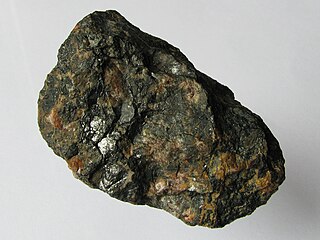
Coffinite is a uranium-bearing silicate mineral with formula: U(SiO4)1−x(OH)4x.

A nanoparticle or ultrafine particle is usually defined as a particle of matter that is between 1 and 100 nanometres (nm) in diameter. The term is sometimes used for larger particles, up to 500 nm, or fibers and tubes that are less than 100 nm in only two directions.

Plasma arc welding (PAW) is an arc welding process similar to gas tungsten arc welding (GTAW). The electric arc is formed between an electrode and the workpiece. The key difference from GTAW is that in PAW, by positioning the electrode within the body of the torch, the plasma arc can be separated from the shielding gas envelope. The plasma is then forced through a fine-bore copper nozzle which constricts the arc and the plasma exits the orifice at high velocities and a temperature approaching 28,000 °C (50,000 °F) or higher.
In materials science, the sol–gel process is a method for producing solid materials from small molecules. The method is used for the fabrication of metal oxides, especially the oxides of silicon (Si) and titanium (Ti). The process involves conversion of monomers into a colloidal solution (sol) that acts as the precursor for an integrated network of either discrete particles or network polymers. Typical precursors are metal alkoxides.

A superalloy, or high-performance alloy, is an alloy with the ability to operate at a high fraction of its melting point. Several key characteristics of a superalloy are excellent mechanical strength, resistance to thermal creep deformation, good surface stability, and resistance to corrosion or oxidation.
Biological half-life of a biological substance such as medication is the time it takes from its maximum concentration (Cmax) to half maximum concentration in human body, and is denoted by the abbreviation .
Titanium powder metallurgy (P/M) offers the possibility of creating net shape or near net shape parts without the material loss and cost associated with having to machine intricate components from wrought billet. Powders can be produced by the blended elemental technique or by pre-alloying and then consolidated by metal injection moulding, hot isostatic pressing, direct powder rolling or laser engineered net shaping.

Thermal spraying techniques are coating processes in which melted materials are sprayed onto a surface. The "feedstock" is heated by electrical or chemical means.
Solution precursor plasma spray (SPPS) is a thermal spray process where a feedstock solution is heated and then deposited onto a substrate. Basic properties of the process are fundamentally similar to other plasma spraying processes. However, instead of injecting a powder into the plasma plume, a liquid precursor is used. The benefits of utilizing the SPPS process include the ability to create unique nanometer sized microstructures without the injection feed problems normally associated with powder systems and flexible, rapid exploration of novel precursor compositions.
Electrostatic spray-assisted vapour deposition (ESAVD) is a technique to deposit both thin and thick layers of a coating onto various substrates. In simple terms chemical precursors are sprayed across an electrostatic field towards a heated substrate, the chemicals undergo a controlled chemical reaction and are deposited on the substrate as the required coating. Electrostatic spraying techniques were developed in the 1950s for the spraying of ionised particles on to charged or heated substrates.

Zirconium diboride (ZrB2) is a highly covalent refractory ceramic material with a hexagonal crystal structure. ZrB2 is an ultra high temperature ceramic (UHTC) with a melting point of 3246 °C. This along with its relatively low density of ~6.09 g/cm3 (measured density may be higher due to hafnium impurities) and good high temperature strength makes it a candidate for high temperature aerospace applications such as hypersonic flight or rocket propulsion systems. It is an unusual ceramic, having relatively high thermal and electrical conductivities, properties it shares with isostructural titanium diboride and hafnium diboride.

Nano spray dryers refer to using spray drying to create particles in the nanometer range. Spray drying is a gentle method for producing powders with a defined particle size out of solutions, dispersions, and emulsions which is widely used for pharmaceuticals, food, biotechnology, and other industrial materials synthesis.

Plasma is one of the four fundamental states of matter, and was first described by chemist Irving Langmuir in the 1920s. It consists of a gas of ions – atoms which have some of their orbital electrons removed – and free electrons. Plasma can be artificially generated by heating a neutral gas or subjecting it to a strong electromagnetic field to the point where an ionized gaseous substance becomes increasingly electrically conductive. The resulting charged ions and electrons become influenced by long-range electromagnetic fields, making the plasma dynamics more sensitive to these fields than a neutral gas.
Banana powder is a powder made from processed bananas. It is used as a component for production of milk shakes and baby foods. It is also used in the manufacture of various types of cakes and biscuits.
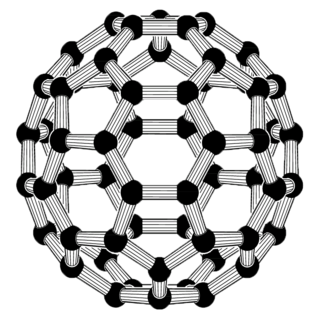
Carbon nanotube metal matrix composites (CNT-MMC) are an emerging class of new materials that are being developed to take advantage of the high tensile strength and electrical conductivity of carbon nanotube materials. Critical to the realization of CNT-MMC possessing optimal properties in these areas are the development of synthetic techniques that are (a) economically producible, (b) provide for a homogeneous dispersion of nanotubes in the metallic matrix, and (c) lead to strong interfacial adhesion between the metallic matrix and the carbon nanotubes. Since the development of CNT-MMC is still in the research phase, the current focus is primarily on improving these latter two areas.
Cold Spray Additive Manufacturing (CSAM) is a particular application of the cold spraying able to fabricate freestanding parts or to build features on existing components. During the process, fine powder particles are accelerated in a high-velocity compressed gas stream, and upon the impact on a substrate or backing plate, deform and bond together creating a layer. Moving the nozzle over a substrate repeatedly, a deposit is building up layer-by-layer, to form a part or component. If an industrial robot or computer controlled manipulator controls the spray gun movements, complex shapes can be created. To achieve 3D shape, there are two different approaches. First to fix the substrate and move the cold spray gun/nozzle using a robotic arm, the second one is to move the substrate with a robotic arm, and keep the spray-gun nozzle fixed. There is also a possibility to combine these two approaches either using two robotic arms or other manipulators. The process always requires a substrates as starting plate and uses only powder as raw material.
References
- ↑ Fauchais, P.; Rat, V.; Delbos, C.; Coudert, J.F.; Chartier, T.; Bianchi, L. (2005). "Understanding of suspension DC plasma spraying of finely structured coatings for SOFC". IEEE Transactions on Plasma Science. 33 (2): 920–930. Bibcode:2005ITPS...33..920F. doi:10.1109/TPS.2005.845094. ISSN 0093-3813.
- ↑ Pierre L. Fauchais; Joachim V.R. Heberlein; Maher I. Boulos (24 January 2014). Thermal Spray Fundamentals: From Powder to Part. Springer Science & Business Media. pp. 564–. ISBN 978-0-387-68991-3.
 | This engineering-related article is a stub. You can help Wikipedia by expanding it. |