Related Research Articles

Ramdhari Singh, known by his pen name Dinkar, was an Indian Hindi language poet, essayist, freedom fighter, patriot and academic. He emerged as a poet of rebellion as a consequence of his nationalist poetry written in the days before Indian independence. His poetry exuded Veer Rasa, and he has been hailed as a Rashtrakavi and Yuga-Chāraṇa on account of his inspiring patriotic compositions. He was a regular poet of Hindi Kavi Sammelan and is hailed to be as popular and connected to poetry lovers for Hindi speakers as Pushkin for Russians.
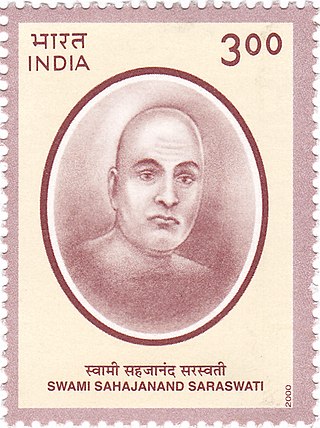
Sahajanand Saraswati was an ascetic, a nationalist and a peasant leader of India. Although born in United Provinces, his social and political activities focussed mostly on Bihar in the initial days, and gradually spread to the rest of India with the formation of the All India Kisan Sabha. He had set up an ashram at Bihta, near Patna, Bihar carried out most of his work in the later part of his life from there. He was an intellectual, prolific writer, social reformer and revolutionary.
Manazir Ahsan Gilani was an Indian Sunni Islamic scholar and former Dean of the Faculty of Theology at Osmania University. Some of his notable works include Tadwin-e-Hadith, Muqaddama Tadwin-e-Fiqh, Sawanih-e-Abu Dharr Ghifari, and Sawanih-e-Qasmi. Muhammad Hamidullah, a historian and hadith researcher, was among his students.

Gopi Chand Narang was an Indian theorist, literary critic, and scholar who wrote in Urdu and English. His Urdu literary criticism incorporated a range of modern theoretical frameworks including stylistics, structuralism, post-structuralism, and Eastern poetics.
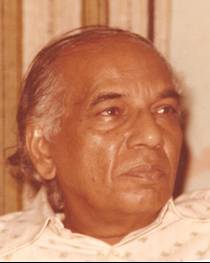
Syed Ali Jawad Zaidi was an Indian Urdu poet, scholar, and author of over 80 books in several languages. He was also an Indian independence activist, lawyer and later a civil servant, but is best known for his work in Urdu literature.
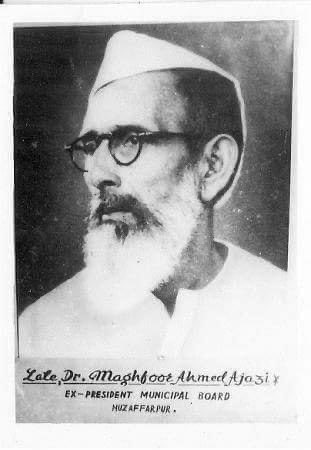
Maghfoor Ahmad Ajazi was a political activist from Bihar, prominent in the Indian independence movement.

Shamim Hashimi is an Urdu and Persian poet. He is basically a poet of Ghazal. He has also written poems of other forms of poetry in different meters.
Bismil Azimabadi was an Indian freedom fighter, landlord, and an Urdu poet from Patna, the capital of Bihar.
Saeed Ahmad Akbarabadi was an Indian Islamic scholar and an Urdu-language author who co-founded the Nadwatul Musannifeen. He served as the dean of the Faculty of Theology in Aligarh Muslim University.
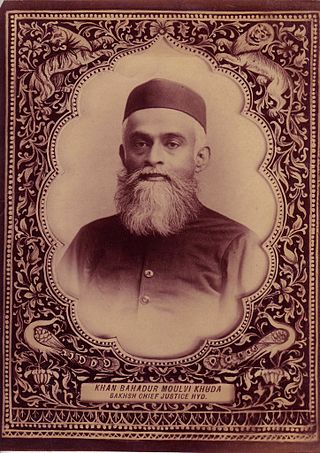
Sir Khan Bahadur Khuda Bakhsh OIE FRAS was an Indian advocate, judge, philosopher, revolutionary freedom fighter, scholar and historian from Patna, Bihar. He was the founder of Khuda Bakhsh Oriental Library and Chief Justice of Nizam's Supreme Court of Hyderabad from 1895 to 1898. Khuda Bakhsh maintains a strong legacy across the Islamic World for his contributions to Literature and History.
This bibliography of Shibli Nomani is a selected list of generally available scholarly resources related to Shibli Nomani, a poet, philosopher, historian, educational thinker, author, orator, reformer, critic of orientalists and Islamic scholar from the Indian subcontinent during the British Raj, regarded as the father of Urdu historiography. His disciple Sulaiman Nadvi wrote his biography, Hayat-e-Shibli, in 1943. This list will include his biographies, theses written on him and articles published about him in various journals, newspapers, encyclopedias, seminars, websites, etcetera in APA style.

Shyam Sunder Sharma is an Indian print artist, author and poet.
Abul Kalam Qasmi Shamsi is an Indian Islamic scholar, author, essayist and an Urdu translator of the Qur'an. He has been the principal of Madrasa Islamia Shamsul Huda, Patna, for about thirteen years. Some of his works included Tazkira Ulama e Bihār, Tahrīk e Aazādi Mein Ulama e Kirām Ka Hissa, Bihār Ki Urdu Shā'irī Mein Ulama Ka Hissa and Tashīl-ul-Qur'an.
Shayesta Bedar is an Indian historian, academician and scholar who is currently serving as the Director of Khuda Bakhsh Oriental Public Library, Patna. Before joining the National library, she has served as an Assistant librarian in Maulana Azad Library AMU, Aligarh from (1993–2019) as in-charge of the Manuscript section of the library where she established a library museum in Maulana Azad Library. She has authored numerous research papers based on Persian and Urdu literature. Additionally, she has edited and compile work for a variety of books related to Persian, Hindi and Urdu literature.
Shafiqur Rahman Nadwi (1942–2002), also written as Shafiq-ur-Rahman Nadwi, was an Indian Islamic scholar and a writer of Arabic and Urdu. He was an alumni and professor of Darul Uloom Nadwatul Ulama and the author of the famous book of Fiqh in Arabic, Al-Fiqh Al-Muyassar. He also served as the office-in-charge of the madrasas affiliated with Darul Uloom Nadwatul Ulama, which numbered 150 at the time.
Sohail Azimabadi was an Indian Urdu poet, Novelist, Fictional writer, Journalist and critic. He was known as the international critic of Urdu-language along with Kaleem Aajiz.
Fasihuddin Balkhi was an Indian Author and Historian. He belonged to the Khanqah Balkhia Firdausia, Fatuha, Patna. He was a contemporary of Ata Kakwi, Taqi Rahim, Shad Azimabadi and Shah Mohsin Danapuri. He was an active participant in the Non-cooperation Movement. His works include "Tarikh-e-Magadh", "Tazkira-e-Hindu Shora-e-Bihar" and "Wahabi Movement."
Syed Sabahuddin Abdur Rahman was an Indian historian and writer. He was the editor of Maarif, a monthly journal. He had served as the director and secretary of Darul Musannefin Shibli Academy, a research academy founded by Shibli Nomani and based in Azamgarh.
Syed Shah Ataur Rahman popularly known as Ata Kakwi was an Indian poet and writer. He was a contemporary of Wali Azimabadi, Akhtar Qadri, Azizuddin Balkhi and Fasihuddin Balkhi. He has served as the head of department for the Department of Persian of Patna University.

Muhammad Ikram Chughtai, also written as M. Ikram Chughtai or Ikram Chagatai, was a Pakistani researcher, translator, historian, and biographer. He conducted research on Muhammad Husain Azad and Muhammad Asad and published several rare and previously unpublished documents, contributing to Urdu research. His work in Iqbal Studies is frequently referenced in academic literature. His research methodologies and findings have been cited in Urdu, English, and other languages.
References
- ↑ Indian Journal of Politics. Department of Political Science, Aligarh Muslim University. 2006. p. 198.
- ↑ Hussain, Md Zakir (1 January 2013). 1857 Aur Bihar Ki Patrakarita: 1857 Aur Bihar Ki Patrakarita: Journalism and the Revolt of 1857 in Bihar (in Hindi). Prabhat Prakashan. pp. 28–29. ISBN 978-93-5048-312-1.
- ↑ Documents of the Communist Movement in India: 1971-72. National Book Agency. 1997. pp. 298, 300. ISBN 978-81-7626-000-8.
- ↑ Qādrī, Fuz̤ail Aḥmad (1998). The Celebrated Garden: A Study of Phulwari Sharif Family of Muslim Divines. Shillong: North-Eastern Hill University Publications. p. 28.
- ↑ Liberation. Nimai Ghose. 2000. p. 282.
- ↑ "Homage". archive.cpiml.org. Retrieved 8 October 2024.
- ↑ Talwar, Veer Bharat (2007). Naksalwadi Ke Daud Mein (in Hindi). Anamika Publishers and Distributors. p. 511. ISBN 978-81-7975-163-3.