
Machu Picchu is a 15th-century Inca citadel located in the Eastern Cordillera of southern Peru on a mountain ridge at 2,430 meters (7,970 ft). Often referred to as the "Lost City of the Incas", it is the most familiar icon of the Inca Empire. It is located in the Machupicchu District within Urubamba Province above the Sacred Valley, which is 80 kilometers (50 mi) northwest of Cusco. The Urubamba River flows past it, cutting through the Cordillera and creating a canyon with a subtropical mountain climate.

Salem is a town in New London County, Connecticut, United States. The town is part of the Southeastern Connecticut Planning Region. The population was 4,213 at the 2020 census.
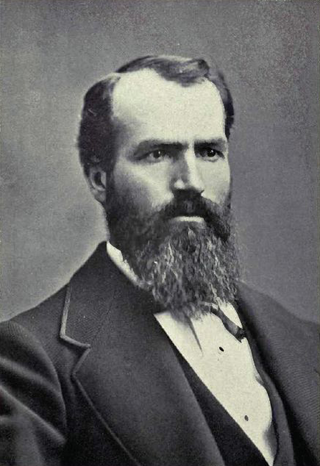
Nathaniel Pitt Langford was an American explorer, businessman, bureaucrat, vigilante and historian from Saint Paul, Minnesota who played an important role in the early years of the Montana gold fields, territorial government and the creation of Yellowstone National Park.

Phillip Calvin McGraw, known professionally as Dr. Phil, is an American television personality and author, best known for hosting the talk show Dr. Phil. He holds a doctorate in clinical psychology, though he ceased renewing his license to practice psychology in 2006.

Hiram Bingham, formally Hiram Bingham I, was leader of the first group of American Protestant missionaries to introduce Christianity to the Hawaiian Islands. Like most of the missionaries, he was from New England.

Hiram "Harry" Bingham IV was an American diplomat. He served as a Vice Consul in Marseilles, France, during World War II, and, along with Varian Fry, helped more than 2,500 Jews to escape from France as Nazi forces advanced.
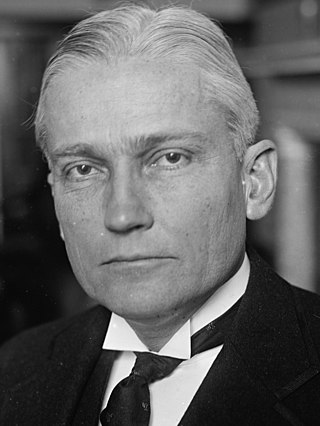
Hiram Bingham III was an American academic, explorer and politician. In 1911, he publicized the existence of the Inca citadel of Machu Picchu which he rediscovered with the guidance of local indigenous farmers. Later, Bingham served as the 69th Governor of Connecticut for a single day in 1925—the shortest term in history. He had been elected in 1924 as governor, but was also elected to the Senate and chose that position. He served as a member of the United States Senate until 1933.

Hiram Bingham II was a Protestant Christian missionary to Hawaii and the Gilbert Islands.

Vilcabamba or Willkapampa, often called the Lost City of the Incas, is a lost city in the Echarate District of La Convención Province in the Cuzco Region of Peru. Vilcabamba, in Quechua, means "sacred plain". The modern name for the Inca ruins of Vilcabamba is Espíritu Pampa.

Elisha Kent Kane was a United States Navy medical officer and Arctic explorer. He served as assistant surgeon during Caleb Cushing's journey to China to negotiate the Treaty of Wangxia and in the Africa Squadron. He was assigned as a special envoy to the United States Army during the Mexican–American War and as a surveyor in the United States Coast Survey.
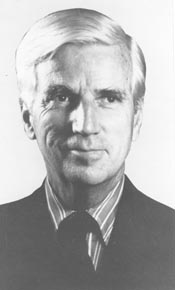
Jonathan Brewster Bingham was an American politician and diplomat. He was the US delegate to the United Nations General Assembly and was elected to Congress from The Bronx, serving in the House of Representatives from 1965 to 1983.

Frances Parkinson Keyes was an American author who wrote about her life as the wife of a U.S. Senator and novels set in New England, Louisiana, and Europe. A convert to Roman Catholicism, her later works frequently featured Catholic themes and beliefs. Her last name rhymes with "eyes," not "keys."

Vitcos was a residence of Inca nobles and a ceremonial center of the Neo-Inca State (1537–1572). The archaeological site of ancient Vitcos, called Rosaspata, is in the Vilcabamba District of La Convención Province, Cusco Region in Peru. The ruins are on a ridge overlooking the junction of two small rivers and the village of Pucyura. The Incas had occupied Vilcabamba, the region in which Vitcos is located, about 1450 CE, establishing major centers at Machu Picchu, Choquequirao, Vitcos, and Vilcabamba. Vitcos was often the residence of the rulers of the Neo-Inca state until the Spanish conquest of this last stronghold of the Incas in 1572.

Walter Stanley Keane was an American plagiarist who became famous in the 1960s as the claimed painter of a series of widely reproduced paintings depicting vulnerable subjects with enormous eyes. The paintings are now accepted as having been painted by his wife, Margaret Keane. When she told her side of the story, Walter Keane retaliated with a USA Today article that again claimed he had done the work.

Lawrence Washington was a High Church rector of the Church of England. He was an early ancestor to the Washington family of Virginia, being the paternal great-great-grandfather of U.S. President George Washington.

Charles Wiener (1851–1913) was an Austrian-French scientist-explorer. Born in Vienna, he is perhaps best known as the explorer who traveled extensively in Peru, climbed the Illimani and came close to re-discovering Machu Picchu.
Echarate District is one of fourteen districts of the province La Convención in Peru. The town of Echarte, near the Urubamba River, is the capital of the district. In 2016, part of Echarte district was incorporated into the newly created Megantoni District.

The Peru–Yale University dispute was a century-long conflict between the government of Peru and Yale University about the rightful ownership of Inca human remains and artifacts from Machu Picchu, an ancient Inca site high in the Peruvian Andes active c. 1420–1532. In the several years following his re-discovery of Machu Picchu in 1911, Yale explorer Hiram Bingham III removed thousands of objects – including pottery, stone tools, and human bones – from the archaeological site and brought them to New Haven, Connecticut. The circumstances of these transfers were disputed, with some, including Bingham, claiming that Yale agreed to borrow the artifacts for a period of 18 months to conduct studies. Peru attempted to regain the collection in the 1920s, but Yale resisted. Tensions rose between 2006 and 2010 with a lawsuit, activism by Peruvians and Yale alumni, and a plea to then–U.S. President Barack Obama by then–Peruvian President Alan Garcia. On November 19, 2010, Peru and Yale reached an agreement that the remains and artifacts would be returned. In early 2011, Yale and University of Cusco (UNSAAC) signed a further agreement that the two institutions would partner to create a museum and research center in Cusco. The museum, the Museo Machu Picchu, was opened to the public in November 2011. The collection is regarded by experts to be among the most valuable collections of Inca artifacts.

Agustín Lizárraga Ruiz was a Peruvian explorer and farmer who discovered Machu Picchu on 14 July 1902, nine years prior to American explorer Hiram Bingham.
