
Helen Beatrix Potter was an English writer, illustrator, natural scientist, and conservationist. She is best known for her children's books featuring animals, such as The Tale of Peter Rabbit, which was her first commercially published work in 1902. Her books, including 23 Tales, have sold more than 250 million copies. An entrepreneur, Potter was a pioneer of character merchandising. In 1903, Peter Rabbit was the first fictional character to be made into a patented stuffed toy, making him the oldest licensed character.

A nursery rhyme is a traditional poem or song for children in Britain and other European countries, but usage of the term dates only from the late 18th/early 19th century. The term Mother Goose rhymes is interchangeable with nursery rhymes.

Children's literature or juvenile literature includes stories, books, magazines, and poems that are created for children. Modern children's literature is classified in two different ways: genre or the intended age of the reader, from picture books for the very young to young adult fiction.

Catherine Greenaway was an English Victorian artist and writer, known for her children's book illustrations. She received her education in graphic design and art between 1858 and 1871 from the Finsbury School of Art, the South Kensington School of Art, the Heatherley School of Art, and the Slade School of Fine Art. She began her career designing for the burgeoning greetings card market, producing Christmas and Valentine's cards. In 1879 wood-block engraver and printer Edmund Evans printed Under the Window, an instant best-seller, which established her reputation. Her collaboration with Evans continued throughout the 1880s and 1890s.

"Old Mother Hubbard" is an English-language nursery rhyme, first given an extended printing in 1805, although the exact origin of the rhyme is disputed. It has a Roud Folk Song Index number of 19334. After a notable nursery success, it was eventually adapted to a large variety of practical and entertaining uses.
Cliff Wright is an artist, book illustrator and advertising artist.

Mary GrandPré is an American illustrator best known for her cover and chapter illustrations of the Harry Potter books in their U.S. editions published by Scholastic. She received a Caldecott Honor in 2015 for illustrating Barb Rosenstock's The Noisy Paint Box: The Colors and Sounds of Kandinsky's Abstract Art. GrandPré, who creates her artwork with paint and pastels, has illustrated more than twenty books and has appeared in gallery exhibitions and periodicals such as The New Yorker, Atlantic Monthly, and The Wall Street Journal.

Drummer Hoff is an illustrated children's book by Barbara and Ed Emberley. Ed Emberley won the 1968 Caldecott Medal for the book's illustrations. Written by Barbara Emberley, it tells a cumulative tale of seven soldiers who build a cannon named "Sultan", and Drummer Hoff, who fires it off, with the book exploding into a blast of colors. The last picture shows the exploded cannon at a future point in time among wildflowers and birds. The illustrations, done in woodcuts, evoke both 1960s psychedelica and Colonial American engravings. In 1969, the book was adapted into an animated 6 minute theatrical short, directed by Gene Deitch and produced by Morton Schindel of Weston Woods Studios. It was released on DVD in 2008.
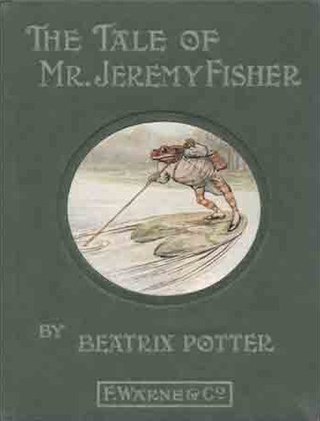
The Tale of Mr. Jeremy Fisher is a children's book, written and illustrated by Beatrix Potter. It was published by Frederick Warne & Co. in July 1906. Jeremy's origin lies in a letter she wrote to a child in 1893. She revised it in 1906, and moved its setting from the River Tay to the English Lake District. The tale reflects her love for the Lake District and her admiration for children's illustrator Randolph Caldecott.

The Tale of Mrs. Tiggy-Winkle is a children's book written and illustrated by Beatrix Potter. It was published by Frederick Warne & Co. in October 1905. Mrs. Tiggy-winkle is a hedgehog washerwoman (laundress) who lives in a tiny cottage in the fells of the Lake District. A child named Lucie happens upon the cottage and stays for tea. The two deliver freshly laundered clothing to the animals and birds in the neighbourhood. Potter thought the book would be best enjoyed by girls, and, like most girls' books of the period, it is set indoors with a focus on housework.
Beginner Books is the Random House imprint for young children ages 3–9, co-founded by Phyllis Cerf with Ted Geisel, more often known as Dr. Seuss, and his wife Helen Palmer Geisel. Their first book was Dr. Seuss's The Cat in the Hat (1957), whose title character appears in the brand's logo. Cerf compiled a list of 379 words as the basic vocabulary for young readers, along with another 20 slightly harder "emergency" words. No more than 200 words were taken from that list to write The Cat in the Hat. Subsequent books in the series were modeled on the same requirement.

The Story of Miss Moppet is a tale about teasing, featuring a kitten and a mouse, that was written and illustrated by Beatrix Potter, and published by Frederick Warne & Co for the 1906 Christmas season. Potter was born in London in 1866, and between 1902 and 1905 published a series of small-format children's books with Warne. In 1906, she experimented with an atypical panorama design for Miss Moppet, which booksellers disliked; the story was reprinted in 1916 in small book format.

An alphabet book is a type of children's book giving basic instruction in an alphabet. Intended for young children, alphabet books commonly use pictures, simple language and alliteration to aid language learning. Alphabet books are published in several languages, and some distinguish the capitals and lower case letters in a given alphabet.

"Apple Pie ABC" is an old and enduring English alphabet rhyme for children which has gone through several variations since the 17th century.

Edmund Evans was an English wood-engraver and colour printer during the Victorian era. He specialized in full-colour printing, a technique which, in part because of his work, became popular in the mid-19th century. He employed and collaborated with illustrators such as Walter Crane, Randolph Caldecott, Kate Greenaway and Richard Doyle to produce what are now considered to be classic children's books. Little is known about his life, although he wrote a short autobiography before his death in 1905 in which he described his life as a printer in Victorian London.

Parts is a children's book written and illustrated by Tedd Arnold. It was first published on September 1, 1997. Written in rhyme with cartoon-like watercolor illustrations, Parts is the first in Arnold's trilogy on the theme of body parts. It was followed by More Parts in 2001 and Even More Parts in 2004. In 1998, it won the "Tellable" Stories for Ages 4–7 Award and in 1999, the Colorado Children's Book Award.

Little Eva: The Flower of the South is an Anti-Tom children's book by American writer Philip J. Cozans. Although its publication date is unknown, scholars estimated the release was either in the 1850s or early 1860s. The book follows Little Eva, the daughter of a wealthy Alabama planter. She is characterized through her kindness toward slaves as she reads the Bible to them and teaches the alphabet to slave children. On her ninth birthday, Little Eva nearly drowns, but is rescued by a slave named Sam. Her parents free Sam who decides to remain with the family because he loves them.

Tommy Thumb's Song Book is the earliest known collection of British nursery rhymes, printed in 1744. No original copy has survived, but its content has been recovered from later reprints. It contained many rhymes that are still well known.
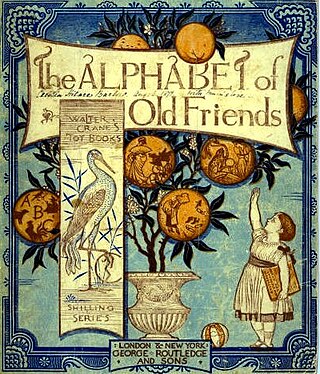
Toy books were illustrated children's books that became popular in England's Victorian era. The earliest toy books were typically paperbound, with six illustrated pages and sold for sixpence; larger and more elaborate editions became popular later in the century. In the mid-19th century picture books began to be made for children, with illustrations dominating the text rather than supplementing the text.
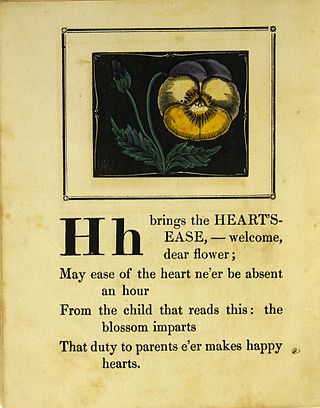
Dean & Son was a 19th-century London publishing firm, best known for making and mass-producing moveable children's books and toy books, established around 1800. Thomas Dean founded the firm, probably in the late 1790s, bringing to it innovative lithographic printing processes. By the time his son George became a partner in 1847, the firm was the preeminent publisher of novelty children's books in London. The firm was first located on Threadneedle Street early in the century; it moved to Ludgate Hill in the middle of the century, and then to Fleet Street from 1871 to 1890. In the mid-20th century the firm published books by Enid Blyton and children's classics in the Dean's Classics series.


