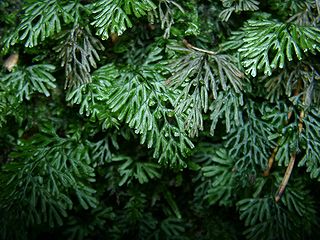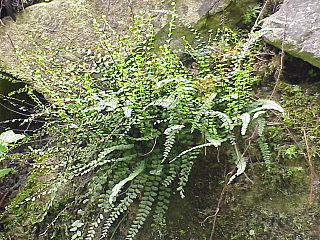
Asplenium is a genus of about 700 species of ferns, often treated as the only genus in the family Aspleniaceae, though other authors consider Hymenasplenium separate, based on molecular phylogenetic analysis of DNA sequences, a different chromosome count, and structural differences in the rhizomes. The type species for the genus is Asplenium marinum.

Amphiprion melanopus, also known as the cinnamon clownfish, fire clownfish, red and black anemonefish, black-backed anemonefish or dusky anemonefish is a widely distributed anemonefish chiefly found in the western and southern parts of the Pacific Ocean.. The species scientific name 'melanopus' is Greek, meaning black feet in reference to the black pelvic fins. Like all anemonefishes it forms a symbiotic mutualism with sea anemones and is unaffected by the stinging tentacles of the host anemone. It is a sequential hermaphrodite with a strict sized based dominance hierarchy: the female is largest, the breeding male is second largest, and the male non-breeders get progressively smaller as the hierarchy descends. They exhibit protandry, meaning the breeding male will change to female if the sole breeding female dies, with the largest non-breeder becomes the breeding male.
British NVC community OV39 is one of the open habitat communities in the British National Vegetation Classification system. It is one of six communities of crevice, scree and spoil vegetation.
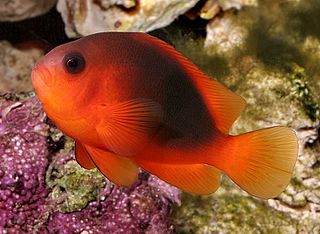
The red saddleback anemonefish, Amphiprion ephippium, also known as the saddle anemonefish, is a marine fish belonging to the family Pomacentridae, the clownfishes and damselfishes.
Ceradenia melanopus is a species of grammitid fern. It is endemic to Ecuador. Its natural habitat is subtropical or tropical moist montane forests. It is threatened by habitat loss.
Trichomanes angustatum is a species of fern in the Hymenophyllaceae family. It is found on Tristan da Cunha. Its natural habitats are subantarctic shrubland and subantarctic grassland.

Trichomanes is a large genus of ferns in the family Hymenophyllaceae, termed bristle ferns. Some botanists place it in its own family, Trichomanaceae. All ferns in the hymenophylloid clade are filmy ferns, with leaf tissue typically 2 cells thick. This thinness generally necessitates a permanently humid habitat, and makes the fronds somewhat translucent.
Trichomanes paucisorum is a species of fern in the Hymenophyllaceae family. It is endemic to Ecuador. Its natural habitat is subtropical or tropical moist lowland forests. It is threatened by habitat loss.
Trichomanes tenuissimum is a species of fern in the Hymenophyllaceae family. It is endemic to Ecuador. Its natural habitat is subtropical or tropical moist lowland forests. It is threatened by habitat loss.

Trichomanes speciosum, commonly known as Killarney fern, is a species of fern found widely in Western Europe. It is most abundant in Ireland, the United Kingdom, Brittany, Galicia, Canary Islands, Madeira and the Azores, but is also found in other locations including France, Spain, Portugal and Italy.
Asplenium trichomanes is a small fern in the spleenwort genus Asplenium. It is a widespread and common species, occurring almost worldwide in a variety of rocky habitats. It is a variable fern with several subspecies.
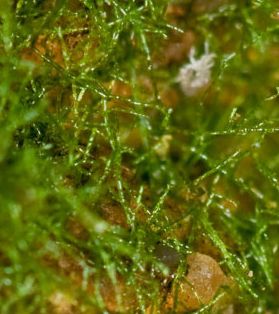
Trichomanes intricatum is known as the weft fern. This is an unusual filmy fern that grows in rock shelters and crevices in the eastern United States, being known only from its gametophyte generation. It is a rare plant that is protected in several states.
Polyporus melanopus is a species of mushroom in the genus Polyporus. It can be found growing on dead wood.

Asplenium viride is known as the green spleenwort because of its green stipes and rachides. This feature easily distinguishes this species from the very similar-looking maidenhair spleenwort, Asplenium trichomanes.
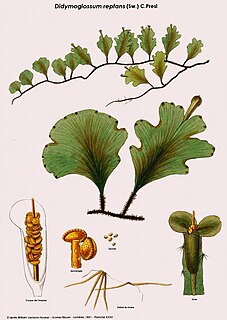
Didymoglossum is a tropical genus of ferns in the family Hymenophyllaceae. It comprises more than 30 epilithic or low-epiphytic species under two subgenera.
Coradion melanopus, known commonly as the twospot coralfish, is a species of marine fish in the family Chaetodontidae.

Trichomanes boschianum, the Appalachian bristle fern or Appalachian filmy fern, is a small delicate perennial leptosporangiate fern which forms colonies with long, black creeping rhizomes. The evergreen fronds are bipinnatifid, deeply and irregularly dissected, about 4 to 20 cm long, 1 to 4 cm across with winged stipes 1 to 7 cm long and light green in colour. The common name derives from the leaves which are very thin, only a single cell thick, missing an epidermis and translucent, giving the appearance of a wet film.
The Dark sea catfish is a species of catfish in the family Ariidae. It was described by Albert Günther in 1864. It is a tropical, freshwater catfish which occurs in Guatemala. It reaches a total length of 23 cm (9.1 in).