
Club Athletico Paranaense is a Brazilian football team from the city of Curitiba, capital city of the Brazilian state of Paraná, founded on 26 March 1924.

The Argentina national rugby union team represents Argentina in men's international competitions, The Argentine Rugby Union. Officially nicknamed Los Pumas, they play in sky blue and white jerseys. They are ranked 7th in the world by World Rugby, making them by some distance the highest-ranked nation in the Americas.

Club Santos Laguna S.A. de C.V., better known as just Santos Laguna, is a Mexican professional football club based in Torreón, Coahuila. The team competes in the Liga MX, the top tier of Mexican football.

Throwback uniforms, throwback jerseys, retro kits or heritage guernseys are sports uniforms styled to resemble the uniforms that a team wore in the past. One-time or limited-time retro uniforms are sometimes produced to be worn by teams in games, on special occasions such as anniversaries of significant events.

Colo-Colo, officially Club Social y Deportivo Colo-Colo, is a Chilean professional football club based in Macul, Santiago. Founded in 1925 by David Arellano, it competes in the Chilean Primera División, from which the club has never been relegated. The team has played its home games at Estadio Monumental David Arellano since 1989. Colo-Colo is regarded as the most successful club in Chilean football.

Club Universidad de Chile is a professional football club based in Santiago, Chile, that plays in the Primera División.
Club Deportivo Universidad Católica, known as Universidad Católica, is a professional football club based in Santiago, Chile. Founded in 1937 they play in the Primera División, the top flight of Chilean football. The team has played its home games at Estadio San Carlos de Apoquindo since 1988.

Danubio Fútbol Club is a Uruguayan football club based in Jardines del Hipódromo, Montevideo that currently plays in the Uruguayan Primera División.

Umbro is an English sports equipment manufacturer founded in 1924 in Wilmslow, Cheshire, and based in Manchester. They specialise in football and rugby sportswear featuring their Double Diamond logo. Umbro products are marketed in over 100 countries.

Club de Deportes Cobreloa S.A.D.P., commonly referred to as Cobreloa, is a Chilean football professional club based in Calama, Región de Antofagasta, Chile. They compete in the Primera División. The club's home ground is the Estadio Zorros del Desierto.

Club Unión Española S.A.D.P. is a professional football club based in the Independencia neighborhood, commune of Santiago, Chile. They currently participate in the Primera División de Chile. It has a branch of women's football, and competes in national tournaments with its lower categories. Acclaimed as one of the four great of Chilean football, it is one of the longest-lived teams in the country.

Estadio Nacional Julio Martínez Prádanos is the national stadium of Chile, and is located in the Ñuñoa district of Santiago. It is the largest stadium in Chile with an official capacity of 48,665. It is part of a 62 hectare sporting complex which also features tennis courts, an aquatics center, a modern gymnasium, a velodrome, a BMX circuit, and an assistant ground/warmup athletics track.

Huachipato FC is a Chilean football club based in Talcahuano that currently plays in the Chilean Primera División. Huachipato was founded on 7 June 1947 by workers of the homonymous steel mill in Talcahuano, and it currently plays its home games at the Estadio Huachipato-CAP Acero, which it owns, making it one of the five Chilean professional football clubs to own their own ground. Originally a multisports club, Huachipato became a football club in 2015.

Club de Deportes Santiago Wanderers is a football club based in Valparaíso, a founding member of the Chilean Football Federation. Their home ground, Estadio Elías Figueroa Brander, is in the north-west of the city. Wanderers have played their games there since 1931 after moving from Barrio Puerto.

O'Higgins Fútbol Club, also known as O'Higgins de Rancagua, is a Chilean professional football club based in Rancagua, that currently plays in the Campeonato Nacional. The club's home stadium is Estadio El Teniente, opened in 1945 and renovated for the 2015 Copa América, which was hosted by Chile.
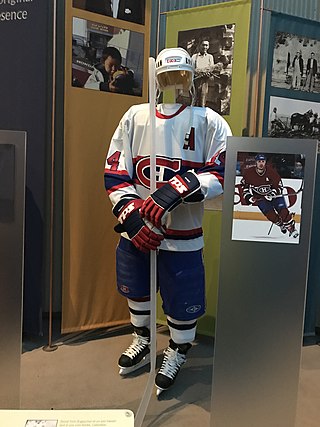
Players in the National Hockey League wear equipment which allows their team affiliation to be easily identified, unifying the image of the team. An NHL uniform consists of a hockey jersey, hockey pants, socks, gloves, and a helmet.
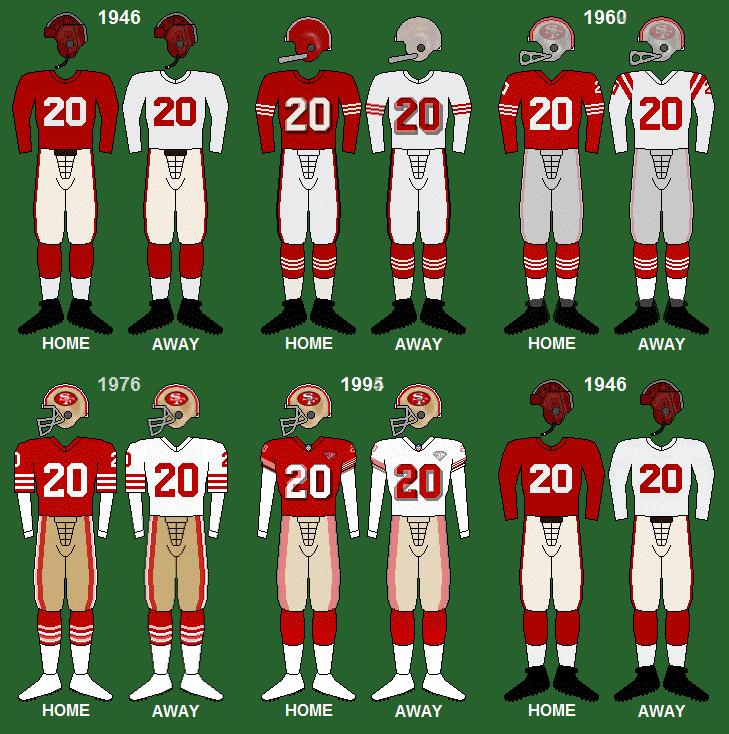
The logo and uniforms of the San Francisco 49ers have evolved since their inception in 1946.
Fenix Football Club Sydney, is an Australian association football club located in Fairfield, New South Wales. The club was founded on 15 August 2004, currently a member of the Sydney Amateur Football League under the Football NSW federation. The club is largely supported by members of the Latin American Australian community.
Club Deportivo y Social Colo-Colo B, usually called Colo-Colo B, is a Chilean football team from Santiago. They are the reserve team of Colo-Colo, and are currently competing in the third tier of Chilean football, the Segunda División.
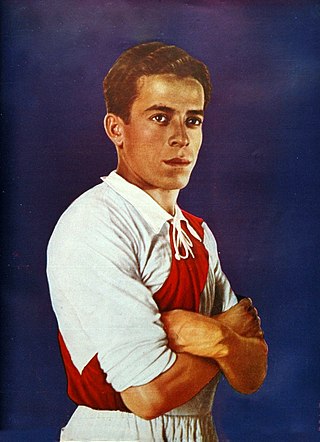
The Peru national football team kit is the official sportswear used by the association football team organised by the Peruvian Football Federation (FPF) to represent Peru in international football friendlies and competitions.
