
Cochise County is a county in the southeastern corner of the U.S. state of Arizona. It is named after Cochise,a Chiricahua Apache who was a key war leader during the Apache Wars.
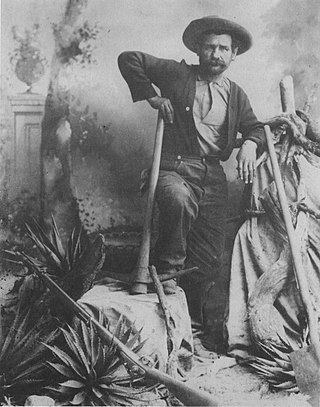
George Warren worked as a prospector in the Tombstone and Bisbee,Arizona region during the late 19th century. He is credited with having located the body of copper ore,which later was known as the Copper Queen Mine,one of Arizona's most productive copper mines. Warren drank too much and bet his interest in the mine on a foot race against a horse and lost.
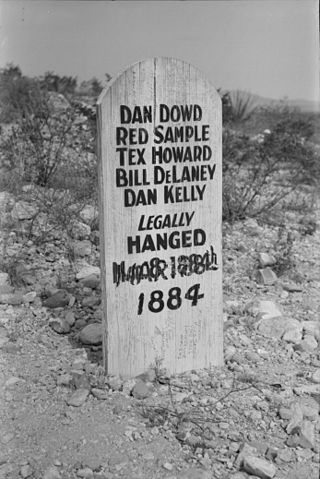
The Bisbee massacre occurred in Bisbee,Arizona,on December 8,1883,when six outlaws who were part of the Cochise County Cowboys robbed a general store. Believing the general store's safe contained a mining payroll of $7,000,they timed the robbery incorrectly and were only able to steal between $800 and $3,000,along with a gold watch and jewelry. During the robbery,members of the gang killed five people,including a lawman and a pregnant woman. Six men were convicted of the robbery and murders. John Heath,who was accused of organizing the robbery,was tried separately and sentenced to life in prison. The other five men were convicted of murder and sentenced to hang.

The 1914 Arizona gubernatorial election took place on November 3,1914,for the post of the Governor of Arizona. The Supreme Court of Arizona ruled that there would be no statewide elections in 1912,thus extending the terms to sync up with elections on even years. The Democratic nominee was incumbent governor George W. P. Hunt,his Republican opponent was the final Delegate to Congress from Arizona Territory,Ralph H. Cameron. Cameron was disadvantaged by the same reason the previous Republican nominee Wells was:he had opposed statehood with the present Constitution.

The 1918 Arizona gubernatorial election took place on November 5,1918,for the post of the Governor of Arizona. Thomas Campbell,who served a partial term in 1917 and had his election overturned by the Supreme Court of Arizona,returned to contest the Governors office. Incumbent Governor Hunt declined to run again after the stress of the close elections and the year-long court battle. Despite falling to its lowest percentage in years,the sole third party challenger held the difference between the two candidates. The Democratic challenger was state senator Fred T. Colter,a pro-Hunt Democrat.
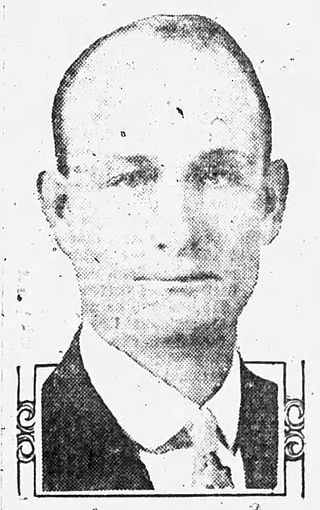
Fred Tuttle Colter was an Arizona rancher and farmer,as well as being the state senator for Apache County beginning with Arizona's second state legislature in 1915. Colter spent six terms in the Arizona Senate. He also led the fight on Arizona's behalf to maintain control over the water from the Colorado River,coining the slogan,"Save the Colorado for Arizona". He was a close ally of the state's first governor,George W. P. Hunt. Prior to his election to the state senate,Colter had served as the state's fair commissioner.

Fred Arthur Sutter Sr. was an Arizona attorney and politician. He ran several times,unsuccessfully,for governor of the state,and was elected several times to the state legislature.
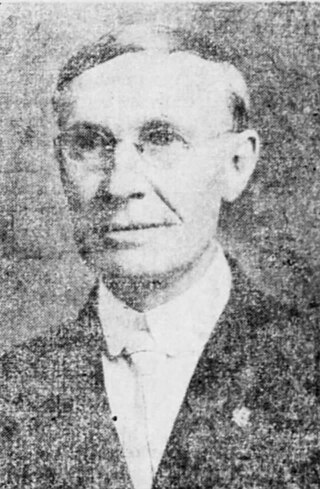
William Prescott Sims ) was a politician and dentist from Arizona. He served in Arizona State Senate in the 1st,2nd,and 5th - 7th State Legislatures. He served as the President of the Senate during the 2nd Legislature.

Charles M. Roberts was an American politician who served in the first Arizona State Senate.
Alfred Kinney was a politician from Arizona. He was one of the first two state senators from Gila County,serving in the first three state legislatures,and the 6th through 10th legislatures,a total of eight legislatures overall.
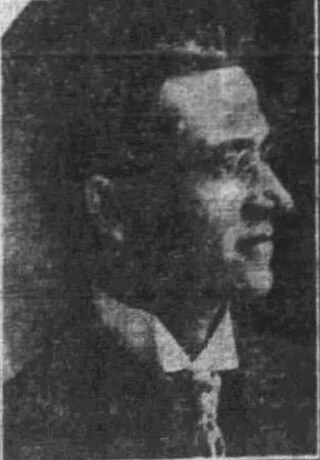
John T. Hughes was a politician from Arizona who served in the 1st Arizona State Legislature. He was also a newspaper man,editing and publishing his father's paper,the Arizona Daily Star,and an attorney,the first native-born Arizonan to be admitted to the Arizona bar. Additionally,he had several mining and real estate interests.
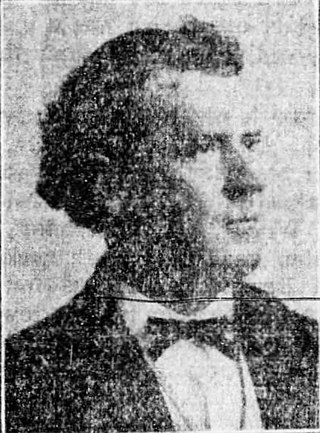
Colonel A. A. Worsley was a politician from Arizona who served in the 1st Arizona State Legislature. Worsley was also an attorney,who practiced in Tucson,Arizona. He was married to Alice J. Worsley.

John Elmer Bacon was a politician from Arizona who served a single term in the Arizona state senate during the 2nd Arizona State Legislature. He was a doctor and surgeon who was an early proponent of Joseph Lister's theories on antiseptic measures. He was a charter member of the American College of Surgeons,and helped found the Southwest Medical and Surgical Association,and was president of the Arizona Medical Association. He was also one of the founders of the Arizona State League,a professional baseball league.

John W. Buchanan (1871–1941) was an American politician from Arizona who served in the states first three legislatures,the first two in the House of Representatives,and the third in the State Senate. During his political career he also served as Pima County Treasurer and as Tucson's City Treasurer.
Thomas A. Hughes was an American politician and businessman from Arizona. He served a single term in the Arizona State House of Representatives during the 3rd Arizona State Legislature,and a single term in the Arizona State Senate during the 4th Arizona State Legislature. He owned an insurance agency in Bisbee,Arizona,and later served as an officer of the Hartford Indemnity and Insurance Company.
David C. O'Neil was an American politician from Arizona. He served a single term in the Arizona State House of Representatives during the 3rd Arizona State Legislature,and a single term in the Arizona State Senate during the 4th Arizona State Legislature. He served 13 years on the Arizona State Tax Commission,6 of them as chairman. He was appointed in 1934 to serve the last year of an unexpired term,then was re-elected twice,in 1934 and 1940. Early in his career he worked in the hospitality and transportation industries.
Harold A. Elliott was an American lawyer and politician from Arizona. He served several terms in the Arizona State Senate from the 4th Arizona State Legislature through the 7th Arizona State Legislature. He graduated from the University of Michigan Law School,and became an attorney,eventually becoming Phelps Dodge's chief counsel.
John P. Cull was an American politician from Arizona. He served several terms in the Arizona State Legislature,beginning in Arizona House of Representatives during the 4th Arizona State Legislature,and then in the Arizona State Senate first in the 5th Arizona State Legislature,and again in the 10th Arizona State Legislature. In both of his re-election attempts to the State Senate he was defeated in the Democrat's primary. During his career he was involved in the banking and mercantile industries,and later on was one of the largest cattle ranchers in Cochise County. During the 1930s he also served on the Arizona State Livestock Sanitary Board.
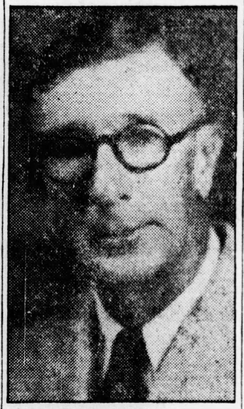
W. B. Kelly,was an American politician from Arizona. He served three terms in the Arizona State Senate during the 10th,11th,and 12th Arizona State Legislatures,holding the seat from Graham County. He was a pioneer newspaper man in Arizona,owning and editing several newspapers,including the Arizona Daily Star,Bisbee Daily Review,and the Graham Guardian.

Henry A. Morgan was an Arizona pioneer. He was born in California in 1861. He moved to Tucson,Arizona in 1880,where he worked for L. Zeckendorf and Company. While in Tucson,he met John H. Norton,who owned the trading post at Fort Grant. He moved to Fort Grant to take over the books for Norton,and while there,he worked as a justice of the peace and postmaster. In approximately 1888,the trading post at Fort Grant was closed,and Norton moved his mercantile enterprise to Willcox,and Morgan moved with the business. When Norton incorporated his business,it was with Morgan as his partner,and the company was called the Norton Morgan Commercial Company,which became one of the largest commercial enterprises in Arizona. Upon Norton's death,the business became the sole property of Morgan.

