Related Research Articles
Gero von Wilpert was a German author, a senior lecturer in German at the University of New South Wales and, from 1980, Professor of German at the University of Sydney.
Under German law, the registered design, formerly called Geschmacksmuster, is a form of intellectual property that extends industrial design rights over the visual design of objects that is not purely utilitarian. The term of a Geschmacksmuster is twenty-five years, as it is for a community design.

The Gottfried Wilhelm Leibniz Prize, or Leibniz Prize, is awarded by the German Research Foundation to "exceptional scientists and academics for their outstanding achievements in the field of research". Since 1986, up to ten prizes have been awarded annually to individuals or research groups working at a research institution in Germany or at a German research institution abroad. It is considered the most important research award in Germany.

Otfried Höffe is a German philosopher and professor.
Ernst Forsthoff was a German scholar of constitutional law and a leading theorist of administrative law.
Christian Habicht was a German historian of ancient Greece and an epigrapher in Ancient Greek.
Ernst Stengelin was a German SS-Unterscharführer (Corporal) who served at Treblinka and Sobibor extermination camps and was killed in the Sobibor uprising. Nothing is known about his personal life.
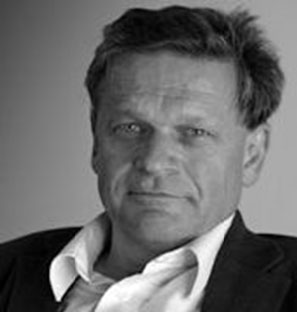
Axel Michaels is a Professor of Classical Indology and Religious Studies at Heidelberg University, former Co-Director of the Cluster of Excellence "Asia and Europe in a Global Context" (2014-2019) and since 2014 the Director of the research project Documents on the History of Religion and Law of Pre-modern Nepal. He also was the Speaker of the Collaborative Research Centre SFB 619 “Ritual Dynamics” from 2002 until 2013.

Peter-André Alt is a German literary scholar, former president of the Freie Universitaet of Berlin and, since August 2018, president of the German Rectors' Conference (HRK). Alt is married to the writer Sabine Alt and has two adult sons.
Dieter Medicus was a German jurist. Until his retirement in 1994 he was professor of Private Law and history of Ancient law at the University of Munich.
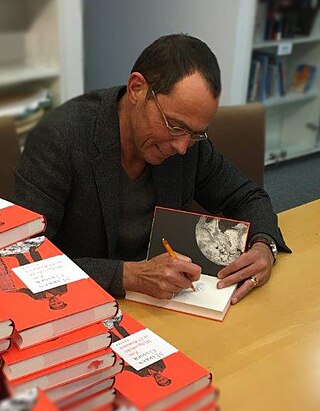
Markus Gasser is an Austrian literary scholar and author.

Oliver Lepsius is a German professor of jurisprudence at the University of Münster.
Uvo Hölscher was a German classical philologist.
Dieter Nörr was a German scholar of Ancient Law. He studied at the Ludwig Maximilian University of Munich from 1949 to 1953. After receiving his doctorate with a dissertation on criminal law in the Code of Hammurabi, Nörr undertook postdoctoral study at the University of Heidelberg and the University of Rome. He worked for a year as a post-doctoral assistant at the Institute for Criminal Law and Legal Philosophy under Karl Engisch. He received his Habilitation at the University of Munich, under Professor Wolfgang Kunkel, in 1959 with a work on Byzantine Contract Law and was promoted to Privatdozent. He then accepted the Chair of Roman and Civil Law at the University of Hamburg. In 1960, Nörr became Full Professor at the University of Münster. After he declined positions at the Universities of Hamburg, Tübingen, and Bielefeld, he returned to the Ludwig Maximilian University of Munich as Professor, Chair of Roman Law, and Director of the Leopold Wenger Institute for Ancient Legal History and Papyrus Research. His brother, Knut Wolfgang Nörr, was also a professor of Legal History, especially Canon Law, at the University of Tübingen.
Nils Ole Oermann is a German academic and business ethicist.
Florian Prey is a German opera singer. He is the son of German baritone Hermann Prey.

Menno Aden is a German lawyer, former politician and translator. He is the founder of the Neue Rechte and has written speeches and pamphlets with historical revisionism content.
Andreas Robert Roth is a German lawyer and professor.
Uwe Wesel was a German academic, lawyer, and legal historian. He taught at the Free University of Berlin (FU).
Reinhard Mehring is a German political scientist and philosopher who has written extensively on Carl Schmitt.
References
- ↑ Website of the Nordakademie – Graduate School, Website Nordakademie, 20.02.2015, accessed on the 20.02.2015.
- ↑ Website of the University of Münster, Website University of Münster, 20.02.2015, accessed on the 20.02.2015.
- ↑ Website of Römermann Rechtsanwälte AG, Website of Römermann Rechtsanwälte AG, 29.07.2015, accessed on the 29.07.2015.
- ↑ Website of the Wire Institute, Website of the Wire Institute, 22.09.2016, accessed on the 22.09.2016.
- ↑ Website of the journal - FuR Familie und Recht, Website FuR, 20.02.2015, accessed on the 20.02.2015.
| International | |
|---|---|
| National | |
| People | |
