 |
| |||
|---|---|---|---|
| +... |
| |
| |||
|---|---|---|---|
| +... |

Charles "Lucky" Luciano was an Italian-born gangster who operated mainly in the United States. Luciano started his criminal career in the Five Points Gang and was instrumental in the development of the National Crime Syndicate. Luciano is considered the father of modern organized crime in the United States for the establishment of the Commission in 1931, after he abolished the boss of bosses title held by Salvatore Maranzano following the Castellammarese War. He was also the first official boss of the modern Genovese crime family.
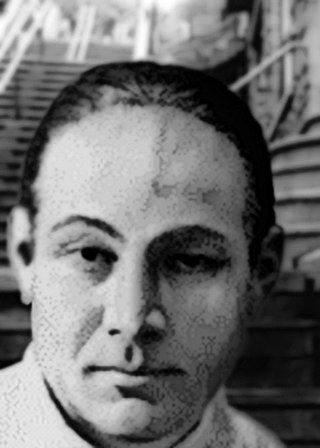
Salvatore Maranzano, nicknamed Little Caesar, was an Italian-American mobster from the town of Castellammare del Golfo, Sicily, and an early Cosa Nostra boss who led what later would become the Bonanno crime family in New York City. He instigated the Castellammarese War in 1930 to seize control of the American Mafia, winning the war after the murder of rival faction head Joe Masseria in April 1931. He then briefly became the Mafia's capo di tutti capi and formed the Five Families in New York City, but was murdered on September 10, 1931, on the orders of Charles "Lucky" Luciano, who established The Commission, in which families shared power to prevent future turf wars.

Giuseppe "Joe the Boss" Masseria was an early Italian-American Mafia boss in New York City. He was boss of what is now called the Genovese crime family, one of the New York City Mafia's Five Families, from 1922 to 1931. In 1930, he battled in the Castellammarese War to take over the criminal activities in New York City. The war ended with his murder on April 15, 1931, in a hit ordered by his own lieutenant, Charles "Lucky" Luciano, in an agreement with rival faction head Salvatore Maranzano.
The Castellammarese War was a bloody power struggle for control of the Italian-American Mafia that took place in New York City, New York, from February 26, 1930 until April 15, 1931, between partisans of Joe "The Boss" Masseria and those of Salvatore Maranzano. The war was named after the Sicilian town of Castellammare del Golfo, the birthplace of Maranzano. Maranzano's faction won and divided New York's crime families into the Five Families; Maranzano declared himself capo di tutti i capi. However, Maranzano was murdered in September 1931 on orders of Lucky Luciano, who established a power-sharing arrangement called the Commission, a group of Mafia families of equal stature, to avoid such wars in the future.
Manfredi "Al" or "Alfred" Mineo was an Italian American mobster, who headed a strong American Mafia crime family during the Castellammarese War. Mineo's organization would eventually become the present-day Gambino crime family.
The Five Families refer to five Italian American Mafia crime families that operate in New York City. In 1931, the five families were organized by Salvatore Maranzano following his victory in the Castellammarese War.

Thomas Gaetano Lucchese, sometimes known by the nicknames "Tommy", "Thomas Luckese", "Tommy Brown" or "Tommy Three-Finger Brown" was an Italian-American gangster and founding member of the Mafia in the United States, an offshoot of the Cosa Nostra in Sicily. From 1951 until 1967, he was the boss of the Lucchese crime family, one of the Five Families that dominate organized crime in New York City.

Thomas Gagliano was an Italian-born American mobster and boss of what U.S. federal authorities would later designate as the Lucchese crime family, one of the "Five Families" of New York City. He was a low-profile boss for over two decades. His successor was his longtime loyalist and underboss, Tommy Lucchese.

Giuseppe "Joe" Aiello was a Sicilian bootlegger and organized crime leader in Chicago during the Prohibition era. He was best known for his long and bloody feud with Chicago Outfit boss Al Capone.
Stefano Ferrigno was an American mobster of Sicilian origin who led an important Italian criminal gang in the 1920s. Ferrigno was murdered along with Alfred Mineo during the so-called Castellammarese War.

The Atlantic City Conference held between 13–16 May 1929 was a historic summit of leaders of organized crime in the United States. It is considered by most crime historians to be the earliest organized crime summit held in the US. The conference had a major impact on the future direction of the criminal underworld and it held more importance and significance than the Havana Conference of 1946 and the Apalachin meeting of 1957. It also represented the first concrete move toward a National Crime Syndicate.

Gaetano Reina was an Italian-American gangster. He was an early American Mafia boss who was the founder of what has for many years been called the Lucchese crime family in New York City. He led the family until his murder on February 26, 1930, on the orders of Joe Masseria.

Vito Bonventre was a New York City mobster who was a leading member of the Brooklyn gang that would later become the Bonanno Crime Family. He was arrested but then released in 1921 as the leader of a group known as the "Good Killers". Bonventre was murdered in 1930 at the start of a conflict between his gang and a rival gang led by Joe Masseria, referred to as the Castellammarese War.
Gaspar Milazzo was a major organized-crime figure in Detroit, Michigan, during the Prohibition era. He had earlier been a member of the Brooklyn-based gang that would later become known as the Bonanno crime family.
Salvatore Sabella was an Italian-born crime boss of the Philadelphia crime family in the 1920s.
Antonio "the Gentleman" Genna was an Italian-born mobster in Chicago. He headed the Genna crime family with his brothers. Genna was ambushed by a Genna family turncoat on orders of North Side Gang leaders Vince Drucci and Bugs Moran.
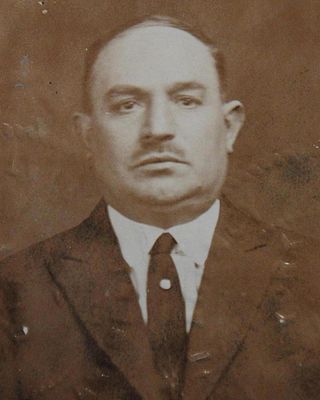
Nicolo "Cola" Schiro was an early Sicilian-born New York City mobster who, in 1912, became the boss of what later become known as the Bonanno crime family.
Organized crime in the 1920s.