
The Arabian Sea is a region of the northern Indian Ocean bounded on the north by Pakistan and Iran, on the west by the Gulf of Aden, Guardafui Channel and the Arabian Peninsula, on the southeast by the Laccadive Sea, on the southwest by the Somali Sea, and on the east by India. Its total area is 3,862,000 km2 (1,491,000 sq mi) and its maximum depth is 4,652 metres (15,262 ft). The Gulf of Aden in the west, connects the Arabian Sea to the Red Sea through the strait of Bab-el-Mandeb, and the Gulf of Oman is in the northwest, connecting it to the Persian Gulf.

The history of Saudi Arabia in its current form as a state began with its foundation in 1744, although the human history of the region extends as far as 20,000 years ago. The region has had a global impact twice in world history:
- In the 7th century it became the cradle of Islam and the capital of the Islamic Rashidun Caliphate.
- From the mid-20th century the discovery of vast oil deposits propelled it into a key economic and geo-political role.

The Arabian peninsula, simplified Arabia, is a peninsula of Western Asia situated northeast of Africa on the Arabian plate. From a geographical perspective, it is considered a subcontinent of Asia.

Wahhabism is an Islamic doctrine and religious movement founded by Muhammad ibn Abd al-Wahhab. It has been variously described as "ultraconservative", "austere", "fundamentalist", or "puritan(ical)"; as an Islamic "reform movement" to restore "pure monotheistic worship" (tawhid) by devotees; and as a "deviant sectarian movement", "vile sect" and a distortion of Islam by its opponents. The term Wahhabi(ism) is often used polemically and adherents commonly reject its use, preferring to be called Salafi or muwahhid. claiming to emphasize the principle of tawhid, for exclusivity on monotheism, dismissing other Muslims as practising shirk, (idolatry). It follows the theology of Ibn Taymiyyah and the Hanbali school of jurisprudence, although Hanbali leaders renounced Abd al-Wahhab's views.
A state-owned enterprise (SOE) is a business enterprise where the government or state has significant control through full, majority, or significant minority ownership. Defining characteristics of SOEs are their distinct legal form and operation in commercial affairs and activities. While they may also have public policy objectives, SOEs should be differentiated from government agencies or state entities established to pursue purely nonfinancial objectives.
The term basic law is used in some places as an alternative to "constitution", implying it is a temporary but necessary measure without formal enactment of constitution. A basic law is either a codified constitution, or in countries with uncodified constitutions, a law given to have constitution powers and effect. The name is usually used to imply an interim or transitory nature, or avoid attempting a claim to being "the highest law", often for religious reasons. In West Germany the term "Basic Law" (Grundgesetz) was used to indicate that the Basic Law was provisional until the ultimate reunification of Germany. But in 1990 no new constitution was adopted and instead the Basic Law was adopted throughout the entire German territory. Basic law is entrenched in that it overrides ordinary 'statute law' passed by the legislature.

The Arabian or Arab horse is a breed of horse that originated on the Arabian Peninsula. With a distinctive head shape and high tail carriage, the Arabian is one of the most easily recognizable horse breeds in the world. It is also one of the oldest breeds, with archaeological evidence of horses in the Middle East that resemble modern Arabians dating back 4,500 years. Throughout history, Arabian horses have spread around the world by both war and trade, used to improve other breeds by adding speed, refinement, endurance, and strong bone. Today, Arabian bloodlines are found in almost every modern breed of riding horse.

Saudi Arabia, officially the Kingdom of Saudi Arabia, is a country in Western Asia constituting the bulk of the Arabian Peninsula. With a land area of approximately 2,150,000 km2 (830,000 sq mi), Saudi Arabia is the largest sovereign state in the Middle East, geographically the fifth-largest in Asia, second-largest in the Arab world after Algeria and 12th-largest in the world. Saudi Arabia is bordered by Jordan and Iraq to the north, Kuwait to the northeast, Qatar, Bahrain, and the United Arab Emirates to the east, Oman to the southeast and Yemen to the south. It is separated from Israel and Egypt by the Gulf of Aqaba. It is the only nation with both a Red Sea coast and a Persian Gulf coast, and most of its terrain consists of arid desert, lowland and mountains. Saudi Arabia is the largest economy in the Middle East as of October 2018 and the 18th largest in the world. The total number of population of Saudi Arabia is 33.4 million with 50% of youth population are under 25.

Western Asia, West Asia, Southwestern Asia or Southwest Asia is the westernmost subregion of Asia. The concept is in limited use, as it significantly overlaps with the Middle East, the main difference usually being the exclusion of the majority of Egypt and the inclusion of the Caucasus. The term is sometimes used for the purposes of grouping countries in statistics. The total population of Western Asia is an estimated 300 million as of 2015. Although the term "Western Asia" is mostly used as a convenient division of contemporary sovereign states into a manageable number of world regions for statistical purposes, it is sometimes used instead of the more geopolitical term "Middle East".

The House of Saud is the ruling royal family of Saudi Arabia. It is composed of the descendants of Muhammad bin Saud, founder of the Emirate of Diriyah, known as the First Saudi state (1744–1818), and his brothers, though the ruling faction of the family is primarily led by the descendants of Ibn Saud, the modern founder of Saudi Arabia. The most influential position of the royal family is the King of Saudi Arabia. King Salman, who reigns currently, chose first his nephew and then his son as the crown prince without consulting the Allegiance Council. The family is estimated to comprise 15,000 members, but the majority of the power and wealth is possessed by a group of about 2,000 of them.
In contemporary literary studies, a theme is a central topic a text treats. Themes can be divided into two categories: a work's thematic concept is what readers "think the work is about" and its thematic statement being "what the work says about the subject".

Salman bin Abdulaziz Al Saud has been King of Saudi Arabia, Prime Minister of Saudi Arabia, and Custodian of the Two Holy Mosques since 23 January 2015.

Islamization, Islamicization or Islamification is the process of a society's shift towards Islam, such as found in Sudan, Pakistan, Iran, Malaysia, or Algeria. In contemporary usage, it may refer to the perceived imposition of an Islamist social and political system on a society with an indigenously different social and political background.
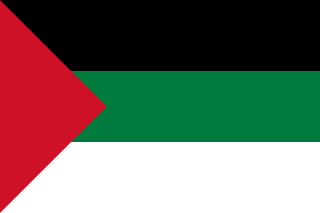
The Hashemite Kingdom of Hejaz was a state in the Hejaz region in the Middle East, the western portion of the Arabian peninsula ruled by the Hashemite dynasty. It achieved national independence after the destruction of the Ottoman Empire by the British Empire, during World War I, when the Sharif of Mecca fought in alliance with the British Imperial forces to drive the Ottoman Army from the Arabian Peninsula during the Arab Revolt.

Thamudic is a name invented by nineteenth-century scholars for large numbers of inscriptions in Ancient North Arabian (ANA) alphabets which have not yet been properly studied. It does not imply that they were carved by members of the ancient tribe of Thamud. These texts are found over a huge area from southern Syria to Yemen. In 1937, Fred V. Winnett divided those known at the time into five rough categories A, B, C, D, E. In 1951, some 9000 more inscriptions were recorded in south-west Saudi Arabia which have been given the name Southern Thamudic.
Ancient North Arabian (ANA) is a collection of scripts and possibly a language or family of languages used in central and northern Arabia from the 8th century BCE to the 4th century CE. The term "Ancient North Arabian" refers all of the so-called South Semitic scripts except Ancient South Arabian (ASA). To date, it has not been demonstrated that these scripts derive from a single ancestor not also shared by the ASA scripts. The hypothesis that all ANA alphabets derive from a single ancestor gave rise to the idea that the languages which these scripts express constitute a linguistic unity, a so-called ANA language. The validity of this hypothesis has been called into question.

Abdullah bin Abdulaziz Al Saud was King of Saudi Arabia and Custodian of the Two Holy Mosques from 2005 to his death in 2015. He ascended to the throne on 1 August 2005 upon the death of his half-brother, King Fahd.
Islam is the state religion of Saudi Arabia and its law requires all citizens to be Muslims. Public worship by adherents of religions other than Islam is forbidden. Any non-Muslim attempting to acquire Saudi Arabian nationality must convert to Islam. Saudi Arabia has been criticized for its implementation of Islamic law and its human rights record.

The King of Saudi Arabia is Saudi Arabia's absolute monarch who serves as head of state and head of government. He is the head of the Saudi royal family, the House of Saud. The King is called the Custodian of the Two Holy Mosques, a title that signifies Saudi Arabia's jurisdiction over the mosques of Masjid al Haram in Mecca and Al-Masjid an-Nabawi in Medina, replacing His Majesty in 1986.

Mohammed bin Salman bin Abdulaziz Al Saud, colloquially known as MbS, is the Crown Prince of Saudi Arabia. He is currently serving as the country's deputy prime minister and is also chairman of the Council for Economic and Development Affairs, chairman of the Council of Political and Security Affairs, and minister of defense – the world's youngest at the time of his appointment. He has been described as the power behind the throne of his father, King Salman. He was appointed crown prince in June 2017 following King Salman's decision to remove Muhammad bin Nayef from all positions, making Mohammed bin Salman heir presumptive to the throne.

