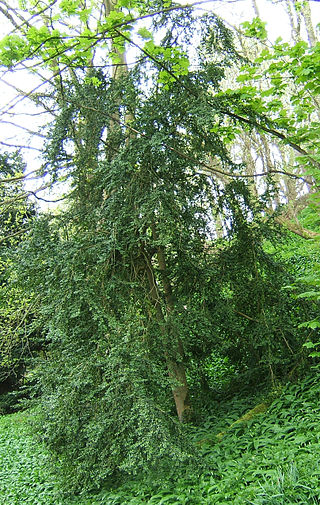
Buxus is a genus of about seventy species in the family Buxaceae. Common names include box and boxwood.

Thespesia is a genus of 14 flowering shrubs and trees in the Hibiscus family, Malvaceae, although within the family they are more closely related to cotton plants (Gossypium). The genus is distributed from the South Pacific through Asia, Africa, and the Caribbean.
Paul Arnold Fryxell was an American botanist known for his work on flowering plants, especially those within the Malvaceae.

Phymosia is a genus of flowering plants in the family Malvaceae.

Robinsonella is a genus of flowering plants in the family Malvaceae. It contains sixteen species of trees occurring from Costa Rica to southern Mexico, eight of which occur in the Mexican state of Chiapas.
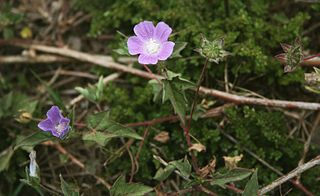
Anoda is a genus of flowering plants in the mallow family. It includes 24 species of herbs, native to the subtropical and tropical Americas from the southwestern United States through Mexico, Central America, and western South America to northern Argentina and southern Chile. They are generally erect plants with a variety of leaf shapes, and many bear colorful flowers. Most bear distinctive disk-shaped segmented fruits.
Talipariti was a genus of plants in the mallow family Malvaceae. It is now considered to be a synonym of Hibiscus, in which case its species form the section Hibiscus sect. Azanzae. There were about 22 species, exclusively tropical except for one species whose range extends into temperate areas of Japan and Korea. לכתוב בעברית בירושלים לא בעברית תודה

Fuertesimalva is a genus of flowering plants in the mallow family Malvaceae, native to Mexico, Venezuela, Colombia, Ecuador, Bolivia, Peru and Argentina. Most species in this genus were originally placed in Urocarpidium.
Krapovickasia is a genus of flowering plants in the mallow family Malvaceae, disjunctly distributed in Mexico, Brazil, Paraguay, Uruguay and Argentina. Perennial herbs, they have yellowish to peach or faded rose colored flowers.
Batesimalva is a genus of flowering plants belonging to the family Malvaceae.
Briquetia is a genus of flowering plants belonging to the family Malvaceae.
Fryxellia is a monotypic genus of flowering plants belonging to the family Malvaceae. It contains only one species, Fryxellia pygmaea(Correll) D.M.Bates.
Dendrosida is a genus of flowering plants belonging to the family Malvaceae.
Hochreutinera is a genus of flowering plants belonging to the family Malvaceae.
Meximalva is a genus of flowering plants belonging to the family Malvaceae.
Periptera is a genus of flowering plants belonging to the family Malvaceae.

Rhynchosida is a genus of flowering plants belonging to the family Malvaceae.
Greta Albrecht Fryxell was a marine scientist known for her work on the biology and taxonomy of diatoms. In 1996, she was elected a fellow of the American Association for the Advancement of Science.
