| This article is part of a series on the politics and government of Anguilla |
|---|
A general election was held in Anguilla in March 1994. [1] Despite a large drop in the Anguilla United Party's percentage of the vote, the loss of the Road North constituency to the Anguilla Democratic Party gave the second and third parties enough seats to form a coalition government. Hubert Hughes of the Anguilla United Party, who had stood on a pro-independence platform, was appointed Chief Minister following the election. [1] The small Anguilla for Good Government party replaced PACE as the fourth party, but like its predecessor, failed to win representation. The future Chief Minister Osbourne Fleming held his seat of Sandy Hill as an independent.
Anguilla is a British overseas territory in the Caribbean. It is one of the most northerly of the Leeward Islands in the Lesser Antilles, lying east of Puerto Rico and the Virgin Islands and directly north of Saint Martin. The territory consists of the main island of Anguilla, approximately 16 miles (26 km) long by 3 miles (4.8 km) wide at its widest point, together with a number of much smaller islands and cays with no permanent population. The island's capital is The Valley. The total land area of the territory is 35 square miles (91 km2), with a population of approximately 14,764.
Road North is a constituency of the Anguillan House of Assembly. The incumbent is Edison Baird of the Anguilla United Movement.
The Anguilla Democratic Party is a political party in Anguilla. At the 21 February 2005 elections, the party was part of the Anguilla United Front, which won 38.9% of popular votes and four out of seven elected seats.
Island Harbour is a constituency of the Anguillan House of Assembly. The incumbent is Othlyn Vanterpool of the Anguilla United Front.
Valley North is a constituency of the Anguillan House of Assembly. The incumbent is Evans Rodgers of the Anguilla United Front.
Valley South is a constituency of the Anguillan House of Assembly. The incumbent is Evan Gumbs of the Anguilla United Movement.
Road South is a constituency of the Anguillan House of Assembly. The representative is the incumbent Chief Minister Hubert Hughes of the Anguilla United Movement, who has held the seat since 1989.
West End is a constituency of the Anguillan House of Assembly. The incumbent, elected in the Anguillan general election, 2015 is Cardigan Connor of the Anguilla United Front, replacing Walcott Richardson of the Anguilla United Movement.
Hubert Benjamin Hughes is a politician from Anguilla. He was the island territory's Chief Minister from 16 March 1994 to 6 March 2000, and again between February 2010 and April 2015.
Sandy Hill is a constituency of the Anguillan House of Assembly. The incumbent is Jerome Roberts of the Anguilla Progressive Party.
Osbourne Berrington Fleming is a politician and a former chief minister of Anguilla. He held that post from March 6, 2000, three days after the Anguilla United Front, a conservative coalition which included Fleming's Anguilla National Alliance won parliamentary elections, gaining at least 4 of the 7 seats, until February 15 2010 in which he retired from his seat as the chief minister of Anguilla. Mr. Fleming was a prominent and successful businessman prior to entering politics. He served for many years as Minister of Finance before winning election as Anguilla's Chief Minister.
| Anguilla General Election 1994 [2] | |||||||||||||||
|---|---|---|---|---|---|---|---|---|---|---|---|---|---|---|---|
| Candidates | Votes | ||||||||||||||
| Party | Stood | Elected | Gained | Unseated | Net | % of total | % | № | Net % | ||||||
| ANA | 5 | 2 | 0 | 1 | - 1 | 28.6 | 36.1 | 1,608 | -4.4 | ||||||
| ADP | 5 | 2 | 1 | 0 | +1 | 28.6 | 32.5 | 1,448 | +7.5 | ||||||
| AUP | 4 | 2 | 0 | 0 | ± 0 | 28.6 | 12.1 | 540 | -10.0 | ||||||
| AGG | 2 | 0 | 0 | 0 | ± 0 | 0.0 | 11.7 | 520 | N/A | ||||||
| Independent | 3 | 1 | 0 | 0 | ± 0 | 14.3 | 7.5 | 335 | +0.6 | ||||||
Total votes: 4,451. In addition to the elected members, there were five appointed members, four appointed by the governor and one by the ruling party/coalition.
| Party | Candidate | Votes | % | ± | |
|---|---|---|---|---|---|
| ANA | Kenneth Harrigan | 438 | 55.6 | -0.6 | |
| Anguilla for Good Government | Londrane Hodge | 328 | 41.6 | N/A | |
| Independent | Cuthwin Webster | 22 | 2.8 | N/A | |
| Majority | 110 | 14.0 | +1.7 | ||
| Turnout | 788 | ||||
| ANA hold | Swing | N/A | |||
| Party | Candidate | Votes | % | ± | |
|---|---|---|---|---|---|
| ADP | Edison Baird | 294 | 50.8 | +8.4 | |
| ANA | David Carthy | 257 | 44.4 | -13.2 | |
| AUP | Restormel Franklin | 28 | 4.8 | N/A | |
| Majority | 37 | 6.4 | |||
| Turnout | 579 | ||||
| ADP gain from ANA | Swing | 10.8 | |||
| Party | Candidate | Votes | % | ± | |
|---|---|---|---|---|---|
| AUP | Hubert B. Hughes | 308 | 47.5 | -6.6 | |
| ANA | Everet Romney | 165 | 25.5 | -2.6 | |
| ADP | Samuel Connor | 112 | 17.3 | +8.1 | |
| Independent | Alan Gumbs | 63 | 9.7 | N/A | |
| Majority | 143 | 22.1 | |||
| Turnout | 648 | ||||
| AUP hold | Swing | -2.0 | |||
| Party | Candidate | Votes | % | ± | |
|---|---|---|---|---|---|
| Independent | Osbourne Fleming | 250 | 56.6 | -10.9 | |
| Anguilla for Good Government | Ronald Webster | 192 | 43.4 | N/A | |
| Majority | 58 | 13.1 | -21.9 | ||
| Turnout | 442 | ||||
| Independent hold | Swing | N/A | |||
| Party | Candidate | Votes | % | ± | |
|---|---|---|---|---|---|
| ANA | Eric Reid | 411 | 50.6 | -6.9 | |
| ADP | Leroy C. Rogers | 402 | 49.4 | +15.0 | |
| Majority | 9 | 1.1 | |||
| Turnout | 813 | ||||
| ANA hold | Swing | -11.0 | |||
| Party | Candidate | Votes | % | ± | |
|---|---|---|---|---|---|
| ADP | Victor Banks | 525 | 61.8 | -11.3 | |
| ANA | Merritt Lake | 307 | 36.1 | +2.5 | |
| Anguilla United Party | Evan R. Lake | 18 | 2.1 | N/A | |
| Majority | 218 | 25.6 | |||
| Turnout | 850 | ||||
| ADP hold | Swing | -6.9 | |||
| Party | Candidate | Votes | % | ± | |
|---|---|---|---|---|---|
| AUP | Albert E. Hughes | 186 | 61.8 | +13.7 | |
| ADP | Kenswick Richardson | 115 | 38.2 | +14.5 | |
| Majority | 71 | 23.6 | |||
| Turnout | 301 | ||||
| AUP hold | Swing | ||||
The history of Anguilla runs from the beginning of human habitation, probably via settlement from South America, through its colonization by the English in the early modern period, to the present day. Following a series of rebellions and a short-lived period as an independent republic during the 1960s, Anguilla has been a separate British overseas territory since 1980.
The music of Anguilla is part of the Lesser Antillean music area. The earliest people of the island were the Caribs and Arawaks, who arrived from South America. English settlers from St Kitts and Irish people later colonised the island. Unlike regional neighbours, however, the plantation system of agriculture that relied on chattel slavery never took root in Anguilla, causing a distinctly independent cultural makeup. The most recent influences on Anguilla's musical life come from elsewhere in the Caribbean, especially the music of Trinidad and Tobago and Jamaica, as well as abroad, especially the music of the United States and the United Kingdom. Anguilla's Rastafarian heritage has played a role in the island's music and culture and produced influential figures like activist Ijahnya Christian and Robert Athlyi Rogers, author of The Holy Piby.
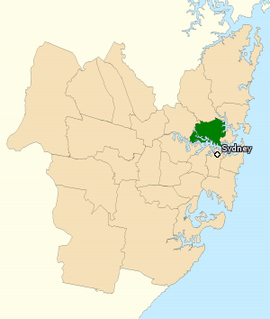
The Division of North Sydney is an Australian electoral division in the state of New South Wales. It was proclaimed in 1900 and was one of the original 65 divisions contested at the first federal election.
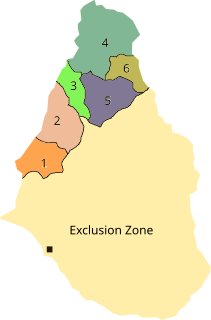
Elections in Montserrat take place within the framework of a multi-party democracy and a parliamentary system. The Legislative Assembly is directly elected, and a Chief Minister is selected by the party or coalition with the most seats in the Assembly.

The Anguilla United Front is an alliance of political parties in Anguilla. At elections, 21 February 2005, the alliance won 38.9% of popular votes and 4 out of 7 elected seats.
The Electoral district of Wakehurst is an electoral district of the Legislative Assembly in the Australian state of New South Wales. It covers a significant part of Sydney's Northern Beaches as well as parts of the Forest District. Created in 1962, it has been won by the Liberal Party at all but two elections over the last half-century.
The 2008 New Zealand general election was held on 8 November 2008 to determine the composition of the 49th New Zealand parliament. The conservative National Party, headed by its parliamentary leader John Key, won the largest share of votes and seats, ending nine years of government by the social-democratic Labour Party, led by Helen Clark. Key announced a week later that he would lead a National minority government with confidence-and-supply support from the ACT, United Future and Māori parties. The Governor-General swore Key in as New Zealand's 38th Prime Minister on 19 November 2008. This marked an end to nine years of Labour Party government, and the beginning of the Fifth National Government of New Zealand which would govern for 9 years, until its loss to the Labour Party in the 2017 general election.
A general election was held in the state of New South Wales, Australia, on Saturday 7 October 1978. The result was a landslide victory for the Labor Party under Neville Wran, popularly known as the "Wranslide."
The 2005 Anguillan general election was held in Anguilla on 21 February 2005 to elect the seven elected seats in the House of Assembly. The Anguilla United Front, an alliance of the Anguilla National Alliance and the Anguilla Democratic Party, won the election retaining four of the elected seats.
Education in Anguilla is compulsory between the ages of 5 and 17. In 1998, the gross primary enrollment rate was 100.7 percent, and the net primary enrollment rate was 98.9 percent. The government has collaborated with UNESCO to develop an Education for All plan that aims to raise educational achievement levels, improve access to quality special education services and provide human resource training for teachers and education managers.
The Anguillan general election was held on 15 February 2010. Seven seats in the Anguilla House of Assembly were contested in the election.
The British Virgin Islands general election, 2011 was held in the British Virgin Islands on 7 November 2011. The result was a decisive victory for the opposition National Democratic Party (NDP) led by Orlando Smith over the incumbent Virgin Islands Party (VIP), led by Premier Ralph T. O'Neal. No minor parties or independent candidates won any seats.
A legislative election was held in Belize on 7 March 2012 to elect all 31 members of the Belize House of Representatives as well as offices in the various local governments. The election was run by the Elections and Boundaries Commission's Elections and Boundaries Department. Dean Barrow and his United Democratic Party (UDP) were re-elected, but lost eight seats to the opposition People's United Party (PUP) to maintain a slim 17-14 majority in the Belize House. The upper house of the Belize National Assembly, the Senate, was appointed after the election by the UDP-led government in accordance with the Constitution of Belize.
General elections were held in Anguilla on 22 April 2015. The result was a victory for the Anguilla United Front alliance, which won six of the seven elected seats in the House of Assembly. The ruling Anguilla United Movement failed to win a seat.
The People's Progressive Party (PPP) was a political party in Anguilla.
Victor Franklin Banks is an Anguillan politician. A member of the Anguilla United Front (AUF), he has served as Chief Minister since 23 April 2015.
Evalie Bradley nee Hughes is an Anguillian politician and member of the House of Assembly of Anguilla.