Related Research Articles
Barbados is an island country in the southeastern Caribbean Sea, situated about 100 miles (160 km) east of Saint Vincent and the Grenadines. Roughly triangular in shape, the island measures some 21 miles (34 km) from northwest to southeast and about 14 miles (23 km) from east to west at its widest point. The capital and largest town is Bridgetown, which is also the main seaport.

Slavery in the colonial history of the United States refers to the institution of slavery as it existed in the European colonies which eventually became part of the United States. In these colonies, slavery developed due to a combination of factors, primarily the labour demands for establishing and maintaining European colonies, which had resulted in the Atlantic slave trade. Slavery existed in every European colony in the Americas during the early modern period, and both Africans and indigenous peoples were victims of enslavement by European colonizers during the era.
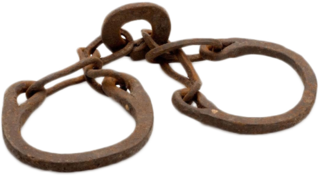
The slave codes were laws relating to slavery and enslaved people, specifically regarding the Atlantic slave trade and chattel slavery in the Americas.
The Barbados Slave Code of 1661, officially titled as An Act for the better ordering and governing of Negroes, was a law passed by the Parliament of Barbados to provide a legal basis for slavery in the English colony of Barbados. It is the first comprehensive Slave Act, and the code's preamble, which stated that the law's purpose was to "protect them [slaves] as we do men's other goods and Chattels", established that black slaves would be treated as chattel property in the island's court.

The Tuscarora War was fought in North Carolina from September 10, 1711, until February 11, 1715, between the Tuscarora people and their allies on one side and European American settlers, the Yamasee, and other allies on the other. This was considered the bloodiest colonial war in North Carolina. The Tuscarora signed a treaty with colonial officials in 1718 and settled on a reserved tract of land in Bertie County, North Carolina. The war incited further conflict on the part of the Tuscarora and led to changes in the slave trade of North and South Carolina.

Sir John Yeamans, 1st Baronet was an English colonial administrator and planter who served as Governor of Carolina from 1672 to 1674. Contemporary descriptions of Yeamans described him as "a pirate ashore."
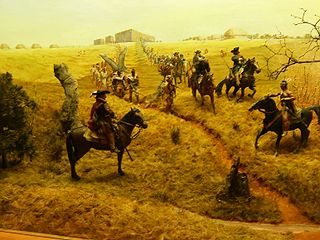
James Moore Sr. was an Irish-born military officer and colonial administrator who served as the governor of Carolina from 1700 to 1703. He is best known for leading several invasions of Spanish Florida during Queen Anne's War, including attacks in 1704 and 1706 which wiped out most of the Spanish missions in Florida. He captured and brought back to Carolina as slaves thousands of Roman Catholic Apalachee Indians.

The colonial period of South Carolina saw the exploration and colonization of the region by European colonists during the early modern period, eventually resulting in the establishment of the Province of Carolina by English settlers in 1663, which was then divided to create the Province of South Carolina in 1710. European settlement in the region of modern-day South Carolina began on a large scale after 1651, when frontiersmen from the English colony of Virginia began to settle in the northern half of the region, while the southern half saw the immigration of plantation owners from Barbados, who established slave plantations which cultivated cash crops such as tobacco, cotton, rice and indigo.
The Yamasee War was a conflict fought in South Carolina from 1715 to 1717 between British settlers from the Province of Carolina and the Yamasee, who were supported by a number of allied Native American peoples, including the Muscogee, Cherokee, Catawba, Apalachee, Apalachicola, Yuchi, Savannah River Shawnee, Congaree, Waxhaw, Pee Dee, Cape Fear, Cheraw, and others. Some of the Native American groups played a minor role, while others launched attacks throughout South Carolina in an attempt to destroy the colony.
The Yamasees were a multiethnic confederation of Native Americans who lived in the coastal region of present-day northern coastal Georgia near the Savannah River and later in northeastern Florida. The Yamasees engaged in revolts and wars with other native groups and Europeans living in North America, specifically from Florida to North Carolina.

The Cusabo were a group of American Indian tribes who lived along the coast of the Atlantic Ocean in what is now South Carolina, approximately between present-day Charleston and south to the Savannah River, at the time of European colonization. English colonists often referred to them as one of the Settlement Indians of South Carolina, tribes who "settled" among the colonists.
Henry Woodward, was a Barbados-born merchant and colonist who was one of the first white settlers in the Carolinas. He established relationships with many Native American Tribes in the American southeast. He initiated trade, primarily in deerskins and slaves, with many Indian towns and tribes.

Slavery among Native Americans in the United States includes slavery by and enslavement of Native Americans roughly within what is currently the United States of America.

Black Barbadians or Afro-Barbadians are Barbadians of entirely or predominantly African descent.
Henry Hawley was the English Governor of Barbados from 1630 to 1639/40.
Native Americans living in the American Southeast were enslaved through warfare and purchased by European colonists in North America throughout the 17th, 18th, and 19th centuries, as well as held in captivity through Spanish-organized forced labor systems in Florida. Emerging British colonies in Virginia, Carolina, and Georgia imported Native Americans and incorporated them into chattel slavery systems, where they intermixed with slaves of African descent, who would eventually come to outnumber them. The settlers' demand for slaves affected communities as far west as present-day Illinois and the Mississippi River and as far south as the Gulf Coast. European settlers exported tens of thousands of enslaved Native Americans outside the region to New England and the Caribbean.

The Grand Model was a utopian plan for the Province of Carolina, founded in 1670. It consisted of a constitution coupled with a settlement and development plan for the colony. The former was titled the Fundamental Constitutions of Carolina. The word "constitutions" was synonymous with "articles". The document was composed of 120 constitutions, or articles. The settlement and development plan for the colony consisted of several documents, or "instructions", for guiding town and regional planning as well as economic development.
South Carolina established its first slave code in 1695. The code was based on the 1684 Jamaica slave code, which was in turn based on the 1661 Barbados Slave Code. The South Carolina slave code was the model for other North American colonies. Georgia adopted the South Carolina code in 1770, and Florida adopted the Georgia code.
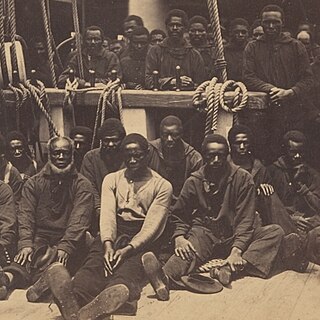
Slavery in South Carolina was widespread and systemic even when compared to other slave states. From the Pickney cousins at the 1787 Constitutional Convention to the scores of slave traders active in Charleston for decade upon decade to the Rhett–Keitt axis of Fire-Eaters in the 1850s, South Carolina white men arguably did more than any other single faction devoted to perpetuating slavery in the United States.
The Barbados Servant Code of 1661 or the Master and Servant Code, officially titled as An Act for good governing of Servants and Ordaining the rights between Master and Servants was a law passed by the Parliament of Barbados to provide a legal basis for servitude in the English colony of Barbados. It was one of a series of acts including the Militia Act, which provided a basis to control indentured servants, often Irish, as well as enslaved on the Caribbean Island.
References
- ↑ The Barbados Tourism Encyclopaedia - U.S.A. - Barbadian Ties
- ↑ "Carolina - The Barbadian Settlers, et.al."
- ↑ Wood, Origins of American Slavery (1997), pp. 64–65.
- ↑ "South Carolina Emigration and Immigration". FamilySearch .
- ↑ Oatis, Steven J. (2004). A colonial complex: South Carolina's frontiers in the era of the Yamasee War, 1680–1730. University of Nebraska Press. ISBN 0-8032-3575-5.
- ↑ Overview of the History of Goose Creek, City of Goose Creek.
- ↑ Smith, Henry A. M. (1928). "Goose Creek". The South Carolina Historical and Genealogical Magazine. 29: 1–25, 71–96, 167–92, 265–79. ISSN 0148-7825.
- ↑ "The Goose Creek Men". Barbados and the Carolinas Foundation. Retrieved 2024-03-09.
- ↑ Rugemer, Edward B. (2013). "The Development of Mastery and Race in the Comprehensive Slave Codes of the Greater Caribbean during the Seventeenth Century". The William and Mary Quarterly. 70 (3): 429–458. doi:10.5309/willmaryquar.70.3.0429. JSTOR 10.5309/willmaryquar.70.3.0429.
- ↑ Christian, Charles M.; Bennet, Sari (1998). Black Saga: The African American Experience. Basic Civitas Books. pp. 27–28.
- ↑ Joseph Hall, "The Great Indian Slave Caper", review of Alan Gallay, The Indian Slave Trade: The Rise of the English Empire in the American South, 1670-1717, Common-place, vol. 3, no. 1 (October 2002), accessed 5 March 2017.
- ↑ Godfrey, John (1915). "Historical Notes". The South Carolina Historical and Genealogical Magazine. 16 (3): 134–138. ISSN 0148-7825.