Related Research Articles

Stanmore is a suburb in the Inner West of Sydney, in New South Wales, Australia 6 kilometres south west of the Sydney central business district. It is part of the local government area of the Inner West Council. It is known for its long strip of shops running along Parramatta Road.
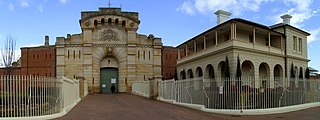
Bathurst Correctional Centre, originally built as Bathurst Gaol in 1888, is a prison for men and women located in the city of Bathurst, New South Wales, Australia, and operated by the Department of Communities and Justice. Bathurst holds inmates sentenced under State or Australian criminal law, along with a small number of remand prisoners.
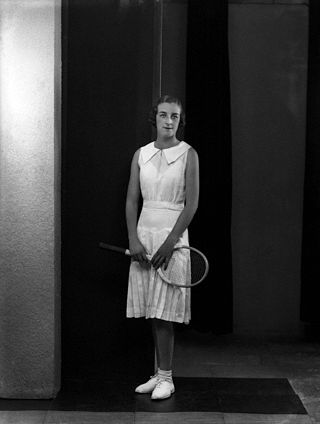
Joan Marcia Bathurst was an Australian Champion tennis player who was active from the early 1930s until the late 1940s.

Thomas Rowe was a British-born architect, builder and goldminer who became one of Australia's leading architects of the Victorian era. He was also a politician, who was the first Mayor of Manly.
Ernest Clayton Andrews BA, FRS, commonly referred to as E. C. Andrews, was an Australian geologist and botanist.

Francis Bertie Boyce, commonly referred to as Archdeacon Boyce, was an Australian clergyman and social reformer.
George Edward Ardill was an Australian politician. He was a member of the New South Wales Legislative Assembly from 1930 to 1941, representing the electorate of Yass for the Nationalist Party and its successor, the United Australia Party.

Varney Parkes was an Australian politician, architect and son of Henry Parkes.
In 2013 Bathurst, New South Wales, Australia celebrated 200 years from its naming as a town in 1813. Over the 200 years significant milestones have occurred in the town and regions infrastructure development to support growth of the region. The development of Australia progressed with a few frontier towns built in extreme isolation like Bathurst. Sydney was founded in 1788 and 25 years later in 1813 only a few other coastal towns had been established. The desire to explore the unknown areas led the Colonial Government to sponsor expeditions to the interior of the vast country. A large mountain range running parallel to the Sydney coast blocked access to the west and rugged mountains and a river blocked access to the north. Before the exploration of the inland started they had no idea what they would find but what they did discover was fertile and well watered land ideal for grazing of animals and producing agricultural products.
Yetholme is a village in New South Wales, Australia, originally known as Fryingpan and Frying Pan. The town is near Frying Pan Creek. It is situated 25 kilometres (16 mi) east of Bathurst and 35 kilometres (22 mi) west of Lithgow.
Burraga is located in the Central Tablelands of New South Wales, 47 kilometres south west of Oberon and about 67 kilometres (42 mi) south of Bathurst. It is within Oberon Shire. At the 2016 census, Burraga had a population of 91.

Charles White, was an Australian journalist, author and historian, notable for his books on bushranging and other aspects of Australian history.

James Greenwood was an English-born Australian politician.
Rev. William Henry Savigny MA was an Australian academic, born in England. His elder son, also named William Henry Savigny was a longtime master at Sydney Grammar School.
Joseph Richard Massey, referred to in his lifetime as Joseph Massey sen., was an Australian musician and founder of a family of musicians, best known as church organists.
Zisca the Avenger, or The Slave's Revenge, is an 1851 Australian play by Francis Belfield. It was a rare Australian play to be staged at the time.
Thomas Sharp MCO, was an organist in Launceston and Sydney, Australia, remembered as a member of the committee which drew up the specifications for the Grand Organ in Sydney Town Hall. He was the only dissenter from its final decision. Three of his sons were professional organists.
Arthur John Waldock, generally known as A. J. Waldock was a Baptist minister in Australia, best known for establishing the denomination in Canberra.
Charles Alfred White, commonly referred to as C. A. White, was a Presbyterian minister in New South Wales, Australia. He compiled a definitive history of the Presbyterian Church in Australia to c. 1950.
Wilfred Lemuel Jarvis was a Baptist evangelist and gospel singer in Brisbane and Sydney, Australia.
References
- 1 2 "Family Notices". Daily Pictorial (Sydney) . No. 15, 736. New South Wales, Australia. 17 May 1930. p. 7. Retrieved 23 September 2024– via National Library of Australia.
- ↑ "Late James Tinsley". The Bathurst Times . New South Wales, Australia. 19 September 1918. p. 3. Retrieved 21 September 2024– via National Library of Australia.
- ↑ "Bathurst Baptist Church". The National Advocate . New South Wales, Australia. 27 March 1907. p. 2. Retrieved 24 September 2024– via National Library of Australia.
- ↑ "Technical College". Bathurst Free Press and Mining Journal . New South Wales, Australia. 15 January 1892. p. 3. Retrieved 24 September 2024– via National Library of Australia.
- ↑ "Technical Examination". Bathurst Free Press and Mining Journal . New South Wales, Australia. 16 January 1893. p. 3. Retrieved 24 September 2024– via National Library of Australia.
- ↑ "Women's Christian Temperance Union". Bathurst Free Press and Mining Journal . New South Wales, Australia. 8 November 1893. p. 2. Retrieved 24 September 2024– via National Library of Australia.
- ↑ "Town Tattle". The National Advocate . New South Wales, Australia. 30 January 1937. p. 4. Retrieved 24 September 2024– via National Library of Australia.
- 1 2 "Baptist minister". Sydney Morning Herald. 19 March 1960. p. 7.
- ↑ "The Churches". The Sydney Morning Herald . No. 27, 761. New South Wales, Australia. 25 December 1926. p. 3. Retrieved 20 September 2024– via National Library of Australia.
- ↑ "Nomads' children will see Queen". The Courier-mail . Queensland, Australia. 10 February 1954. p. 8. Retrieved 22 September 2024– via National Library of Australia.
- ↑ "Government Gazette Notices". Government Gazette of the State of New South Wales . No. 141. New South Wales, Australia. 2 December 1960. p. 3846. Retrieved 23 September 2024– via National Library of Australia.
- ↑ "Personal". The National Advocate . New South Wales, Australia. 18 September 1918. p. 2. Retrieved 24 September 2024– via National Library of Australia.
- ↑ "Personal". The National Advocate . New South Wales, Australia. 7 October 1948. p. 2. Retrieved 23 September 2024– via National Library of Australia.
- ↑ "Family Notices". The National Advocate . New South Wales, Australia. 17 February 1931. p. 4. Retrieved 23 September 2024– via National Library of Australia.
- ↑ "Personal". The Bathurst Times . New South Wales, Australia. 27 September 1912. p. 3. Retrieved 24 September 2024– via National Library of Australia.
- ↑ "Wedding". Bathurst Free Press and Mining Journal . New South Wales, Australia. 23 July 1902. p. 3. Retrieved 24 September 2024– via National Library of Australia.
- ↑ "New Baptist Church Opened". Victor Harbour Times . Vol. 59, no. 2, 615. South Australia. 26 May 1972. p. 6. Retrieved 23 September 2024– via National Library of Australia.
- ↑ "Lutheran conference in Canberra". The Canberra Times . Vol. 45, no. 12, 728. Australian Capital Territory, Australia. 6 February 1971. p. 15. Retrieved 23 September 2024– via National Library of Australia.
- ↑ "Legacy Remembers David Alfred Tinsley" . Retrieved 23 September 2024.