
The Diocese of Hamar is one of the dioceses that make up the Church of Norway. The diocese of Hamar covers the churches of Oppland and Hedmark. There are 10 deaneries, 65 clerical districts and 164 parishes in the diocese. Hamar Cathedral in the city of Hamar is the seat of the Diocese of Hamar.

Eivind Josef Berggrav was a Norwegian Lutheran bishop. As Primate of the Church of Norway, Berggrav became known for his unyielding resistance against the Nazi occupation of Norway during World War II. Berggrav also became an important figure in 20th-century ecumenical movement and served as president of the United Bible Societies.

Ove Bang was a Norwegian architect. He was an advocate of functionalism in architecture.

Anton Christian Bang was a Norwegian theologian, historian and politician for the Conservative Party of Norway. Bang was one of the more prominent figures within the Church of Norway in the decades around 1900. He served as a professor of church history at the Royal Frederick University from 1885 onward, as Minister of Education and Church Affairs from 1893 to 1895, and as Bishop of Oslo from 1896 to 1912.

Rasmus Tønder Nissen was a Norwegian, educator, theologian and politician.
Events in the year 1906 in Norway.
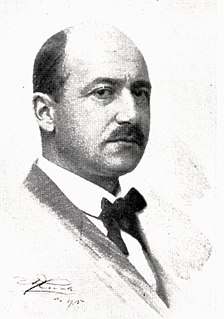
Thorvald Astrup was a Norwegian architect, particularly known for industrial architecture.
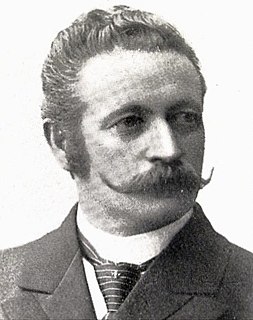
Johannes Henrik Nissen was a Norwegian architect.

Nils Christian Tønsberg was a Norwegian publisher and author. Christian Tønsberg became one of the larger Norwegian publishers and was best known for illustrated books about Norway.

Henrik Bull was a Norwegian architect and designer. Among his works are the Paulus Church at Grünerløkka in Oslo, the National Theater, the Historical Museum in Oslo, and the Government Building. He also designed coins for Norges Bank, and participated at the Kristiania Jubilée exhibition at Frogner in 1914. He headed the Norwegian National Academy of Craft and Art Industry from 1912 to 1934.

James Maroni was a Norwegian theologian and priest in the Church of Norway. From 1930 until 1947 he served as the Bishop of the Norwegian Diocese of Agder.
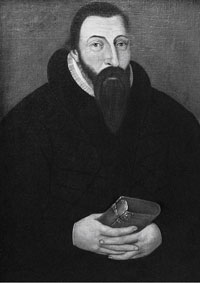
Jens Nilssøn (1538–1600) was a Norwegian clergyman, educator, poet and author. He served as the Bishop of Oslo from 1580 to 1600.
Johan Johannson was a Norwegian businessman.
Ole Hartvig Nissen Johannson, MBE was a Norwegian businessperson.
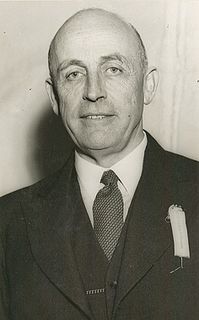
Henrik Greve Hille was a Norwegian clergyman. He served as Bishop of the Diocese of Hamar from 1934 to 1942 and from 1945 until 1946.
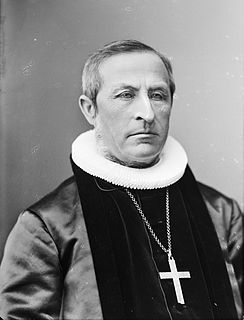
Arnoldus Marius Hille was a Norwegian Lutheran Bishop.

Gustav Adolph Lammers was a Norwegian priest, architect, artist and member of parliament.

Johan Storjohann was a Norwegian priest, educator and non-fiction writer. He is most associated with the establishment of the Norwegian Seamen’s Mission (Sjømannskirken).

Henning Astrup was a Norwegian architect.

Johan Peter Lunde was a Norwegian theologian and Bishop of the Diocese of Oslo.
