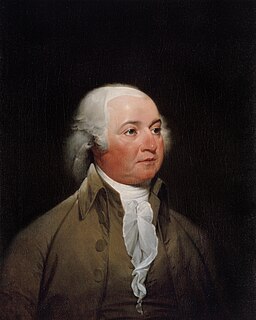
The United States presidential election of 1796 was the third quadrennial presidential election. It was held from Friday, November 4 to Wednesday, December 7, 1796. It was the first contested American presidential election, the first presidential election in which political parties played a dominant role, and the only presidential election in which a president and vice president were elected from opposing tickets. Incumbent Vice President John Adams of the Federalist Party defeated former Secretary of State Thomas Jefferson of the Democratic-Republican Party.
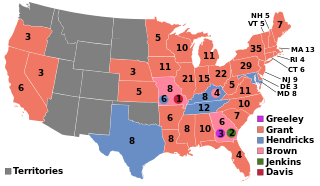
The United States presidential election of 1872 was the 22nd quadrennial presidential election, held on Tuesday, November 5, 1872. Despite a split in the Republican Party, incumbent President Ulysses S. Grant defeated Liberal Republican nominee Horace Greeley. The election is notable for being the only presidential election in which a major party nominee died during the election process.

The United States Electoral College is a body of electors established by the United States Constitution, constituted every four years for the sole purpose of electing the president and vice president of the United States. The Electoral College consists of 538 electors, and an absolute majority of 270 electoral votes is required to win an election. Pursuant to Article II, Section 1, Clause 2, the legislature of each state determines the manner by which its electors are chosen. Each state's number of electors is equal to the combined total of the state's membership in the Senate and House of Representatives; currently there are 100 senators and 435 representatives. Additionally, the Twenty-third Amendment provides that the District of Columbia (D.C.) is entitled to a number of electors no greater than that of the least populous state.
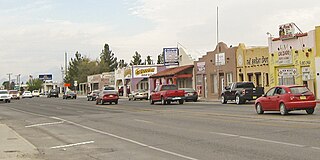
Anthony is a city in Doña Ana County, New Mexico, United States. The population was 9,360 at the 2010 census. It is located on the New Mexico–Texas state line in the Upper Mesilla Valley, and on Interstate 10, 27 miles south of Las Cruces and 21 miles north of El Paso, Texas. The city is part of the El Paso–Las Cruces combined statistical area.
A ballot is a device used to cast votes in an election, and may be a piece of paper or a small ball used in secret voting. It was originally a small ball used to record decisions made by voters.
Electronic voting is voting that uses electronic means to either aid or take care of casting and counting votes.

The 1868 United Kingdom general election was the first after passage of the Reform Act 1867, which enfranchised many male householders, thus greatly increasing the number of men who could vote in elections in the United Kingdom. It was the first election held in the United Kingdom in which more than a million votes were cast; nearly triple the number of votes were cast compared to the previous election of 1865.
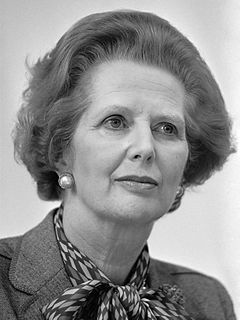
The European Assembly Election, 1979, was the first European election to be held in the United Kingdom after the European Communities (EC) decided to directly elect representatives to the European Parliament. It was held on 7 June. Elections were also held in eight other EC states. European elections were incorporated into UK law by the European Assembly Elections Act 1978. Out of the 410 members of the European Parliament, 81 were elected from the UK. The electoral system was First Past the Post in England, Scotland and Wales and Single Transferable Vote in Northern Ireland.
The first elections to select inductees to the Baseball Hall of Fame were held in 1936. Members of the Baseball Writers' Association of America (BBWAA) were given authority to select individuals from the 20th century; while a special Veterans Committee, made up of individuals with greater familiarity with the 19th century game, was polled to select deserving individuals from that era. The intent was for 15 honorees to be selected before the 1939 ceremonies – 10 from the 20th century and 5 from the 19th; additional players from both eras would be selected in later years. Voters were given free rein to decide for themselves in which group a candidate belonged, with neither group knowing the outcome of the other election; some candidates had their vote split between the elections as a result – Cy Young, the pitcher with most wins in Major League history, finished 8th in the BBWAA vote and 4th in the Veterans vote. In addition, there was no prohibition on voting for active players, a number of whom received votes. Individuals who had been banned from baseball – such as Shoeless Joe Jackson and Hal Chase – were also not formally excluded, though few voters chose to include them on ballots.

Elections in the United States are held for government officials at the federal, state, and local levels. At the federal level, the nation's head of state, the President, is elected indirectly by the people of each state, through an Electoral College. Today, these electors almost always vote with the popular vote of their state. All members of the federal legislature, the Congress, are directly elected by the people of each state. There are many elected offices at state level, each state having at least an elective Governor and legislature. There are also elected offices at the local level, in counties, cities, towns, townships, boroughs, and villages. According to a study by political scientist Jennifer Lawless, there were 519,682 elected officials in the United States as of 2012.

In elections in the United States, a provisional ballot is used to record a vote when there are questions about a given voter's eligibility that must be resolved before the vote can count. The federal Help America Vote Act of 2002 guarantees that, in most states, the voter can cast a provisional ballot if the voter states that he or she is entitled to vote.

In United States presidential elections, a faithless elector is a member of the United States Electoral College who does not vote for the presidential or vice-presidential candidate for whom they had pledged to vote. That is, they break faith with the candidate they were pledged to and vote for another candidate, or fail to vote. A pledged elector is only considered a faithless elector by breaking their pledge; unpledged electors have no pledge to break.

The Federal Senate is the upper house of the National Congress of Brazil. Created by the first Constitution of the Brazilian Empire in 1824, it was initially similar to the United Kingdom's House of Lords. Since the Proclamation of the Republic in 1889 the Federal Senate has resembled the United States Senate.
Elections to the Baseball Hall of Fame for 1968 followed rules revised in June 1967, which returned the BBWAA to annual elections without any provision for runoff. In the event, the Baseball Writers' Association of America voted once by mail to select from recent major league players and elected Joe Medwick. The Veterans Committee met in closed sessions to consider executives, managers, umpires, and earlier major league players. It selected two players, Kiki Cuyler and Goose Goslin.
The 2016 United States presidential election was the 58th quadrennial American presidential election, held on Tuesday, November 8, 2016. The Republican ticket of businessman Donald Trump and Indiana Governor Mike Pence defeated the Democratic ticket of former Secretary of State Hillary Clinton and U.S. Senator from Virginia Tim Kaine, despite losing the popular vote. Trump took office as the 45th President, and Pence as the 48th Vice President, on January 20, 2017.

The election of president and vice president of the United States is an indirect election in which citizens of the United States who are registered to vote in one of the 50 U.S. states or in Washington, D.C. cast ballots not directly for those offices, but instead for members of the U.S. Electoral College, known as electors. These electors then in turn cast direct votes, known as electoral votes, for president, and for vice president. The candidate who receives an absolute majority of electoral votes is then elected to that office. If no candidate receives an absolute majority of the votes for President, the House of Representatives chooses the winner; if no one receives an absolute majority of the votes for Vice President, then the Senate chooses the winner.

There have been five United States presidential elections in which the winner lost the popular vote including the 1824 election, which was the first U.S. presidential election where the popular vote was recorded. Losing the popular vote means securing less of the national popular vote than the person who received either a majority or a plurality of the vote.

The next Turkish parliamentary election is scheduled to occur on or before 18 June 2023, alongside a presidential election on the same day. Voters from 87 electoral districts will elect 600 Members of Parliament to the Grand National Assembly of Turkey for a five year term, forming the country's 28th Parliament.