Paperback edition | |
| Author | Michael E. Arth |
|---|---|
| Country | United States |
| Language | English |
| Subject | Politics, New Pedestrianism, Florida gubernatorial election, 2010, voting, Michael E. Arth, Economics, Taxation, gun control, military industrial complex, Israel, Iraq, Afghanistan, War on Drugs, Global warming (Climate change), Health Care, Homelessness, Futurism, Alternative Energy, BP Oil Spill, Driverless Car |
| Publisher | Golden Apples Media |
Publication date | May 7, 2010 |
| Media type | Paperback and ebook |
| Pages | 480 pp. |
| ISBN | 978-0-912467-12-2 |
Democracy and the Common Wealth: Breaking the Stranglehold of the Special Interests is a 2010 book by urban designer, policy analyst and artist Michael E. Arth. Arth attempts to expose what he calls the "dirty secrets" of America's electoral system, and provides a list of solutions that he believes will result in a "truly representative democracy." This democracy would be led by effective, trustworthy leaders, who would be elected by a majority, and who would not have to spend their time raising campaign funds, or catering to paid lobbyists.
Michael E. Arth is an American artist, builder, architectural and urban designer, and political scientist.
It also tells the story of the first year of Florida's 2010 gubernatorial race, from his point of view as an outsider, lacking in personal wealth or party backing. In the main text, and in the postscript, Arth writes about how he became an independent candidate for governor after being "frozen out" of the "undemocratic" Florida Democratic Party for not having millions of dollars, and for suggesting that campaigns be about issues instead of money. [1]
The Florida Democratic Party (FDP) is the state branch of the United States Democratic Party in the state of Florida, headquartered in Tallahassee.
The first edition of the book has 480 pages including 72 illustrations and charts and was first published in both e-book and print in May 2010. The e-book version also includes a postscript about the BP Oil Spill and energy policy, and a section on Arth’s switch to No Party Affiliation.
An electronic book, also known as an e-book or eBook, is a book publication made available in digital form, consisting of text, images, or both, readable on the flat-panel display of computers or other electronic devices. Although sometimes defined as "an electronic version of a printed book", some e-books exist without a printed equivalent. E-books can be read on dedicated e-reader devices, but also on any computer device that features a controllable viewing screen, including desktop computers, laptops, tablets and smartphones.
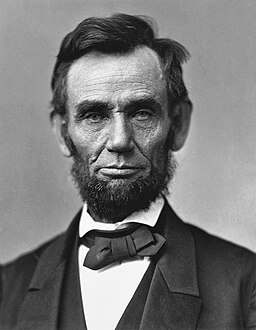
The first sixteen chapters are about how to break up the "oligarchy" and make "a more perfect union" that creates what Abraham Lincoln called a government "of the people, by the people, and for the people." To do this, he writes, would require trading the winner-takes-all voting system for ranked choice voting in single member elections, and replacing single-member congressional districts for multi-member congressional districts, which would use proportional representation and a form of ranked choice voting called single transferable voting. It would also require doing away with private campaign financing, paid lobbyists, and most campaign advertising; and replacing influence-buying and propaganda with highly regulated public campaign financing that would cost a tiny fraction of what is spent now. "Pre-voting," by the electorate, with publicly financed micro-payments during the campaign, would determine both placement and ranking on the ballot in order to simplify the process and get voters more involved in thinking about the issues. [2]
Oligarchy is a form of power structure in which power rests with a small number of people. These people may be distinguished by nobility, wealth, family ties, education or corporate, religious, political, or military control. Such states are often controlled by families who typically pass their influence from one generation to the next, but inheritance is not a necessary condition for the application of this term.
Abraham Thomas Lincoln was an American statesman, politician, and lawyer who served as the 16th president of the United States from 1861 until his assassination in April 1865. Lincoln led the nation through the American Civil War, its bloodiest war and its greatest moral, constitutional, and political crisis. He preserved the Union, abolished slavery, strengthened the federal government, and modernized the U.S. economy.
Instant-runoff voting (IRV) is a type of ranked preferential voting method used in single-seat elections with more than two candidates. Instead of indicating support for only one candidate, voters in IRV elections can rank the candidates in order of preference. Ballots are initially counted for each voter's top choice. If a candidate has more than half of the vote based on first-choices, that candidate wins. If not, then the candidate with the fewest votes is eliminated. The voters who selected the defeated candidate as a first choice then have their votes added to the totals of their next choice. This process continues until a candidate has more than half of the votes. When the field is reduced to two, it has become an "instant runoff" that allows a comparison of the top two candidates head-to-head.
In this chapter, Michael “Biking Mike” Arth wrote of his plan to bicycle from Key West to Pensacola in the course of his campaign, and to bring focus to non-polluting energy self-sufficiency. [3] The trip was at least half finished by early July 2010 and became the subject of Arth's ongoing blog [4] and campaign web site. [5]
Key West is an island and city in the Straits of Florida on the North American continent. The city lies at the southernmost end of U.S. Route 1, the longest north-south road in the United States. Key West is the southernmost city in the contiguous United States and the westernmost island connected by highway in the Florida Keys. The island is about 4 miles (6.4 km) long and 1 mile (1.6 km) wide, with a total land mass of 4.2 square miles (11 km2). Duval Street, its main street, is 1.1 miles (1.8 km) in length in its 14-block-long crossing from the Gulf of Mexico to the Straits of Florida and the Atlantic Ocean. Key West is about 95 miles (153 km) north of Cuba at their closest points.
According to the author, “Part II is a step-by-step guide to the kind of equitable and rational policies we should expect following electoral reform.” In researching this book, Arth drew from 16 years of research from his two-volume work-in-progress, The Labors of Hercules: Modern Solutions to 12 Herculean Problems, his experience rebuilding an inner city slum, and his 2009-2010 run for governor of Florida. [6]
Calling his hometown of DeLand, Florida a “microcosm” of the rest of the country, he describes how problems in his own town have developed in the same way they have elsewhere. He tells the story of how he bought up 32 homes and businesses and cleaned up a slum neighborhood called “Cracktown," which subsequently was the subject of an award-winning 2007 documentary, New Urban Cowboy. From his previous research, in combination with direct experience in rebuilding the slum, he became convinced it would take fundamental, institutional reform to solve most governmental problems.
Over several chapters, Arth gives a survey of economic policies and theory and concludes that the fractional reserve system should probably be ended, as created boom/bust cycles and contributed to the highest combined private and public debt-to-GDP ratio in US history, now twice as high as 1929, just before the Great Depression. Having a full reserve system could reduce the Federal Reserve to a check-clearing service, which could be integrated into the United States Treasury. Money could be spent by the Treasury into existence on noninflationary, productive things related to infrastructure, energy self-sufficiency, social services, information technology, rebuilding the cities, and creating jobs. He believes nonproductive and destructive expenditures associated with the military-industrial complex should be vastly reduced.
Under his plan, the budget would be balanced and the national debt would be retired, with the help of progressive taxation and a wealth tax on the super-rich, as Warren Buffett, Donald Trump, and others have proposed. The trade balance would be restored with import certificates, which balances imports with exports, and would function like a tariff, but be based on supply and demand. Treasury securities would no longer be issued because the government's own money would be spent into existence at a rate that would keep inflation at a low rate, and help prevent new debt from being created.
Arth also proposes a small securities tax and other measures to rein in high-frequency trading (HFT), which is trading done with supercomputers using proprietary algorithms and a form of insider trading called flash trading. Over 70% of all trades are now done with HFT for the benefit of a financial elite. Arth blames governmental policies for allowing special interests on Wall Street to use the common wealth for their own private gain. He sees that as only one example of how plutocrats create and preserve unfair advantages, which could easily be regulated if there were a more responsive and representative democracy.
The longest chapter, "Prohibition Failed!," is about the War on Drugs, something the author has intimate knowledge of as a result of living in a slum, and waging his own private war on drug users and dealers. Arth proposes legalization, regulation and taxation for a wide range of illegal drugs—especially cannabis, for which there has never been a single documented overdose death. He compares drug dealers to fire ants. "You can get rid of them in one spot and they just pop up somewhere else," he writes. "In fact, we cannot even keep drugs out of prison, which is all the proof we need that prohibition will not work, even in a police state."
Arth asserts that legalization would reverse the popular contempt for the law that results from prohibition; eliminate the 800,000 American gang members and global drug cartels; and reduce the incarceration rate in the U.S., which is now seven times higher than Canada. He cites a Rand Institute study that shows treatment to be seven times more effective than incarceration, but states that politicians are afraid to reverse the 40-year "war on the poor" that was started by Richard Nixon as a "racist and cynical campaign ploy" to win over the white majority. [7]
A self-driving, or driverless car is an autonomous vehicle that can drive itself from one point to another without assistance from a driver. Arth believes that autonomous vehicles, which have already been extensively demonstrated in prototypes, have the potential to transform the transportation industry while virtually eliminating accidents, and cleaning up the environment. Arth claims, both in this book and elsewhere, that self-driving electric vehicles—in conjunction with the increased use of virtual reality for work, travel, and pleasure—could reduce the world's 800 million vehicles to a fraction of that number within a few decades. [8] He writes that this would be possible if almost all private cars requiring drivers, which are not in use and parked 90% of the time, were traded for public self-driving taxis that would be in near-constant use. This would also allow for getting the appropriate vehicle for the particular need at any time, subject to market demands. (For example, a bus would be much cheaper than a car for getting people from a football game). A bus could come for a group of people, a limousine could come for a special night out, and a Segway could come for a short trip down the street for one person. Children could be chauffeured in supervised safety, DUIs would no longer exist, and 41,000 lives could be saved each year in the U.S. alone. [9] [10] [11]
This chapter tells the story of Major General Smedley Butler, the most decorated U.S. Marine in American history at the time of his death in 1940. Arth attempts to make the case that Butler was "swift-boated" by privately controlled print media on account of his views that the military existed primarily as a corporate tool, and for testifying in 1934 about the Business Plot to launch a fascist military march on Washington and a coup d'état against Franklin D. Roosevelt. Butler subsequently renounced his role as a "racketeer for capitalism" and published a 1935 tract titled "War is a Racket," which Arth believes still describes the military-industrial complex (MIC) that President Dwight Eisenhower also warned about in 1961.
Subsequent chapters on Iraq and Afghanistan document claim that the U.S. went to war in those countries to further geopolitical ambitions, and to help American oil companies expand their profit base. The primary motivation for invading Afghanistan was to depose the uncooperative Taliban so that oil companies could build oil and gas pipelines from their Caspian Basin holdings in Kazakhstan, across Afghanistan and Pakistan, to the Arabian Sea, in order to access growing Asian energy markets.
This chapter describes how one of the "most primal and comforting images" for humans, enclosed gardens, and community-based villages, should be the basis for cities built for humans. Arth founded New Pedestrianism (NP), a more ecology and pedestrian-oriented version of New urbanism, in 1999. NP is based on completely separating cars from pedestrians and cyclists by putting them on two different networks. Cars are usually relegated to rear streets, while pedestrians and cyclists share a mixed use "pedestrian lane" in front. In this way, someone on a bike or walking could travel through a neighborhood and business district without having to interact with cars. The pedestrian lanes function like linear parks and greatly enhance public life and the common wealth.
Other subjects include:
Ralph Nader is an American political activist, author, lecturer, and attorney, noted for his involvement in consumer protection, environmentalism and government reform causes. The son of Lebanese immigrants to the United States, Nader was educated at Princeton and Harvard and first came to prominence in 1965 with the publication of the bestselling book Unsafe at Any Speed, a critique of the safety record of American automobile manufacturers that became known as one of the most important journalistic pieces of the 20th century. Following the publication of Unsafe at Any Speed, Nader led a group of volunteer law students—dubbed "Nader's Raiders"—in a groundbreaking investigation of the Federal Trade Commission, leading directly to that agency's overhaul and reform. In the 1970s, Nader leveraged his growing popularity to establish a number of advocacy and watchdog groups including the Public Interest Research Group, the Center for Auto Safety, and Public Citizen.
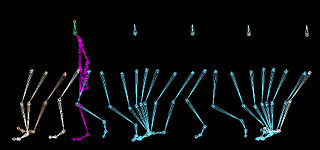
Walking is one of the main gaits of locomotion among legged animals. Walking is typically slower than running and other gaits. Walking is defined by an 'inverted pendulum' gait in which the body vaults over the stiff limb or limbs with each step. This applies regardless of the unusable number of limbs—even arthropods, with six, eight or more limbs, walk.
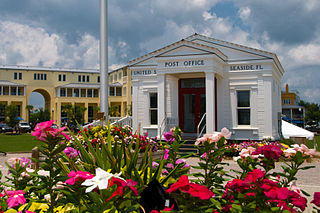
New Urbanism is an urban design movement which promotes environmentally friendly habits by creating walkable neighborhoods containing a wide range of housing and job types. It arose in the United States in the early 1980s, and has gradually influenced many aspects of real estate development, urban planning, and municipal land-use strategies.
How the Other Half Lives: Studies among the Tenements of New York (1890) is an early publication of photojournalism by Jacob Riis, documenting squalid living conditions in New York City slums in the 1880s. It served as a basis for future "muckraking" journalism by exposing the slums to New York City's upper and middle classes. This work inspired many reforms of working-class housing, both immediately after publication as well as making a lasting impact in today's society.
Anarchist economics is the set of theories and practices of economic activity within the political philosophy of anarchism. With the exception of anarcho-capitalists who accept private ownership of the means of production, anarchists are anti-capitalists. They argue that its characteristic institutions promote and reproduce various forms of economic activity which they consider oppressive, including private property, hierarchical production relations, collecting rents from private property, taking a profit in exchanges and collecting interest on loans. They generally endorse possession-based ownership rather than propertarianism.
Collapse: How Societies Choose to Fail or Succeed is a 2005 book by academic and popular science author Jared Diamond, in which Diamond first defines collapse: "a drastic decrease in human population size and/or political/economic/social complexity, over a considerable area, for an extended time." He then reviews the causes of historical and pre-historical instances of societal collapse — particularly those involving significant influences from environmental changes, the effects of climate change, hostile neighbors, trade partners, and the society's response to the foregoing four challenges— and considers the success or failure different societies have had in coping with such threats.
Federalist No. 10 is an essay written by James Madison as the tenth of The Federalist Papers: a series of essays initiated by Alexander Hamilton arguing for the ratification of the United States Constitution. Published on November 22, 1787 under the name "Publius", Federalist No. 10 is among the most highly regarded of all American political writings.
Criticism of capitalism ranges from expressing disagreement with the principles of capitalism in its entirety to expressing disagreement with particular outcomes of capitalism.
New Pedestrianism (NP) is a more pedestrian and ecology-oriented variation of New Urbanism in urban planning theory, founded in 1999 by Michael E. Arth, an American artist, urban/home/landscape designer, futurist, and author. NP addresses the problems associated with New Urbanism and is an attempt to solve various social, health, energy, economic, aesthetic, and environmental problems, with special focus on reducing the role of the automobile.A neighborhood or new town utilizing NP is called a Pedestrian Village. Pedestrian Villages can range from being nearly car-free to having automobile access behind nearly every house and business, but pedestrian lanes are always in front.
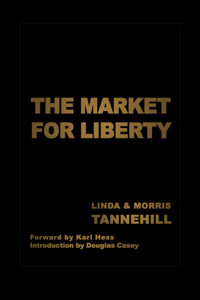
The Market for Liberty is an anarcho-capitalist book written by Linda and Morris Tannehill, which according to Karl Hess has become "something of a classic." It was preceded by the self-published Liberty via the Market in 1969. Mary Ruwart credits the Tannehill's book with winning her over to anarcho-capitalism. Doug Casey was also converted to anarcho-capitalism after reading the book at the behest of Jarret Wollstein. According to the Ludwig von Mises Institute, it was written just following a period of intense study of the writings of both Ayn Rand and Murray Rothbard. It was the first significant anarcho-capitalist work to hit the libertarian movement, coming into print a year before Rothbard's Power and Market although Rothbard's book had been written earlier.
Liberal democracy is a liberal political ideology and a form of government in which representative democracy operates under the principles of classical liberalism. Also called Western democracy, it is characterised by elections between multiple distinct political parties, a separation of powers into different branches of government, the rule of law in everyday life as part of an open society, a market economy with private property and the equal protection of human rights, civil rights, civil liberties and political freedoms for all people. To define the system in practice, liberal democracies often draw upon a constitution, either formally written or uncodified, to delineate the powers of government and enshrine the social contract. After a period of sustained expansion throughout the 20th century, liberal democracy became the predominant political system in the world.
Electoral reform in the United States refers to efforts to change American elections and the electoral system used in the United States.
New Urban Cowboy: Toward a New Pedestrianism is a 2007 documentary film, and DVD release, about American artist and urban designer Michael E. Arth, his New Pedestrianism movement, and his efforts to rebuild the cities, beginning with "Cracktown," an inner city slum in DeLand, Florida. This 83-minute international edition—with subtitles in Spanish, French, German, Japanese, and Chinese—was re-edited from a 100-minute version that made the film festival circuit in 2007. The earlier version was titled New Urban Cowboy: The Labors of Michael E. Arth.
The position that taxation is immoral because it is a form of theft is a viewpoint found in a number of newer radical political philosophies, such as American libertarianism, and marks a radical departure from conservatism and classical liberalism. Voluntaryists, anarcho-capitalists, as well as Objectivists and most minarchists and libertarians see taxation as a clear violation of the non-aggression principle.
Criticism of democracy is grounded in democracy's purpose, process, and outcomes. Since Classical antiquity and through the modern era, democracy has been associated with "rule of the people," "rule of the majority," and free selection or election either through direct participation or elected representation respectively, but has not been linked to a particular outcome.
A "choice-based, marketable, birth license plan" or "birth credits" for population control has been promoted by urban designer and environmental activist Michael E. Arth since the 1990s. Previous iterations of similar transferable birth licensing schemes can also be traced to economist Kenneth Boulding (1964) and leading ecological economist and steady-state theorist Herman Daly (1991)
Economic democracy is a socioeconomic philosophy that proposes to shift decision-making power from corporate managers and corporate shareholders to a larger group of public stakeholders that includes workers, customers, suppliers, neighbours and the broader public. No single definition or approach encompasses economic democracy, but most proponents claim that modern property relations externalize costs, subordinate the general well-being to private profit and deny the polity a democratic voice in economic policy decisions. In addition to these moral concerns, economic democracy makes practical claims, such as that it can compensate for capitalism's inherent effective demand gap.
Out of the Woods: Life and Death in Dirty Dave's Homeless Camp is a 2012 feature documentary film by Michael E. Arth. It follows the life and death struggles of homeless people living in a camp in the woods for four years. Arth single-handely directed, shot and edited Out of the Woods after meeting one of the subjects, Dean "Dino the Dinosaur" Bieber, in a former drug slum Arth had rebuilt and turned into "The Garden District" in DeLand some years before. The backstory of Out of the Woods is told in Arth's previous documentary, New Urban Cowboy: Toward a New Pedestrianism.
Experiments have been conducted on self-driving cars since at least the 1920s; promising trials took place in the 1950s and work has proceeded since then. The first self-sufficient and truly autonomous cars appeared in the 1980s, with Carnegie Mellon University's Navlab and ALV projects in 1984 and Mercedes-Benz and Bundeswehr University Munich's Eureka Prometheus Project in 1987. Since then, numerous major companies and research organizations have developed working prototype autonomous vehicles including Mercedes-Benz, General Motors, Continental Automotive Systems, Autoliv Inc., Bosch, Nissan, Toyota, Audi, Volvo, Vislab from University of Parma, Oxford University and Google. In July 2013, Vislab demonstrated BRAiVE, a vehicle that moved autonomously on a mixed traffic route open to public traffic.
This article relies too much on references to primary sources .(March 2015) (Learn how and when to remove this template message) |