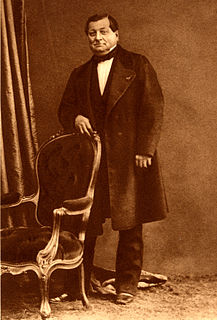
Cycas pruinosa is a small to medium species of cycad, a palm-like seed plant. It is a widespread but sporadic species in the eastern and southern Kimberley region of Western Australia, occurring also in the Spirit Hills on Bullo River Station in the Northern Territory.

The name squash bee, also squash and gourd bee, is applied to two related genera of bees in the tribe Eucerini; Peponapis and Xenoglossa. Both genera are oligoleges on the plant genus Cucurbita and closely related plants, although they usually do not visit watermelon, cucumber, and melon plants. They are small genera, containing only 13 and 7 described species, respectively, and their combined range is nearly identical to the range of Cucurbita in the New World, from South America to North America. Their range has become somewhat expanded along with the movement of cucurbits into other areas.
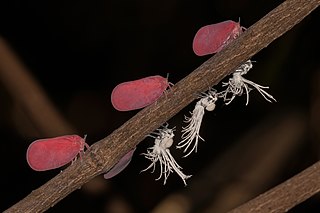
A planthopper is any insect in the infraorder Fulgoromorpha: in the suborder Auchenorrhyncha and exceeding 12,500 described species worldwide. The name comes from their remarkable resemblance to leaves and other plants of their environment and from the fact that they often "hop" for quick transportation in a similar way to that of grasshoppers. However, planthoppers generally walk very slowly so as not to attract attention. Distributed worldwide, all members of this group are plant-feeders, though surprisingly few are considered pests. The infraorder contains only a single superfamily, Fulgoroidea. Fulgoroids are most reliably distinguished from the other Auchenorrhyncha by two features; the bifurcate ("Y"-shaped) anal vein in the forewing, and the thickened, three-segmented antennae, with a generally round or egg-shaped second segment (pedicel) that bears a fine filamentous arista.

Eucalyptus leucoxylon, commonly known as yellow gum, blue gum or white ironbark, is a species of eucalypt that is endemic to Australia. It is widely distributed on plains and nearby mountain ranges or coastal South Australia, where it is known as the Blue Gum and extends into the western half of Victoria where it is known as the yellow gum.

Crataegus pruinosa is a species of hawthorn known by the common name frosted hawthorn. It is native to a wide area of the eastern United States and southern Canada, and is sometimes considered to be several species, rather than just one.

Castilleja pruinosa is a species of Indian paintbrush known by the common name frosted Indian paintbrush. It is native to California and Oregon, where it grows in several types of forested habitat.

Acronicta pruinosa is a moth of the family Noctuidae. It is found in Sri Lanka, the Himalaya, east to Japan and Taiwan south to Myanmar and Peninsular Malaysia, Borneo, Java and New Guinea.
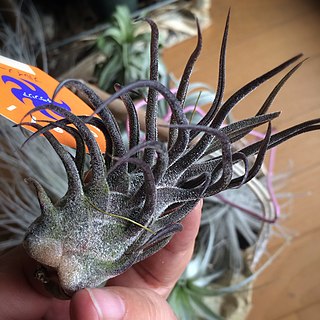
Tillandsia pruinosa, the fuzzywuzzy airplant, is a species of bromeliad in the genus Tillandsia. This species is native to northern South America, Central America, southern Mexico, the West Indies and Florida.
Missulena pruinosa, commonly known as the northern mouse spider, is a species of spider belonging to the family Actinopodidae, native to Australia.
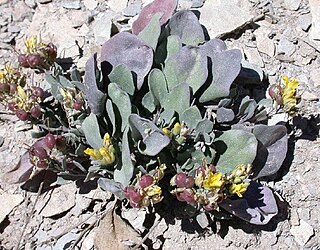
Physaria pruinosa is a species of flowering plant in the mustard family known by the common names Pagosa Springs bladderpod and frosty bladderpod. It is native to Colorado and New Mexico in the United States.
Zygocerini is a tribe of longhorn beetles of the Lamiinae subfamily. It was described by Lacordaire in 1872.
Disternopsis is a genus of longhorn beetles of the subfamily Lamiinae, containing the following species:
Leptogenys pruinosa, is a species of ant of the subfamily Ponerinae. It is found in Sri Lanka, and Philippines.

Eucalyptus pruinosa, commonly known as silver box, silver leaf box, apple box or smoke tree, is a mallee tree that is native to Northern Territory the Kimberley region of Western Australia., and Queensland The Jaminjung peoples know the tree as yarrirra or jarnbiny, the Jaru know the tree as wararn and the Wagiman know it as wararn.
Disternopsis albosticta is a species of beetle in the family Cerambycidae. It was described by Stephan von Breuning in 1939. It is known from Australia.
Disternopsis apicespinosa is a species of beetle in the family Cerambycidae. It was described by Stephan von Breuning in 1939. It is known from Australia.
Disternopsis bivittata is a species of beetle in the family Cerambycidae. It was described by Stephan von Breuning in 1939. It is known from Australia.
Disternopsis bivittipennis is a species of beetle in the family Cerambycidae. It was described by Stephan von Breuning in 1968.
Disternopsis metallica is a species of beetle in the family Cerambycidae. It was described by Westwood in 1863. It is known from Australia.
Disternopsis pentheoides is a species of beetle in the family Cerambycidae. It was described by Francis Polkinghorne Pascoe in 1859. It is known from Australia.