| Fernwood House | |
|---|---|
| | |
| General information | |
| Architectural style | Italianate Villa |
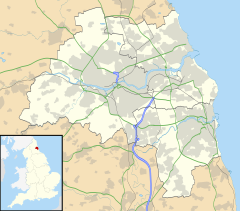
| Location | Tyne and Wear, England |
| Coordinates | 54°58′58″N1°36′14″W / 54.9829°N 1.6038°W |
| Owner | Lowes Group of Companies www |
Fernwood House is a Victorian building, located in Newcastle upon Tyne, United Kingdom. The building is regarded[ by whom? ] as one of the oldest and most notable buildings still standing in the area of Jesmond. The building is located on Clayton Road in Jesmond and was commissioned in 1864 by James Stoddard. Construction of Fernwood House was completed in February 1865. Shortly after its completion, it was sold to tea dealer, William Stewart. Stewart served as the Sheriff of Newcastle between 1876 and 1877, while living in the house.
Walter Runciman and his wife Anne Margaret Runciman bought Fernwood House in 1893, where Runciman served as MP for Hartlepool. He was also owner of one of the largest shipbuilding firms in the area, which spun out to create a number of shipping companies, including Anchor Line.
It served as a private maternity hospital between the 1930s and 1960s. In the 1960s, it was purchased by Newcastle City Council and was used as a Children's home in 1966 until 1991. and reception centre until 1991.
In 1992, the property again entered private ownership when it was purchased by Greggs and used as their head office. Fernwood House was then sold to Lowes Financial Management in 2016, who are part of the Lowes Group.
The history of the building dates back to when Jesmond was a township in the 1800s. It also had Jesmond Colliery nearby, but was fields and woodland until the land was developed and properties were built in the 1850s. The land on which it was built, was formerly owned by the Warwick family, who also owned Warwick Hall. [1] [2] The land was sold to the Archbold family in 1821, following the bankruptcy of Robert Warwick, the owner of the Warwick estate. The sale to the Archbold family came as the Warwick estate was broken up and sold off to different buyers. A number of Archbolds owned the land, before James Archbold Pears began to develop the land. Pears was the son of the noble family who owned Fenham Hall near Newcastle upon Tyne at the time.
After James Archbold Pears inherited the estate, he disposed of some of the land so that it could be developed. This included the land where Fernwood House is now situated. The construction of the building took place in 1864, when a number of properties and roads were established in the area. This included the development of Clayton Road, which the house and many similar style Victorian buildings are now situated in Jesmond, Newcastle upon Tyne.
The house was built by James Stoddard, after he acquired the land. Stoddard worked in London as the owner of the James Stoddard & Company and also the Imperial Chinese Tea company. [3] After the property had been completed, it was sold to the tea dealer William Stewart, who was originally from Newcastle. He and his family resided in Fernwood House from 1865 until 1893. Stewart purchased the property for £1,200, with the aid of a 94% mortgage from Newcastle Permanent Building Society.
In 1876 while living at Fernwood House, Stewart became the Sheriff of Newcastle between 1876 and 1877. Once he had finished serving as Sheriff, Stewart substantially extended the property in 1877. [4] The building's significance locally, led it to be referenced in an article by Holliday Bickerstaffe Kendall, part of his Preachers of Thirty Years Ago series. [5] The article refers to the viewing of the Leonid meteor shower that took place in 1866.
The ownership of Fernwood House changed again in 1893 after the death of William Stewart. Stewart's widow and son sold Fernwood House to Walter Runciman and his wife Anne Margaret Runciman. He was the owner of the South Shields Shipping Company, which later became Moor Line and Anchor Line. Runciman was the second largest ship builder in Newcastle at the time, second to James Knott’s Prince Line. He served as Liberal MP for Hartlepool from 1914 to 1918. Walter Runciman died in 1937 at Fernwood House, with the estate valued at £286,431.
Following the death of Walter Runciman in 1937, Fernwood House was then transformed into a maternity hospital. Dr. Henry Harvey Evers, was the doctor who purchased the building in order to turn it into a leading private maternity hospital in the north east of England. [6] Evers subsequently purchased the neighbouring Oakwood House, which he used as his personal residence.
During this period, Fernwood House was more commonly known as Fernwood House Maternity Hospital. While it remained as a private hospital throughout, many complicated births were treated in the hospital for people in the surrounding area. In 1945, George Orwell’s wife Eileen Blair, was admitted to the Fernwood House Maternity Hospital and underwent a hysterectomy whilst her husband George was in Paris reporting on the closing states of World War II. Eileen Blair died while under general anesthetic in the hospital. [7] She was buried in nearby Jesmond Cemetery. Other notable births at the hospital included the founder of Greggs, John Gregg and also two senior figures of Lowes Financial Management.
In 1964, the maternity hospital closed its doors and was sold to Newcastle City Council. Fernwood House was again renamed Fernwood House Reception Centre and would act as a replacement for the facility in the centre of Newcastle. [8]
The building went under an extensive refurbishment between 1964 and 1966 and reopened in May 1966. A number of distressed children passed through the facility in the 25 years it was open. The most notable was Mary Bell, who was a resident at the property in December 1968, while she underwent an 11-day trial, which saw her convicted of the manslaughter of two young boys. The Fernwood House Reception Centre closed in 1991.
Following the closure of Fernwood House as a reception centre, it was purchased by Greggs and used as their headquarters. The building was extensively altered to create a main entrance directly off Clayton Road, while also expanding the car park and landscaping the gardens. Prior to this change, the main entrance was located on the building close to Oakwood House and Denewood House. Several expansions took place in 1997, 2002 and in 2004. The expansions focused on the rear of the property, incorporating a stableman's cottage and taking down several outhouses. Many of the smaller buildings had stood since the early 20th century.
Lowes Group acquired the premises in May 2016 and it became the head office of Lowes Financial Management. Lowes was previously based at the nearby Holmwood House from 1984 onwards. The building was situated a couple of buildings away on Clayton Road.
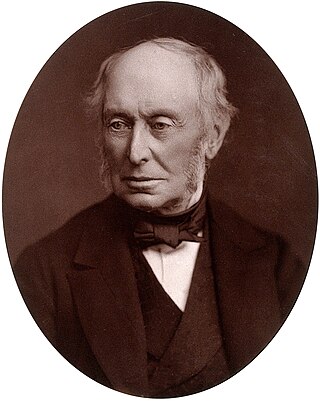
William George Armstrong, 1st Baron Armstrong, was an English engineer and industrialist who founded the Armstrong Whitworth manufacturing concern on Tyneside. He was also an eminent scientist, inventor and philanthropist. In collaboration with the architect Richard Norman Shaw, he built Cragside in Northumberland, the first house in the world to be lit by hydroelectricity. He is regarded as the inventor of modern artillery.
Charles Mitchell was a Scottish engineer from Aberdeen who founded major shipbuilding yards on the Tyne. He became a public benefactor who funded notable buildings that still survive today.
John Dobson was a 19th-century English neoclassical architect. During his life, he was the most noted architect in Northern England. He designed more than 50 churches and 100 private houses, but he is best known for designing Newcastle railway station and his work with Richard Grainger developing the neoclassical centre of Newcastle. Other notable structures include Nunnykirk Hall, Meldon Park, Mitford Hall, Lilburn Tower, St John the Baptist Church in Otterburn, Northumberland, and Beaufront Castle.
Jesmond Parish Church is a parish church in the Church of England situated in Brandling Village in the Jesmond suburb of Newcastle upon Tyne, Tyne and Wear, England. The church's official name is the Clayton Memorial Church and is unusual among Anglican parish churches in not being named after either a saint who appears in the church's calendar or a person of the Trinity. This reflects the church's conservative Evangelical roots. It is a grade II listed building.
The history of Newcastle upon Tyne dates back almost 2,000 years, during which it has been controlled by the Romans, the Angles and the Norsemen amongst others. Newcastle upon Tyne was originally known by its Roman name Pons Aelius. The name "Newcastle" has been used since the Norman conquest of England. Due to its prime location on the River Tyne, the town developed greatly during the Middle Ages and it was to play a major role in the Industrial Revolution, being granted city status in 1882. Today, the city is a major retail, commercial and cultural centre.

Regent Centre is a large business park in Gosforth, Newcastle upon Tyne, England. The business park is home to a variety of companies, including banking group Virgin Money whose Head Office is located on the site. The centre has its own transport interchange with a station on the Tyne & Wear Metro and integrated bus station.
Heaton is a district and suburb in the city of Newcastle upon Tyne, England, two miles east of the city centre. It is bordered by the neighbouring areas of Walkergate to the east, Jesmond to the north west, Byker to the south, and Sandyford to the west. The name Heaton means high town, referring to the area "being situated on hills above the Ouseburn, a tributary of the River Tyne." The area is divided into South Heaton, and High Heaton, representing the north, respectively. For city council elections, the area is split between three wards: Heaton, Manor Park and Ouseburn.
La Sagesse School was a 3–18, Roman Catholic, private school for girls in Jesmond, Newcastle upon Tyne, Tyne and Wear, England. It was established in 1906 and closed in 2008. It occupied Jesmond Towers, a Grade II* listed building and was located in the Roman Catholic Diocese of Hexham and Newcastle.
John Clayton was an antiquarian and town clerk of Newcastle upon Tyne, England, during the nineteenth century. He worked with the builder Richard Grainger and architect John Dobson to redevelop the centre of the city in a neoclassical style, and Clayton Street in Newcastle is named after him. He did much to preserve the remains of Hadrian's Wall.
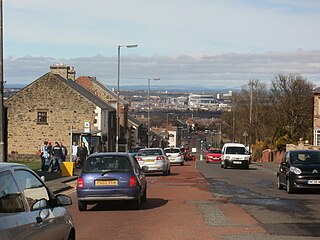
Sheriff Hill is a suburb in the Metropolitan Borough of Gateshead in Tyne and Wear, England. It lies on the B1296 road 2 miles (3.2 km) south of Gateshead, 2.5 miles (4.0 km) south of Newcastle upon Tyne and 12 miles (19 km) north of the historic city of Durham. According to the 2001 UK census it had a population of 5,051.
Howdon is a largely residential area in the eastern part of Wallsend, Tyne and Wear, England. It consists of High Howdon and the smaller settlement of East Howdon. Much of the High Howdon area was formerly called Willington prior to post-World War II urbanisation. The North Tyneside ward population at the 2011 Census was 11,129.
Thomas Oliver was an English classical architect and surveyor active in Newcastle upon Tyne. He was one of a number of talented local architects who worked with Richard Grainger on the development of Newcastle, but his work tends to be overshadowed by that of John Dobson who has been given a great deal of the credit for the central part of the city referred to as Grainger Town.
Ridley Hall is an 18th-century country house, now a residential and conference centre, at Bardon Mill, Northumberland. It is a Grade II listed building.

Sir Arthur Munro Sutherland, 1st Baronet,, of Hethpool House, Kirknewton, Northumberland, was an English shipowner and philanthropist.
Jesmond is a suburb of Newcastle upon Tyne, situated north of the city centre and to the east of the Town Moor. Jesmond is considered to be one of the most affluent suburbs of Newcastle upon Tyne, with higher average house prices than most other areas of the city.
Dilston Castle is an unglazed 15th-century uninhabited tower house at Dilston in the parish of Corbridge, Northumberland, England. Both are scheduled monuments and Grade I listed buildings giving them recognition for historic and architectural value as well protection from demolition.
Carr Hill is a suburb in the Metropolitan Borough of Gateshead in Tyne and Wear, England. It is bordered by Felling to the north, Sheriff Hill to the south, Windy Nook to the east and Deckham to the west. It lies 1.5 miles (2.4 km) south of Gateshead, 2 miles (3.2 km) south of the city of Newcastle upon Tyne and 13 miles (21 km) north of the historic City of Durham. Once a village in County Durham, it was incorporated into the Metropolitan Borough of Gateshead by the Local Government Act 1972 on 1 April 1974.
Frank West Rich was an English architect who mainly worked in the Newcastle upon Tyne area.
Richard Clayton was a British clergyman, Master of the Mary Magdalene Hospital and chaplain to the Church of St Thomas the Martyr, Newcastle upon Tyne from 1826 until his death.