- 1 2 3 Courtney 1892.
- ↑ "LEE, George (?1700-58)". History of Parliament Online (1715–1754). Retrieved 9 February 2019.
- ↑ "LEE, Sir George (c.1700-58)". History of Parliament Online (1754–1790). Retrieved 9 February 2019.
- ↑ List of Privy Councillors [Usurped!]
Related Research Articles

William Cavendish, 3rd Duke of Devonshire, was a British nobleman and Whig politician who sat in the House of Commons from 1721 to 1729 when he inherited the Dukedom.

Richard Edgcumbe, 1st Baron Edgcumbe, of Mount Edgcumbe in Cornwall, was an English Whig politician who sat in the English and British House of Commons from 1701 until 1742 when he was raised to the peerage as Baron Edgcumbe. He is memorialised by Edgecombe County, North Carolina.

General John Campbell, 4th Duke of Argyll KT PC, was a British Army officer and Scottish Whig politician who sat in the House of Commons between 1713 and 1761. From 1729 to 1761 he was known as John Campbell of Mamore.
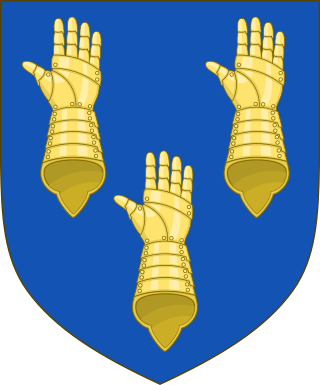
Henry Vane, 1st Earl of Darlington, PC, known as Lord Barnard between 1753 and 1754, was a British politician who sat in the House of Commons from 1726 to 1753 when he succeeded to a peerage as Baron Barnard.
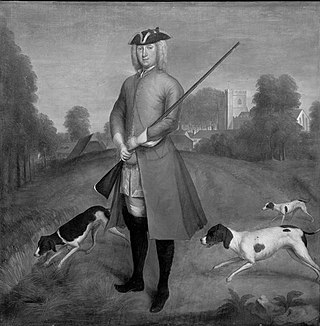
Charles Powlett, 3rd Duke of Bolton, styled Earl of Wiltshire from 1685 until 1699, and Marquess of Winchester from 1699 until 1722, was a British landowner and Whig politician who sat in the English House of Commons from 1705 to 1708 and in the British House of Commons between 1708 and 1717, when he was raised to the peerage as Lord Powlett and sat in the House of Lords.

John Smith (1656–1723) of Tedworth House, Hampshire, was an English politician who sat in the English and British House of Commons between 1678 and 1723. He served as Speaker and twice as Chancellor of the Exchequer.

Lord James Cavendish FRS of Staveley Hall, Derbyshire was a British Whig politician who sat in the English House of Commons between 1701 and 1707 and in the British House of Commons between 1707 and 1742. He was also a member of the Cavendish family.
Harry Powlett, 4th Duke of Bolton PC, known until 1754 as Lord Harry Powlett, was a British nobleman and Whig politician. He sat in the House of Commons from 1715 to 1754, when he took his seat in the House of Lords.

Lord Archibald Hamilton of Riccarton and Pardovan was a British officer of the Royal Navy, and Whig politician who sat in the House of Commons between 1708 and 1747. In the 1690s, he was active in the English Channel pursuing French privateers, including Tyger out of St Malo. He commanded the third-rate HMS Boyne at the Battle of Vigo Bay in October 1702 and then commanded the third-rate HMS Eagle at the Battle of Málaga in August 1704 during the War of the Spanish Succession. He was a controversial Governor of Jamaica. He then joined the Board of Admiralty, ultimately serving as Senior Naval Lord.
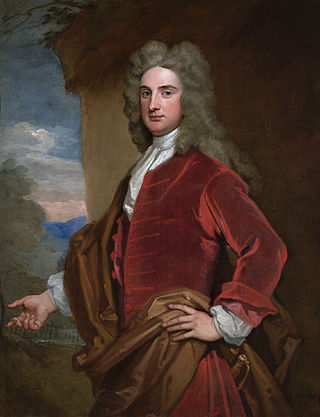
Sir John Rushout, 4th Baronet, of Northwick Park, Worcestershire was a British Whig politician who sat in the House of Commons for 55 years from 1713 to 1768. He was a supporter of Pulteney in opposition to Walpole, and was briefly part of an Administration. He was Father of the House from 1762.
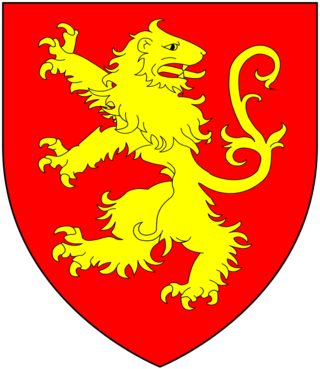
Sir William Morice, 3rd Baronet of Werrington Park was an English Tory politician who sat in the House of Commons from 1727 to 1750.

Sir John Evelyn, 2nd Baronet was a British courtier and Whig politician who sat in the House of Commons for 40 years from 1727 to 1767.

George Treby of Plympton House, Plympton St Maurice, Devon, was an English Whig politician who sat in the House of Commons for 34 years from 1708 to 1742. He was Secretary at War from 1718 to 1724, and Master of the Household from 1730 to 1741. He built Plympton House between 1715 and 1720, which his father began and left unfinished at his death in 1700.
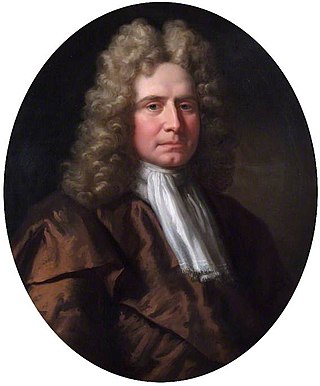
Humphry Morice was a British merchant, MP, Governor of the Bank of England who was involved in the Atlantic slave trade. He inherited his father's trading business around the age of eighteen, and learned finance and speculation from an uncle. Placed in Parliament through a cousin's interest in 1713, his Whig politics ultimately provoked a breach with his Tory cousin, and he had to be given another seat in 1722 by Robert Walpole's administration. He rose to be Deputy Governor and then Governor of the Bank of England in 1727, but unknown to his contemporaries, his fortune was largely fictitious and he was embezzling from the Bank and his daughters' trust fund. He died suddenly in 1731, perhaps having poisoned himself to forestall the discovery of his frauds, and left behind enormous debts.
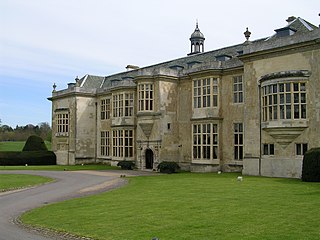
Sir Thomas Lee, 3rd Baronet (1687–1749), of Hartwell, near Aylesbury, Buckinghamshire, was an English politician who sat in the House of Commons almost continuously from 1710 to 1741.
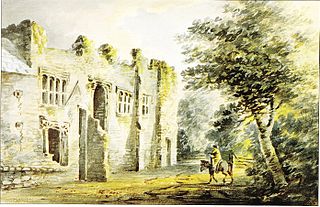
Sir William Pole, 4th Baronet, of Colcombe Castle, near Colyton and Shute, near Honiton, Devon was an English landowner and Tory politician who sat in the English and British House of Commons between 1701 and 1734.
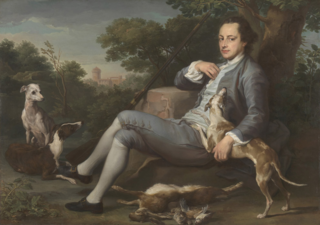
Humphry Morice was a Whig Member of Parliament for the Cornish parliamentary borough of Launceston from 2 February 1750 until 1780.
Hon. Nicholas Herbert was a British politician who sat in the House of Commons between 1740 and 1774 and a member of the Herbert family. He became the Treasurer of Princess Amelia of Great Britain, of the Royal House of Hanover, in 1757.
Sir William Middleton, 3rd Baronet of Belsay Castle, Bolam, Northumberland, was a British landowner and Whig politician who sat in the House of Commons for 35 years from 1722 to 1757.
John Hedworth (1683–1747), of Chester Deanery, Durham, was a British colliery owner and politician who sat in the House of Commons for 34 years from 1713 to 1747.
References
 This article incorporates text from a publication now in the public domain : Courtney, William Prideaux (1892). "Lee, George (1700–1758)". In Lee, Sidney (ed.). Dictionary of National Biography . Vol. 32. London: Smith, Elder & Co.
External links
- The Sir George Lee Papers are available for research use at the Historical Society of Pennsylvania.
- Parliamentary Archives, Papers of Sir George Lee (1700–1758)
Sir George Lee | |
|---|---|
 | |
| Member of Parliament (MP) for Brackley | |
| In office 1733–1742 |
| International | |
|---|---|
| National | |
| People | |
| Other | |
