
Hanna Jessen | |
|---|---|
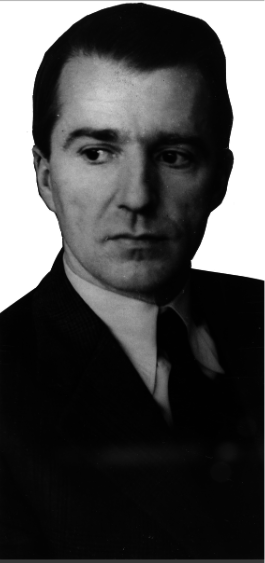
 Sculptor Hanna Jessen in 1940 |
Hanna Jessen (born 29 June 1907 in Kristiania, died 11 October 1973 in Oslo) was a Norwegian sculptor, lecturer and non-fiction author.
Hanna Jessen | |
|---|---|
| Sculptor Hanna Jessen in 1940 |
Hanna Jessen (born 29 June 1907 in Kristiania, died 11 October 1973 in Oslo) was a Norwegian sculptor, lecturer and non-fiction author.
Hanna Jessen was the daughter of engineer Christian Jessen and Olga Jessen (born Corneliussen). [1] Jessen studied sculptor with Torbjørn Alvsåker, Wilhelm Rasmussen, Antoine Bourdelle and Ossip Zadkine as teachers. She also spent some time studying in the Dresden Academy of Fine Arts. [2]
In 1934, the National Museum of Art, Architecture and Design purchased the bronze bust Helene. This was a work Jessen had completed the year before, and it was purchased for funds from Benneche's endowment. [3]
In 1950, she showed three works at "The Official Finnish Exhibition" in Oslo: Liv, which belonged to Larvik, as well as Synnøve (a portrait in soapstone of the textile artist Synnøve Anker Aurdal [2] ), a sculpture in soapstone, and Piken med blokfløyten, which was carved in granite. [4]
A child's portrait in bronze from 1954, titled Piken med fuglen was installed in Schous plass in Oslo. [5] [6] Piken med fuglen was a testementary gift to the city from Liv Skavlan Reiss. [7] In Oslo, there is also the bronze sculpture Barn som lærer å gå (1962); this work was placed at the base of a pool in the Ditten complex in Akersgata 55. [6] [7] Selvaagbygg A/S donated a soapstone sculpture by Jessen to be placed at the intersection of Veitvetveien/Grevlingveien in Veitvet; the motif is a mother holding her small child. [7]
Among other works by Jessen is a portrait bust of her sculptor colleague Emma Matthiasen, [8] and a portrait of the singer Gudrun Grave Nordlund (1956). [5] A sculpture of a girl in bronze is located in a flower bed in Herregården in Larvik, and both Askim and Haugesund municipalities own examples of her bronze sculpture Fløytespilleren. [2]
She has made several war memorials, including the three metre high memorial at Nyborg kirke in Nyborg i Åsane. The memorial has reliefs in a variant of dragestil among its motifs. [2]
Jessen was elected to the supervisory board of Kunstnernes Hus in Oslo, as a representative of sculptors, in 1952/1953/1954. She was re-elected to the supervisory board in 1967/1968/1969, and again in 1970/1971/1972. She was again reelected in 1973/1974/1975, but died in 1973. [9]
In 1955, Jessen was one of the winners in a competition to design a memorial for the actress Johanne Dybwad. [2]
Jessen spent many years as a private sculpture teacher, before becoming senior lecturer at Statens Håndverks- og Kunstindustriskole. [1] She worked at the school until her death in 1973. [10]
In 1960, Jessen published the book Modellering som hobby : forming i leire, brenning og gipsstøping, stein og tre from Fabritius publishing [5]

Ingebrigt Vik was a Norwegian sculptor. Vik is regarded as having been one of Norway's greatest sculptors from the first part of the 20th century.

Dyre Vaa was a Norwegian sculptor and painter.
Jan Valentin Sæther was a Norwegian figurative painter, sculptor and gnostic priest. He was professor of figurative painting at the National Academy of the Arts in Oslo between 1996 and 2002.

Axel Otto Normann was a Norwegian journalist, newspaper editor, theatre critic and theatre director.

Johanne Dybwad was a Norwegian stage actress and stage producer. She was the leading actress in Norwegian theatre for half a century.

Per Ung was a Norwegian sculptor and graphic artist.
Gunnar Christie Wasberg was a Norwegian historian, philosopher and first librarian at the University of Oslo Library.

Ragnhild Butenschøn, née Jakhelln was a Norwegian sculptor. She was especially known for her church art.
Karin Sveen is a Norwegian poet, novelist and essayist.
Gunnar Tidemand Janson was a Norwegian sculptor. He was born in Levanger, and was the father of journalist Mette Janson and composer Alfred Janson. Among his works are sculptures of Hans E. Kinck, Arne Garborg, Tarjei Vesaas, Dagfin Werenskiold and Ingeborg Refling Hagen. From 1939 a miniature version of his sculpture Spydkasteren was used as a statuette awarded for all-round proficiency in sports. His bronze sculpture Nasjonalmonument for krigens ofre was unveiled at Akershus Fortress in 1970. He was Chairman of the Board of Directors of Oslo House of Artists.
Per Palle Storm was a Danish-born Norwegian sculptor and professor at the Norwegian National Academy of Fine Arts.

Amphitrite, the wave and the sea birds is a 4 m (13 ft) tall stainless steel sculpture by Jørleif Uthaug located in Porsgrunn, Norway. The work consists of a nude female figure and two seabirds gliding over a large geometric wave. It is one of Uthaug's most recognizable and celebrated works.

Nicolai Marius "Nic" Schiøll was a Norwegian sculptor and painter. He was most known for his public works, ornamental sculptures and memorials.
Smørbukk is a Norwegian comic strip. It was started in 1938 by text writer Andreas Haavoll and illustrator Jens R. Nilssen. The first Smørbukk story was based on the fairytale Buttercup collected by Asbjørnsen and Moe. The strip appears in the children's magazine Norsk Barneblad, as well as in separate albums. From 1959/1960 to 1983 the series was illustrated by Solveig Muren Sanden. Later text writers have been Øyvind Dybwad and Johannes Farestveit. From 1983 Håkon Aasnes took over as illustrator. The anniversary book Smørbukk 70 år was published in 2008.
Finn Henrik Bodvin was a Norwegian sculptor.

Maria Vigeland was a Norwegian painter and sculptor.

Elen Sofie Elster Christensen was a Norwegian sculptor of the 20th century. Her public works grace a number of Norwegian cities and towns, including Gutten som ser fremover, a statue in Trondheim that honors shipping magnate Harry Borthens.

Siri Aurdal is a Norwegian painter, graphic designer, and sculptor. She comes from an artistic family with parents textile artist Synnøve Anker Aurdal and painter Leon Aurdal. Ludvig Eikaas was her stepfather from 1959.

Ambrosia Tønnesen was a Norwegian sculptor. She is regarded as the first professional female sculptor in Norway, and is best known for her many portraits, including statues, busts, and reliefs.
Gro Jessen (1938–2003) was a Norwegian textile artist. One of her country's most significant contributors to textile art in the second half of the 20th century, she also taught at the Norwegian National Academy of Craft and Art Industry and was active in a number of craft organizations including Norske Kunsthåndverkere. From the 1980s, her works were increasingly decorative as she experimented with new techniques and a variety of fabrics. Several of her creations are in the permanent collection of Norway's National Museum. Jessen has received a number of prizes, including the Norske Kunsthåndverkere's Honorary Award in 2003.
{{cite book}}: CS1 maint: numeric names: authors list (link){{cite book}}: CS1 maint: numeric names: authors list (link){{cite book}}: CS1 maint: location missing publisher (link)[ dead link ]{{cite book}}: CS1 maint: location missing publisher (link) CS1 maint: numeric names: authors list (link)| International | |
|---|---|
| National | |
| Artists | |
