
Netball is a ball sport played on a rectangular court by two teams of seven players. The primary objective is to shoot a ball through the defender's goal ring while preventing the opposing team from shooting through their own goal ring. It is among a rare number of sports which have been created exclusively for female competitors and remains primarily played by women. The sport is played on indoor and outdoor netball courts and is specifically played in schools. Netball is most popularly played in Commonwealth nations.
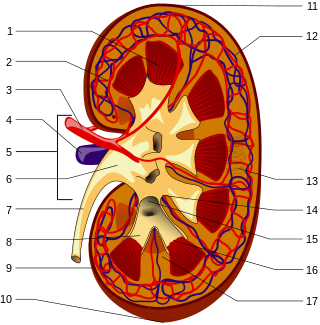
Nephrology is a specialty of adult internal medicine and pediatric medicine that concerns the study of the kidneys, specifically normal kidney function and kidney disease, the preservation of kidney health, and the treatment of kidney disease, from diet and medication to renal replacement therapy. The word “renal” is an adjective meaning “relating to the kidneys”, and its roots are French or late Latin. Whereas according to some opinions, "renal" and "nephro" should be replaced with "kidney" in scientific writings such as "kidney medicine" or "kidney replacement therapy", other experts have advocated preserving the use of renal and nephro as appropriate including in "nephrology" and "renal replacement therapy", respectively.

Osteopathy is a type of pseudoscientific system of alternative medicine that emphasizes physical manipulation of the body's muscle tissue and bones. In most countries, practitioners of osteopathy are not medically trained and are referred to as osteopaths.
In the medical profession, a general practitioner (GP) or family physician is a physician who treats acute and chronic illnesses and provides preventive care and health education to patients of all ages. GPs' duties are not confined to specific fields of medicine, and they have particular skills in treating people with multiple health issues. They are trained to treat patients to levels of complexity that vary between countries. The term "primary care physician" is more usually used in the US. In Asian countries like India, this term has been replaced mainly by Medical Officers, Registered Medical Practitioner etc.
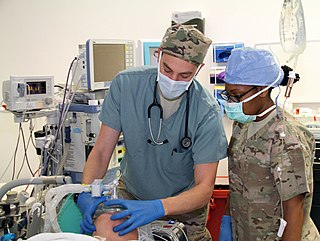
Anesthesiology, anaesthesiology, or anaesthesia is the medical specialty concerned with the total perioperative care of patients before, during and after surgery. It encompasses anesthesia, intensive care medicine, critical emergency medicine, and pain medicine. A physician specialized in anesthesiology is called an anesthesiologist, anaesthesiologist, or anaesthetist, depending on the country. In some countries, the terms are synonymous, while in other countries they refer to different positions, and anesthetist is only used for non-physicians, such as nurse anesthetists.

Podiatry, or podiatric medicine, also known as chiropody, is a branch of medicine devoted to the study, diagnosis, and treatment of disorders of the foot, and ankle. The healthcare professional is known as a podiatrist. The US podiatric medical school curriculum includes lower extremity anatomy, general human anatomy, physiology, general medicine, physical assessment, biochemistry, neurobiology, pathophysiology, genetics and embryology, microbiology, histology, pharmacology, women's health, physical rehabilitation, sports medicine, research, ethics and jurisprudence, biomechanics, general principles of orthopedic surgery, and foot and ankle surgery.
The Royal Australian and New Zealand College of Radiologists (RANZCR) is the leading professional organisation for the promotion of the science and practice of the medical specialties of clinical radiology and radiation oncology in Australia and New Zealand. The college has members throughout the world. RANZCR provides the educational curricula for medical graduates training to enter the specialties.
A medical specialty is a branch of medical practice that is focused on a defined group of patients, diseases, skills, or philosophy. Examples include those branches of medicine that deal exclusively with children (paediatrics), cancer (oncology), laboratory medicine (pathology), or primary care. After completing medical school or other basic training, physicians or surgeons and other clinicians usually further their medical education in a specific specialty of medicine by completing a multiple-year residency to become a specialist.

The Australasian College for Emergency Medicine (ACEM), based in Melbourne Australia, is the primary training body for specialist emergency physicians in Australia and New Zealand. The college is recognised by the Australian Medical Council and Medical Council of New Zealand as such and provides services for approximately 2700 Fellows and 2600 Trainees.
The following lists events that happened during 1909 in New Zealand.

Sir Frederic Truby King, generally known as Truby King, was a New Zealand health reformer and Director of Child Welfare. He is best known as the founder of the Plunket Society.
The Royal Australasian College of Physicians (RACP) is a not-for-profit professional organisation responsible for training and educating physicians and paediatricians across Australia and New Zealand.
Fellow of the Royal Australasian College of Physicians, abbreviated as the post-nominal initials FRACP, is a recognition of the completion of the prescribed postgraduate specialist training programme in internal adult or internal paediatric medicine of the Royal Australasian College of Physicians.
Phlebology is a medical speciality that is concerned with venous issues including the diagnosis and treatment of disorders of the veins. A medical specialist in this field is known as a phlebologist. The specialty of phlebology has developed to enable physicians sharing an interest in venous disease and health to share knowledge and experience despite being trained in a variety of backgrounds such as dermatology, vascular surgery, haematology, interventional radiology or general medicine. Diagnostic techniques used include the patient's history and physical examination, venous imaging techniques in particular vascular ultrasound and laboratory evaluation related to venous thromboembolism. The American Medical Association and the American Osteopathic Association have added phlebology to their list of self-designated practice specialties.

Simon Mitchell is a New Zealand physician specialising in occupational medicine, hyperbaric medicine and anesthesiology. Trained in medicine, Mitchell was awarded a PhD for his work on neuroprotection from embolic brain injury. Mitchell has also published more than 45 research and review papers in the medical literature. Mitchell is an author and avid technical diver. He also wrote two chapters of the latest edition of Bennett and Elliott's Physiology and Medicine of Diving, is the co-author of the diving textbook Deeper Into Diving with John Lippmann and co-authored the chapter on Diving and Hyperbaric Medicine in Harrison's Principles of Internal Medicine with Michael Bennett.
Ronald Valentine Trubuhovich is a medical doctor and a major pioneer of critical care medicine in New Zealand.
The timeline of nursing history in Australia and New Zealand stretches from the 19th century to the present.
The College of Intensive Care Medicine (CICM), also known by its longer and more complete name, the College of Intensive Care Medicine of Australia and New Zealand, is the medical specialty college statutorily responsible for the training and accreditation of intensive care medical specialists in Australia and New Zealand.
The 2009 New Year Honours in New Zealand were appointments by Elizabeth II in her right as Queen of New Zealand, on the advice of the New Zealand government, to various orders and honours to reward and highlight good works by New Zealanders, and to celebrate the passing of 2008 and the beginning of 2009. They were announced on 31 December 2008.


