
Herschel Junior Walker is an American former football running back who played in the National Football League (NFL) for 12 seasons. He was also the Republican nominee in the 2022 United States Senate election in Georgia.
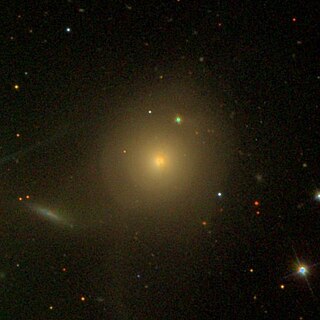
NGC 467 is an unbarred lenticular galaxy in the constellation Pisces. It was discovered on 8 October 1785 by William Herschel.
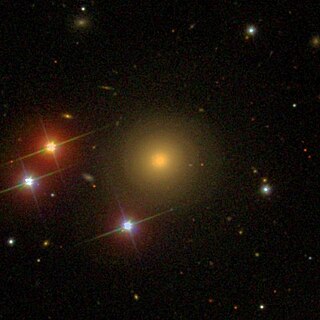
NGC 83 is an elliptical galaxy estimated to be about 260 million light-years away in the constellation of Andromeda. It was discovered by John Herschel in 1828 and its apparent magnitude is 14.2.
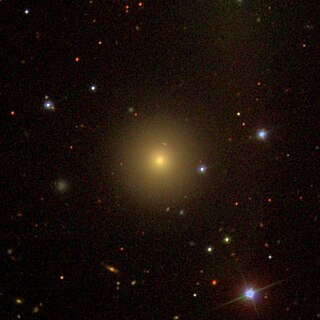
NGC 97 is an elliptical galaxy estimated to be about 230 million light-years away in the constellation of Andromeda. It was discovered by John Herschel in 1828 and its apparent magnitude is 13.5.

NGC 157 is an intermediate spiral galaxy in the constellation of Cetus. The compiler of the New General Catalogue, John Louis Emil Dreyer noted that NGC 157 was "pretty bright, large, extended, between 2 considerably bright stars". It was discovered on December 13, 1783 by William Herschel.
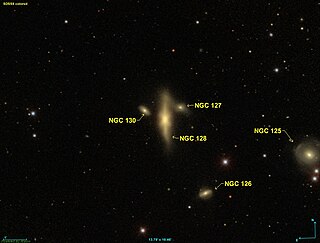
NGC 125 is a lenticular galaxy located in the constellation Pisces. It is designated as subclass Sa Ring in the galaxy morphological classification scheme. It lies approximately 235 million light-years away.

NGC 154 is an elliptical galaxy in the Cetus constellation. The galaxy was discovered by Frederick William Herschel on November 27, 1785.
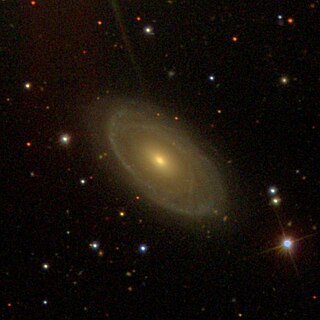
NGC 160 is a lenticular galaxy in the Andromeda constellation. It was discovered on December 5, 1785, by William Herschel.

NGC 163 is an elliptical galaxy in the constellation Cetus. It was discovered by William Herschel in 1890. Seen through an optical telescope it ranges up to 13th magnitude.
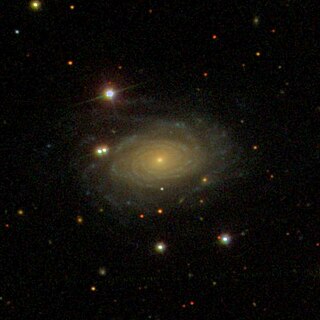
NGC 251 is a spiral galaxy in the constellation of Pisces. It was discovered on October 15, 1784, by Frederick William Herschel.

NGC 252 is a lenticular galaxy located in the constellation Andromeda. It was discovered by William Herschel in 1786.

NGC 255 is a barred spiral galaxy in the constellation Cetus. It was discovered on November 27, 1785, by Frederick William Herschel.

NGC 257 is a spiral galaxy in the Pisces constellation. It was discovered on December 29, 1790, by Frederick William Herschel.

NGC 834 is a spiral galaxy located in the Andromeda constellation. It is estimated to be 160 million light-years away from the Milky Way galaxy and has a diameter of about 65,000 light-years. The object was discovered on September 21, 1786 by the astronomer William Herschel.
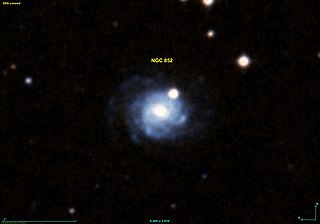
NGC 852 is a barred spiral galaxy located in the Eridanus constellation. It is estimated to be 281 million light-years from the Milky Way and has a diameter of about 110,000 light-years. NGC 852 was discovered on October 27, 1834, by John Herschel.

NGC 622 is a barred spiral galaxy located in the constellation Cetus about 234 million light-years from the Milky Way. It was discovered by British astronomer William Herschel in 1785.

NGC 630 is an elliptical galaxy in the constellation Sculptor. It is estimated to be 275 million light years from the Milky Way and has a diameter of approximately 125,000 light years. The object was discovered on October 23, 1835 by the English astronomer John Herschel.

NGC 3902 is an intermediate spiral galaxy in the constellation Leo. It was discovered on April 6, 1785, by William Herschel and observed on February 19, 1827, by John Herschel. It is estimated to be 180 to 185 million light-years away, and its redshift-independent distance estimates to about 185 to 240 million light-years. It is around 75,000 light-years in diameter.
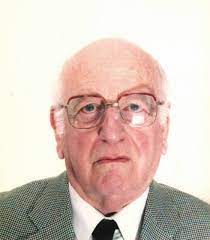
Herschel Albert Prins (1928–2016) was a British professor of criminology. His career spanned over 60 years in work pertaining to forensic psychiatry, and his appointments included positions at the universities of Leeds, Loughborough, Leicester and Birmingham. His roles included HM probation inspectorate, parole board engagement, and involvement in mental health review tribunals and the mental health act commission. He worked with people with malicious activity, antisocial and disinhibited behaviour, unusual sexual deviations and people who behaved dangerously.

Orville Blackwood was a Jamaican-born British man, whose death at Broadmoor Hospital on 28 August 1991, following the administration of large doses of antipsychotic medications, resulted in wide media coverage after an inquiry into the circumstances surrounding his death. The inquiry published a report in 1993 titled 'Report of the committee of inquiry into the death in Broadmoor Hospital of Orville Blackwood, and a review of the deaths of two other Afro-Caribbean patients: "big, black and dangerous?".


