Israeli general election, 1999

Last updated
Election for Prime Minister
Flag of Israel.svg
  1996 17 May 1999 2001  

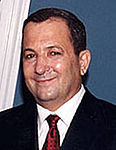
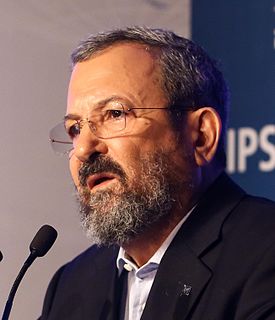
  Ehud Barak Face.jpg Benjamin Netanyahu.jpg
Candidate Ehud Barak Benjamin Netanyahu
Party One Israel Likud
Popular vote 1,791,020 1,402,474
Percentage 56.1% 43.9%

Prime Minister before election

Benjamin Netanyahu
Likud

Elected Prime Minister

Ehud Barak
One Israel

Early general elections for both the Prime Minister and the Knesset were held in Israel on 17 May 1999 following a vote of no confidence in the government; the incumbent Likud Prime Minister Benjamin Netanyahu, ran for re-election.

Knesset legislature of Israel

The Knesset is the unicameral national legislature of Israel. As the legislative branch of the Israeli government, the Knesset passes all laws, elects the President and Prime Minister, approves the cabinet, and supervises the work of the government. In addition, the Knesset elects the State Comptroller. It also has the power to waive the immunity of its members, remove the President and the State Comptroller from office, dissolve the government in a constructive vote of no confidence, and to dissolve itself and call new elections. The Prime Minister may also dissolve the Knesset. However, until an election is completed, the Knesset maintains authority in its current composition. The Knesset is located in Givat Ram, Jerusalem.
Israel country in the Middle East

Israel, officially the State of Israel, is a country in Western Asia, located on the southeastern shore of the Mediterranean Sea and the northern shore of the Red Sea. It has land borders with Lebanon to the north, Syria to the northeast, Jordan on the east, the Palestinian territories of the West Bank and Gaza Strip to the east and west, respectively, and Egypt to the southwest. The country contains geographically diverse features within its relatively small area. Israel's economic and technological center is Tel Aviv, while its seat of government and proclaimed capital is Jerusalem, although the state's sovereignty over Jerusalem has only partial recognition.

Benjamin Netanyahu Israeli prime minister

Benjamin "Bibi" Netanyahu is an Israeli politician serving as the 9th and current Prime Minister of Israel since 2009, previously holding the position from 1996 to 1999. Netanyahu is also currently a member of the Knesset and the Chairman of the Likud party. He is the first Israeli Prime Minister born in Israel after the establishment of the state.

Contents

This election was only the second time in Israeli history an election had been held for the Prime Minister's post in addition to elections for the Knesset. The first such election, in 1996 had been an extremely tight contest between Likud's Benjamin Netanyahu on the right, and Labor's Shimon Peres on the left; the right had won by less than one percent (about 29,000 votes).

Likud, officially the Likud-National Liberal Movement, is a centre-right to right-wing political party in Israel. A secular party, it was founded in 1973 by Menachem Begin and Ariel Sharon in an alliance with several right-wing parties. Likud's landslide victory in the 1977 elections was a major turning point in the country's political history, marking the first time the left had lost power. In addition, it was the first time in Israel that a right-wing party won the plurality of the votes. However, after ruling the country for most of the 1980s, the party lost the Knesset election in 1992. Nevertheless, Likud's candidate Benjamin Netanyahu did win the vote for Prime Minister in 1996 and was given the task of forming a government after the 1996 elections. Netanyahu's government fell apart after a vote of no confidence, which led to elections being called in 1999 and Likud losing power to the One Israel coalition led by Ehud Barak.

The Israeli Labor Party, commonly known as HaAvoda, is a social democratic and Zionist political party in Israel. The Israeli Labor Party was established in 1968 by a merger of Mapai, Ahdut HaAvoda and Rafi. Until 1977, all Israeli Prime Ministers were affiliated with the Labor movement. The current party leader and candidate for prime minister is Avi Gabbay.
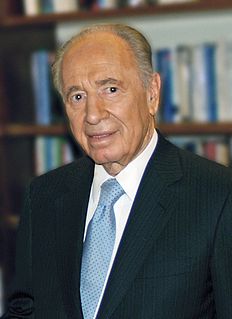
Shimon Peres Israeli politician, 8th prime minister and 9th president of Israel

Shimon Peres was an Israeli politician who served as the ninth President of Israel (2007–2014), the Prime Minister of Israel (twice), and the Interim Prime Minister, in the 1970s to the 1990s. He was a member of twelve cabinets and represented five political parties in a political career spanning 70 years. Peres was elected to the Knesset in November 1959 and except for a three-month-long hiatus in early 2006, was in office continuously until he was elected President in 2007. At the time of his retirement in 2014, he was the world's oldest head of state and was considered the last link to Israel's founding generation.

Ehud Barak, promising to storm the citadels of peace regarding negotiations with the Palestinians and withdraw from Lebanon by July 2000, [1] [2] won the election in a landslide victory.

Background

Wye River Memorandum

In the Israeli–Palestinian peace process, although the Likud government had negotiated the Wye River Memorandum and it had passed the Knesset overwhelmingly in November 1998, subsequent negotiations with the Palestinians were going badly. The lack of progress had alienated support for the government on the left, as well as on its right. The left claimed negotiations were moving too slowly, while the more extreme right were unhappy with the contemplated territorial concessions included in the memorandum itself.

Israeli–Palestinian peace process Efforts to form a peace deal between Israel and the Palestinian people

The peace process in the Israeli–Palestinian conflict refers to intermittent discussions held during the ongoing violence which has prevailed since the beginning of the conflict. Since the 1970s, there has been a parallel effort made to find terms upon which peace can be agreed to in both the Arab–Israeli conflict and in the Palestinian–Israeli conflict. Some countries have signed peace treaties, such as the Egypt–Israel (1979) and Jordan–Israel (1994) treaties, whereas some have not yet found a mutual basis to do so.

Wye River Memorandum

The Wye River Memorandum was an agreement negotiated between Israel and the Palestinian Authority at a summit in Wye River, Maryland, U.S., held from 15–23 October 1998. The Memorandum aimed to resume the implementation of the 1995 Interim Agreement on the West Bank and the Gaza Strip. It was signed in the White House by Benjamin Netanyahu and Yasser Arafat, through negotiations led by U.S. President Bill Clinton, on 23 October 1998. On 17 November 1998 Israel's 120 member parliament, the Knesset, approved the Memorandum by a vote of 75–19. The Memorandum determined that it would enter into force on 2 November 1998, ten days from the date of signature.

The Palestinian people, also referred to as Palestinians or Palestinian Arabs, are an ethnonational group comprising the modern descendants of the peoples who have lived in Palestine over the centuries, including Jews and Samaritans, and who today are largely culturally and linguistically Arab. Despite various wars and exoduses, roughly one half of the world's Palestinian population continues to reside in historic Palestine, the area encompassing the West Bank, the Gaza Strip and Israel. In this combined area, as of 2005, Palestinians constituted 49% of all inhabitants, encompassing the entire population of the Gaza Strip, the majority of the population of the West Bank and 20.8% of the population of Israel proper as Arab citizens of Israel. Many are Palestinian refugees or internally displaced Palestinians, including more than a million in the Gaza Strip, about 750,000 in the West Bank and about 250,000 in Israel proper. Of the Palestinian population who live abroad, known as the Palestinian diaspora, more than half are stateless, lacking citizenship in any country. Between 2.1 and 3.24 million of the diaspora population live in neighboring Jordan, over 1 million live between Syria and Lebanon and about 750,000 live in Saudi Arabia, with Chile's half a million representing the largest concentration outside the Middle East.

Disintegration of the Likud-Gesher-Tzomet alliance

The Likud-Gesher-Tzomet alliance had fallen apart, with more members leaving Likud to set up Herut – The National Movement and the Centre Party.

Gesher, officially the Gesher National Social Movement, was a political party in Israel between 1996 and 2003.

Tzomet is a small secular, right-wing political party in Israel.

Herut – The National Movement, commonly known as just Herut, was a minor right-wing political party in Israel. Though it saw itself as the ideological successor to the historical Herut party it was a new and separate party. It participated in the 1999, 2003 and 2006 elections.

Netanyahu's government finally gave up the ghost due to difficulties in passing the state budget and in January 1999 passed a bill calling for early elections.

The establishment of the One Israel party

Ehud Barak, the leader of the main opposition Labor Party, was Netanyahu's main contender in this election. Before the elections, Ehud Barak's Labour Party formed an alliance with Gesher and Meimad called One Israel in the hope that a united front on the centre-left would give them enough seats to form a more stable coalition.

Ehud Barak Israeli politician and prime minister

Ehud Barak is an Israeli general and politician who served as the tenth Prime Minister from 1999 to 2001. He was leader of the Labor Party until January 2011. He previously held the posts of Minister of Defense and Deputy Prime Minister under Ehud Olmert and then in Benjamin Netanyahu's second government from 2007 to 2013, as he retired from politics at the end of the tenure.

Meimad is a left-wing religious Zionist political party in Israel. Founded in 1999, it is based on the ideology of the Meimad movement founded in 1988 by Rabbi Yehuda Amital. It was formed by dovish religious Zionists who supported the peace process and believed the National Religious Party had drifted too far to the right.

One Israel was an alliance of the Labor Party, Meimad and Gesher created to run for the 1999 Knesset elections.

The establishment of the Center Party

The Aryeh Deri trial

The ongoing South Lebanon conflict

The rising death toll and lack of military victory in Israel's long-running occupation in south Lebanon had soured voter support for the Likud policy.

Election campaign

Initially, three other candidates planned to run; these included: Benny Begin of Herut – The National Movement, running to the right of Likud; Azmi Bishara of the Israeli Arab Balad party, running to the left of One Israel and the first from that minority to stand for Prime Minister, and; Yitzhak Mordechai of the Centre Party, running on positions between those of Likud on the right and One Israel on the left.

Over the course of the campaign however, Begin, Bishara, and Mordechai all dropped out of the race for Prime Minister, after it became clear that they could not win, and that their continued presence would cost votes for the major candidates, Barak and Netanyahu, at their respective ends of the political spectrum. The parties these other candidates represented however, continued to run in the concurrent Knesset elections.

Results

Prime Minister

CandidatePartyVotes%
Ehud Barak One Israel 1,791,02056.1
Benjamin Netanyahu Likud 1,402,47443.9
Invalid/blank votes179,458-
Total3,372,952100

Knesset

PartyVotes%Seats+/−
One Israel 1670,48420.326−11
Likud 2468,10314.119−8
Shas 430,67613.017+7
Meretz 253,5257.610+1
Yisrael BaAliyah 3171,7055.16−1
Shinui 167,7485.06New
Centre Party 2165,6225.06New
National Religious Party 140,3074.25−4
United Torah Judaism 125,7413.75+1
United Arab List 4114,8103.45−1
National Union 5100,1813.04New
Hadash 87,0222.63−1
Yisrael Beiteinu 586,1532.64New
Balad 666,1031.92+1
One Nation 64,1431.92New
Tnufa 44,9531.30New
Power for Pensioners37,5251.10New
Ale Yarok 34,0291.00New
The Third Way 26,2900.70New
Green Party 13,2920.40New
Tikva 7,3660.20New
Casino Party6,5400.10New
Lev LaOlim 6,3110.10New
Negev Party4,3240.10New
Tzomet 4,1280.10New
Natural Law Party 2,9240.10New
Progressive Center Party2,7970.10New
Organization for Democratic Action 2,1510.100
New Arab Party2,0420.10New
Justice for All 1,2570.040New
Moreshet Avot 1,1640.040New
Invalid/blank votes64,332---
Total3,373,7481001200
Registered voters/turnout4,285,42878.7
Source: Nohlen et al.

Note that Yisrael Beiteinu gained a seat after the vote-sharing process was completed. In addition, two parties, Manhigut Yehudit and Voice of the Environment, initially signed up to participate in the election, but withdrew their candidacy before election day.

1 One Israel split into Labor-Meimad (25 seats) and Gesher (2 seats).

2 Five members left the Centre Party. Three established the New Way and two formed Lev, which immediately merged into Likud. Later, two of the three that set up New Way resigned from the Knesset and were replaced by Centre Party members, whilst the remaining New Way MK joined Labor-Meimad.

3 Two MKs left Yisrael BaAliyah to establish the Democratic Choice.

4 Three MKs left the United Arab List; two established the Arab National Party and one formed National Unity – National Progressive Alliance.

5 One MK left the National Union to establish Herut – The National Movement, whilst the National Union became allied to Yisrael Beiteinu.

6 One MK left Balad to establish Ta'al.

Aftermath

Although Barak won the Prime Ministerial election comfortably, his One Israel alliance won only 26 seats, meaning he had to form a convoluted coalition with Shas, Meretz, Yisrael BaAliyah, the Centre Party, the National Religious Party and United Torah Judaism.

When Barak's government collapsed after the start of the Second Intifada and the October Israeli Arab riots in 2000, Barak called new elections for Prime Minister in the hope of winning an authoritative mandate. However, he was well-beaten by Ariel Sharon and subsequently resigned from politics.

The 15th Knesset

After winning the Prime Ministerial elections, Ehud Barak formed the 28th government of Israel on 6 July 1999. His coalition included One Israel, Shas, Meretz, Yisrael BaAliyah, the Centre Party, the National Religious Party and United Torah Judaism, and initially had 16 ministers, though the number later rose to 24. Avraham Burg was appointed as Speaker of the Knesset.

United Torah Judaism left the coalition in September 1999 after a breach of the Sabbath. The government finally collapsed on 10 December 2000 when Barak resigned in the face of the outbreak of the Second Intifada and the Israeli Arab riots of October. Barak called new elections for the position of Prime Minister, which he lost to Ariel Sharon.

Sharon formed the 29th government on 7 March 2001. He set up a national unity government, including Likud, Labor-Meimad, Shas, the Centre Party, the National Religious Party, United Torah Judaism, Yisrael BaAliyah, and National Union-Yisrael Beiteinu. Sharon's government had 26 ministers, which later rose to 29, necessitating the addition of a small table to the end of the Ministers row in the Knesset.

Related Research Articles

Prime Minister of Israel Head of government of Israel

The Prime Minister of Israel is the head of government and chief executive of Israel.

David Levy (Israeli politician) Israeli politician

David Levy is an Israeli politician who served as a member of the Knesset between 1969 and 2006, as well as Deputy Prime Minister, Minister of Foreign Affairs, Minister of Immigrant Absorption, Minister of Housing and Construction and as a Minister without Portfolio. Although most of his time as a Knesset member was spent with Likud, he also led the breakaway Gesher faction, which formed part of Ehud Barak's Labor-led government between 1999 and 2001.

Yisrael BaAliyah was a political party in Israel between its formation in 1996 and its merger into Likud in 2003. It was formed to represent the interests of Russian immigrants by former refusenik Natan Sharansky. Initially a centrist party, it drifted to the right towards the end of its existence.

The Centre Party, originally known as Israel in the Centre, was a short-lived political party in Israel. Formed in 1999 by former Defense Minister Yitzhak Mordechai, the aim was to create a group of moderates to challenge both Binyamin Netanyahu on the right and opposition leader Ehud Barak's Labour Party on the left.

Elections for the 17th Knesset were held in Israel on 28 March 2006. The voting resulted in a plurality of seats for the then-new Kadima party, followed by the Labor Party, and a major loss for the Likud party.

Elections for the 16th Knesset were held in Israel on 28 January 2003. The result was a resounding victory for Ariel Sharon's Likud.

1996 Israeli general election

General elections were held in Israel on 29 May 1996. For the first time the prime minister was elected on a separate ballot from the remaining members of the Knesset.

2009 Israeli legislative election Elections for the 18th Knesset

Elections for the 18th Knesset were held in Israel on 10 February 2009. These elections became necessary due to the resignation of Prime Minister Ehud Olmert as leader of the Kadima party, and the failure of his successor, Tzipi Livni, to form a coalition government. Had Olmert remained in office or had Livni formed a coalition government, the elections would have been scheduled for 2010 instead.

Thirty-first government of Israel

The thirty-first government of Israel was formed by Ehud Olmert on 4 May 2006, following Kadima's victory in the March elections. His coalition initially included the Labor Party, Shas and Gil, and held 67 of the 120 seats in the Knesset. The 11-seat Yisrael Beiteinu joined the coalition in November 2006, but left on 16 January 2008 in protest at peace talks with the Palestinian National Authority. With the inclusion of the Labor Party's Raleb Majadele as a Minister without Portfolio on 29 January 2007, it became the first Israeli cabinet to have a Muslim minister.

Twenty-seventh government of Israel

The twenty-seventh government of Israel was formed by Benjamin Netanyahu of Likud on 18 June 1996. Although his Likud-Gesher-Tzomet alliance won fewer seats that the Labor Party, Netanyahu formed the government after winning the country's first ever direct election for Prime Minister, narrowly defeating incumbent Shimon Peres. This government was the first formed by an Israeli national born in the state after independence in 1948.

Twenty-eighth government of Israel cabinet

The twenty-eighth government of Israel was formed by Ehud Barak of One Israel on 6 July 1999 after his victory in the May election for Prime Minister. Alongside One Israel, Barak included Shas, Meretz, Yisrael BaAliyah, the Centre Party, the National Religious Party and United Torah Judaism in his coalition. United Torah Judaism left the government in September 1999 due to a dispute over the transport of a turbine on Shabbat.

Thirtieth government of Israel

The thirtieth government of Israel was formed by Ariel Sharon on 28 February 2003, following Likud's comprehensive victory in the January elections. His coalition initially included Shinui and the National Union, holding 60 of the 120 seats in the Knesset, whilst the two-seat Yisrael BaAliyah merged into Likud shortly after. The National Religious Party also joined the coalition on 3 March 2003, taking the number of seats it held up to 66.

Twenty-ninth government of Israel

The twenty-ninth government of Israel was formed by Ariel Sharon on 7 March 2001, following his victory over Ehud Barak in the special election for Prime Minister in February. It was the first, and to date only time an election for Prime Minister was held without parallel elections for the Knesset, and one of the first acts of the new government was to repeal the law which introduced separate elections. Despite his large margin of victory in the election, because there had been no Knesset elections, Sharon's Likud was not the largest party in the Knesset, resulting in the formation of a national unity coalition that at some point included Labor-Meimad, Shas, the Centre Party, the National Religious Party, United Torah Judaism, Yisrael BaAliyah, the National Union-Yisrael Beiteinu, the New Way and Gesher. Shas left the government on 23 May 2002, but returned on 3 June, whilst Labor-Meimad left on 2 November 2002.

Early elections for the nineteenth Knesset were held in Israel on 22 January 2013. Public debate over the Tal Law had nearly led to early elections in 2012, but they were aborted at the last moment after Kadima briefly joined the government. The elections were later called in early October 2012 after failure to agree on the budget for the 2013 fiscal year.

Politics in Israel is dominated by Zionist parties. They traditionally fall into three camps, the first two being the largest: Labor Zionism, Revisionist Zionism (conservative) and Religious Zionism. There are also several non-Zionist Orthodox religious parties, non-Zionist left-wing groups as well as non-Zionist and anti-Zionist Israeli Arab parties.

Early legislative elections were held in Israel on 9 April 2019 to elect the 120 members of the 21st Knesset. Elections had been due in November 2019, but were brought forward following a dispute between members of the current government over a bill on national service for the ultra-Orthodox population, as well as impending corruption charges against incumbent Prime Minister Benjamin Netanyahu.

References