
The Food and Agriculture Organization of the United Nations (FAO) is a specialized agency of the United Nations that leads international efforts to defeat hunger and improve nutrition and food security. Its Latin motto, fiat panis, translates to "let there be bread". It was founded on 16 October 1945.
The United Nations (UN) is an intergovernmental organization that aims to maintain international peace and security, develop friendly relations among nations and countries, achieve international cooperation, and serve as a centre for coordinating the actions of member states. It is widely recognized as the world's largest international organization. The UN is headquartered in New York City, in international territory with certain privileges extraterritorial to the United States, and the UN has other offices in Geneva, Nairobi, Vienna, and The Hague, where the International Court of Justice is headquartered at the Peace Palace.

The United Nations Economic and Social Council (ECOSOC) is one of six principal organs of the United Nations, responsible for coordinating the economic and social fields of the organization, specifically in regards to the fifteen specialized agencies, the eight functional commissions, and the five regional commissions under its jurisdiction.

In politics, humanitarian aid, and the social sciences, hunger is defined as a condition in which a person does not have the physical or financial capability to eat sufficient food to meet basic nutritional needs for a sustained period. In the field of hunger relief, the term hunger is used in a sense that goes beyond the common desire for food that all humans experience, also known as an appetite. The most extreme form of hunger, when malnutrition is widespread, and when people have started dying of starvation through lack of access to sufficient, nutritious food, leads to a declaration of famine.

Daniel Robert Glickman is an American politician, lawyer, lobbyist, and nonprofit leader. He served as the United States secretary of agriculture from 1995 until 2001 in the Clinton administration. He previously represented Kansas's 4th congressional district as a Democrat in the U.S. House of Representatives for 18 years.
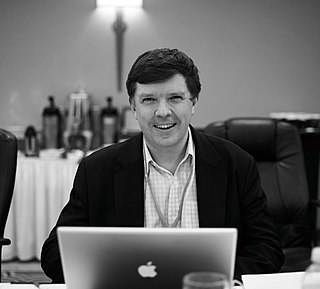
Paul Twomey is an Australian businessman and public policy executive. Twomey is co-founder of STASH, the secure digital storage and content sharing company. He is one of the founding figures of the Internet Corporation for Assigned Names and Numbers (ICANN), the international non-profit organization that coordinates many of the key functions of the global Internet. Twomey was the original chair of its Governmental Advisory Committee (1998-2003) and CEO (2003–10). A former McKinsey & Company consultant (1989–94) he was a senior executive at the Australian Trade Commission and the chief executive of the Australian National Office for the Information Economy, and CEO of Argo Pacific, a high-level Internet and cybersecurity advisory firm. He serves as the founding chairman of the Cybergreen Institute, a global non-profit organization that helps improve the health of the global cyber ecosystem.

The United Nations Research Institute for Social Development (UNRISD) is "an autonomous research institute within the United Nations that undertakes multidisciplinary research and policy analysis on the social dimensions of contemporary development issues". UNRISD was established in 1963 with the mandate of conducting policy-relevant research on social development that is pertinent to the work of the United Nations Secretariat, regional commissions and specialized agencies, and national institutions.
Catherine Bertini is an American public servant. She is the 2003 World Food Prize Laureate. She was the Executive Director of the United Nations World Food Program from 1992 to 2002. She served as the UN Under-Secretary for Management from 2003 to 2005. Currently she is a distinguished fellow at the Chicago Council on Global Affairs, the Chair of the Board of the Global Alliance for Improved Nutrition (GAIN) and the Chair of the Executive Board of the Crop Trust.
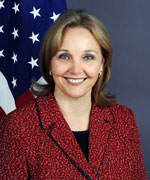
Ambassador Josette Sheeran is a decorated diplomat, humanitarian, entrepreneur and technology leader.
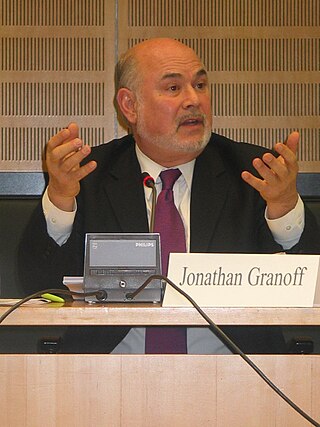
Jonathan Granoff is an American lawyer, screenwriter and lecturer, widely known as President of the Global Security Institute.

Felix Dodds, born Michael Nicholas Dodds, is a British author, futurist, and activist.

Tom Arnold is an Irish agricultural economist and public policy advisor who has worked for the European Commission, the Irish Department of Agriculture and Food and Concern Worldwide. He has served on governmental and non-governmental bodies at Irish, European and international level, with a particular focus on sustainable food systems and nutrition.
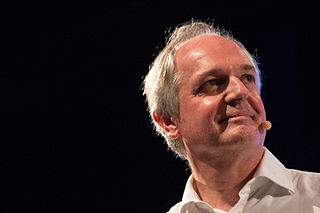
Paulus Gerardus Josephus Maria Polman, is a Dutch businessman and author. He was the chief executive officer (CEO) of the British/Dutch consumer goods company Unilever. Polman is also the co-author of Net Positive: How Courageous Companies Thrive by Giving More Than They Take.

The U.S. Global Leadership Coalition (USGLC) is a nonprofit organization formed by a coalition of American businesses and NGOs, senior national security and foreign policy experts, faith-based and community leaders from across the United States who promote increased support for the United States’ diplomatic and development efforts among both politicians and the public.

Ertharin Cousin is an American lawyer who served as the twelfth executive director of the United Nations World Food Programme from 2012 to 2017. Following the completion of her term, Cousin became Payne Distinguished Professor at Stanford University's Freeman Spogli Institute for International Studies, distinguished fellow at the Center on Food Security and the Environment and the Center on Democracy, Development and the Rule of Law, accepted an appointment as a distinguished fellow with the Chicago Council on Global Affairs, and became a trustee on the UK based Power of Nutrition Board of Directors.
The Committee on World Food Security (CFS) is an intergovernmental body within the United Nations System.
LSE IDEAS is a foreign policy think tank at the London School of Economics and Political Science. IDEAS was founded as a think tank for Diplomacy and Strategy in February 2008, succeeding the Cold War Studies Centre founded in 2004. It is led by Professor Christopher Alden and Professor Michael Cox. LSE IDEAS has been ranked as the top European university-affiliated think tank and the number two university-affiliated think tank in the world.

Tan Sri Zakri bin Abdul Hamid has had a distinguished career in science as a researcher, educator, administrator and diplomat.

Dr. Mohamed Ali Alhakim is an Iraqi politician and diplomat. He was the foreign minister of Iraq from October 25, 2018 to May 12, 2020 in the government of Prime Minister Adel Abdel Mahdi. He is the former Permanent Representative of Iraq to the United Nations Office at Geneva and New York.

Joachim von Braun is a German agricultural scientist and currently director of a department of the Center for Development Research at the University of Bonn and President of the Pontifical Academy of Sciences.

