
Low Saxon, also known as West Low German is a group of Low German dialects spoken in parts of the Netherlands, northwestern Germany and southern Denmark. It is one of two groups of mutually intelligible dialects, the other being East Low German dialects. A 2005 study found that there were approximately 1.8 million "daily speakers" of Low Saxon in the Netherlands. 53% spoke Low Saxon or Low Saxon and Dutch at home and 71% could speak it. According to another study the percentage of speakers among parents dropped from 34% in 1995 to 15% in 2011. The percentage of speakers among their children dropped from 8% to 2% in the same period.

Vlieland is a municipality and island in the northern Netherlands. The municipality of Vlieland is the second most sparsely populated municipality in the Netherlands, after Schiermonnikoog.

Weststellingwerf is a municipality in the province of Friesland in the northern Netherlands. It is one of the municipalities of Friesland, where the spoken language is not West Frisian; instead, Stellingwerfs, a dialect of Dutch Low Saxon, is spoken here.
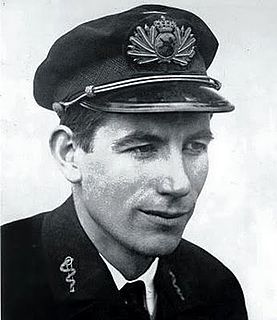
Jan Jacob Slauerhoff, who published as J. Slauerhoff, was a Dutch poet and novelist. He is considered one of the most important Dutch language writers.

The Leeuwarder Courant is the oldest daily newspaper in the Netherlands. Founded by Abraham Ferwerda, it first appeared in 1752. The Leeuwarder Courant was the first paper in the Dutch province Friesland and its capital Leeuwarden. It is considered a "popular" newspaper.

Virginie (Marie) Loveling was a Flemish author of poetry, novels, essays and children's stories. She also wrote under the pseudonym W. E. C. Walter.
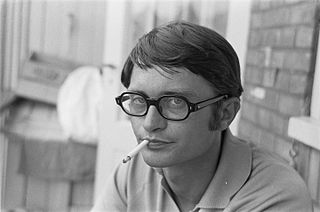
Remco Campert was a Dutch author, poet and columnist.
Gerrit Krol was a Dutch author, essayist and writer.
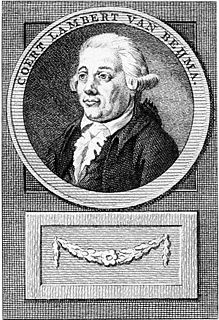
Coert or Court Lambertus van Beyma, son of Julius Matthijs van Beyma and Fokel Helena van Burmania, was a public notary and auctioneer, delegate and representative of the Frisian States, leader of the Frisian patriots. He was the initiator of a Frisian coup and spent time in exile in northern France. On his return to the Netherlands in 1795, he became a delegate to the National Assembly of the newly established Batavian Republic.

Johannes Jacobus Willebrordus "Joost" Zwagerman was a Dutch writer, poet and essayist. Among his teachers was the novelist Oek de Jong.

Carel Steven Adama van Scheltema was a Dutch socialist poet.

Eeltsje Hiddes Halbertsma was a Frisian writer, poet and physician, and the youngest of the Halbertsma Brothers. He became well known when he and his elder brother Justus published the poetry and short story collection De Lapekoer fan Gabe Skroar in 1822. Afterwards, this work was continually expanded, and also came to include contributions by a third brother, Tsjalling, until all the Halbertsma Brothers' prose and poetry was posthumously collected in 1871 to become the famous work Rimen en Teltsjes. This book played a role of crucial importance in the development of a new literary tradition after Western Frisian had been used almost exclusively as a spoken language for three centuries. Of the three Brothers Halbertsma, Eeltsje was probably the most talented, en his poetry especially is still very much admired. His oeuvre included the poem De Alde Friezen, which later became the national anthem of the Western Frisian people.
Veenstra is a Dutch toponymic surname equivalent to the surnames Van der Veen and Van Veen. Notable people with the surname include:

De wederopstanding van een klootzak is a 2013 film by Dutch filmmaker Guido van Driel. The film stars Yorick van Wageningen, Juda Goslinga, and Goua Robert Grovogui; it is one of three films in which Jeroen Willems, who died in 2012, appears posthumously. It was selected to open the 2013 International Film Festival Rotterdam.
LGBT writers in the Dutch-language area are writers from de Lage Landen, that is Flanders and the Netherlands,

Fedde Schurer was a Dutch schoolteacher, journalist, language activist and politician, and one of the most influential poets in the West Frisian language of the 20th century.
Titia Brongersma was a Frisian poet of the late 17th century. Her book, De bron-swaan, was published in 1686 and is virtually the only trace of her literary activity. She also gained prominence for excavating a dolmen at Borger, Netherlands in 1685.

Justus Hiddes Halbertsma, West Frisian form: Joast Hiddes Halbertsma, pron. [jo.ǝst ˈhɪdəs ˈhɔlbǝtsma] ; Dutch form: Joost Hiddes Halbertsma, pron. [joːst ˈhɪdəs ˈhalbǝrtsma], was a Frisian writer, poet, minister, lexicographer and linguist. Today, he is primarily known for the poetry and short story collection De Lapekoer fan Gabe Skroar, which he wrote with his brother Eeltsje, publishing the first edition in 1822. Afterwards, this work was continually expanded, and also came to include contributions by a third brother, Tsjalling, until all the Halbertsma Brothers' prose and poetry was posthumously collected in 1871 to become the famous work Rimen en Teltsjes. Although the literary value of this collection was later disputed by some critics, it is undeniable that Rimen en Teltsjes played a role of crucial importance in the development of a new literary tradition after Western Frisian had been used almost exclusively as a spoken language for three centuries.

Waadhoeke is a municipality of Friesland in the northern Netherlands. It was established 1 January 2018 and consists of the former municipalities of Franekeradeel, het Bildt, Menameradiel and parts of Littenseradiel, all four of which were dissolved on the same day.
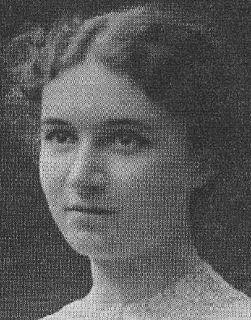
Annie Salomons (1885–1980) was a Dutch writer, poet and translator.


