Related Research Articles

Etiquette is the set of conventional rules of personal behaviour in polite society, usually in the form of an ethical code that delineates the expected and accepted social behaviors that accord with the conventions and norms observed by a society, a social class, or a social group. In modern English usage, the French word étiquette (ticket) dates from the year 1750.

Charles William Eliot was an American academic who was selected as Harvard's president in 1869. A member of the prominent Eliot family of Boston, he transformed the provincial college into the pre-eminent American research university. Eliot served until 1909, having the longest term as president in the university's history.

Politeness is the practical application of good manners or etiquette so as not to offend others. It is a culturally defined phenomenon, and therefore what is considered polite in one culture can sometimes be quite rude or simply eccentric in another cultural context.

Emmanuel College is a constituent college of the University of Cambridge. The college was founded in 1584 by Sir Walter Mildmay, Chancellor of the Exchequer to Elizabeth I.
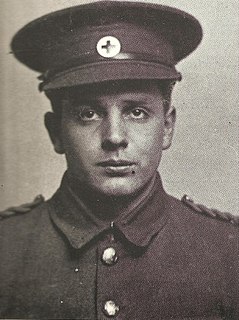
Frank Raymond "F. R." Leavis was a British literary critic of the early-to-mid-twentieth century. He taught for much of his career at Downing College, Cambridge, and later at the University of York.

Anthony Ashley Cooper, 3rd Earl of Shaftesbury Bt was an English politician, philosopher and writer.

Robert Choate Darnton is an American cultural historian and academic librarian who specializes in 18th-century France.
Leo Marx is a Professor of the History and Philosophy of Science Emeritus at the Massachusetts Institute of Technology. He is known for his works in the field of American studies. Dr Marx studies the relationship between technology and culture in 19th and 20th century America. He graduated from Harvard University with a BA in history and literature and a PhD in the history of American civilization in 1950. Marx was awarded Guggenheim Fellowships in 1961 and 1965. Marx turned 100 in November 2019.
Jeremy Black MBE is a British historian and a professor of history at the University of Exeter. He is a senior fellow at the Center for the Study of America and the West at the Foreign Policy Research Institute in Philadelphia. He is the author of over 100 books, principally but not exclusively on 18th-century British politics and international relations, and has been described as "the most prolific historical scholar of our age".

Simon David Goldhill, FBA is Professor in Greek Literature and Culture and fellow and Director of Studies in Classics at King's College, Cambridge. He was previously Director of Centre for Research in the Arts, Social Sciences, and Humanities (CRASSH) at the University of Cambridge, succeeding Mary Jacobus in October 2011. He is best known for his work on Greek Tragedy.
Timothy Charles William Blanning, FBA is a historian and retired academic. Between 1992 and 2009, he was Professor of Modern European History at the University of Cambridge.

The University of Cambridge is a collegiate public research university in Cambridge, United Kingdom. Founded in 1209 and granted a royal charter by King Henry III in 1231, Cambridge is the second-oldest university in the English-speaking world and the world's fourth-oldest surviving university. The university grew out of an association of scholars who left the University of Oxford after a dispute with the townspeople. The two 'ancient universities' share many common features and are often referred to jointly as 'Oxbridge'. The academic standards, history, influence and wealth of the University of Cambridge has made it one of the most prestigious universities in the world.
Rosemary Doreen Ashton, is a British literary scholar. From 2002 to 2012, she was the Quain Professor of English Language and Literature at University College London (UCL). Her reviews appear in the London Review of Books.
Emanuel Raphael Belilios, CMG, JP was a Hong Kong Jewish opium dealer and businessman.
Evelyn Shirley Shuckburgh was an English academic and schoolmaster, known as classical scholar and translator.
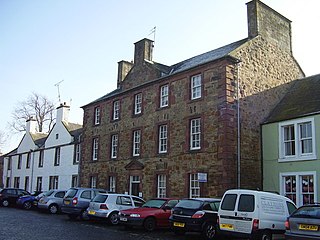
Scottish education in the eighteenth century concerns all forms of education, including schools, universities and informal instruction, in Scotland in the eighteenth century.

Margot C. Finn, is a British historian and academic, who specialises in Britain and the British colonial world during the long nineteenth century. She has been Professor of Modern British History at the University College, London (UCL) since 2012. Finn is the President of the Royal Historical Society and a trustee of the Victoria & Albert Museum.
Ursula Klein is a German historian of science known for her cross-disciplinary work in history, philosophy and semiotics. Klein's concept of a paper tool has been widely applied, and is seen as marking a foundational change in scientific reasoning and practice in the history of chemistry in the early 19th century.
Christopher M. S. Johns is an American art historian, and the Norman L. and Roselea J. Goldberg Professor of History of Art at Vanderbilt University, who specializes in eighteenth-century Italian art, decorative art, material culture, and architecture. He is the leading scholar on early modern Italian art and culture, especially the relationship between art, politics, and religion.
Daniel H. Bays was an American historian of China, best known for his works on Christianity in China.
References
- ↑ Dr Lawrence Klein. Emmanuel College. Retrieved 28 April 2016.
- ↑ Dr Lawrence Eliot Klein. University of Cambridge, Faculty of History. Retrieved 28 April 2016.

 | This biography of an American historian is a stub. You can help Wikipedia by expanding it. |