Related Research Articles

Darkness in El Dorado: How Scientists and Journalists Devastated the Amazon is a polemical book written by author Patrick Tierney in 2000, in which the author accuses geneticist James Neel and anthropologist Napoleon Chagnon of conducting human research without regard for their subjects' well-being while conducting long-term ethnographic field work among the indigenous Yanomamo, in the Amazon basin between Venezuela and Brazil. He also wrote that the researchers had exacerbated a measles epidemic among the Native Americans, and that Jacques Lizot and Kenneth Good committed acts of sexual impropriety with Yanomamo.
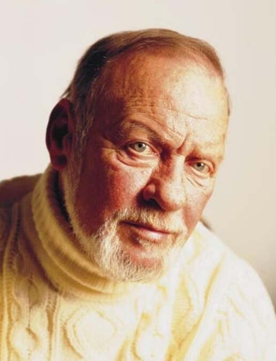
Napoleon Alphonseau Chagnon was an American cultural anthropologist, professor of sociocultural anthropology at the University of Missouri in Columbia and member of the National Academy of Sciences. Chagnon was known for his long-term ethnographic field work among the Yanomamö, a society of indigenous tribal Amazonians, in which he used an evolutionary approach to understand social behavior in terms of genetic relatedness. His work centered on the analysis of violence among tribal peoples, and, using socio-biological analyses, he advanced the argument that violence among the Yanomami is fueled by an evolutionary process in which successful warriors have more offspring. His 1967 ethnography Yanomamö: The Fierce People became a bestseller and is frequently assigned in introductory anthropology courses.

Timothy Asch was an American anthropologist, photographer, and ethnographic filmmaker. Along with John Marshall and Robert Gardner, Asch played an important role in the development of visual anthropology. He is particularly known for his film The Ax Fight and his role with the USC Center for Visual Anthropology.
The Human Studies Film Archives (HSFA) is a sister archive to the National Anthropological Archives within the Smithsonian's National Museum of Natural History. HSFA preserves and provides access to ethnographic films and anthropological moving image materials. It is located at the Smithsonian Museum Support Center in Suitland, Maryland.
The Margaret Mead Film Festival is an annual film festival held at the American Museum of Natural History in New York City. It is the longest-running, premiere showcase for international documentaries in the United States, encompassing a broad spectrum of work, from indigenous community media to experimental nonfiction. The Festival is distinguished by its outstanding selection of titles, which tackle diverse and challenging subjects, representing a range of issues and perspectives, and by the forums for discussion with filmmakers and speakers.
The Ax Fight (1975) is an ethnographic film by anthropologist and filmmaker Tim Asch and anthropologist Napoleon Chagnon about a conflict in a Yanomami village called Mishimishimabowei-teri, in southern Venezuela. It is best known as an iconic and idiosyncratic ethnographic film about the Yanomamo and is frequently shown in classroom settings.

Davi Kopenawa Yanomami, name also written Davi Kobenawä Yanomamö, is a Yanomami shaman and Portuguese-speaking spokesperson for the Yanomami People in Brazil. He became known for his advocacy regarding tribal issues and Amazon rainforest conservation when the tribal rights organization Survival International invited him to accept the Right Livelihood Award on its behalf in 1989. In 2019, Yanomami and the Hutukara Yanomami Association were also awarded the Right Livelihood Award. Yanomami spoke to both the British and Swedish parliaments about the catastrophic impact on Yanomami health as a consequence of the illegal invasion of their land by 40,000 ‘garimpeiros’ or goldminers. Prince Charles publicly called the situation ‘genocide’. In a seven-year period from 1987 to 1993 one fifth of the Yanomami died from malaria and other diseases transmitted by the miners.
A Man Called "Bee": Studying the Yanomamo is a 1974 film by ethnographic filmmakers Tim Asch and Napoleon Chagnon. While he was studying the Yanomamo people, Napoleon Chagnon used many different ethnographic research methods. Some of those methods included participant observation, key informants, tape recording and in depth interviews. Ethnography is based on fieldwork. In order for Chagnon to create this film about the Yanomamo people, he had to take part in their events he was observing, describing, and analyzing.
Lina Fruzzetti is an American cultural anthropologist and documentary filmmaker. Since 1975, she has been a professor of anthropology at Brown University in the United States. Apart from having published ethnographic studies about rural communities and gender relations in East Africa, India and Tanzania, she is the author of several ethnographic films. These films were written and co-directed with her husband, Ákos Östör, cultural anthropologist and professor emeritus of anthropology at Wesleyan University. Since 2016 Fruzzetti is also a Fellow at the Jawaharlal Nehru University Institute for Advanced Studies (JNIAS) in New Delhi, India.
Magical Death is a documentary film by anthropologist Napoleon Chagnon, that explores the role of the shaman within the Yanomamo culture, as well as the close relationship shamanism shares with politics within their society.
A Balinese Trance Seance is a 1979 documentary film by ethnographic filmmaker Tim Asch and anthropologist Linda Connor that profiles Jero Tapakan, a Balinese spirit medium. It was one of five films that were made with Jero Tapakan and were considered to be exemplary ethnographic films.
Dodoth Morning is a 1976 film by ethnographic filmmaker Tim Asch.
An ethnographic film is a non-fiction film, often similar to a documentary film, historically shot by Western filmmakers and dealing with non-Western people, and sometimes associated with anthropology. Definitions of the term are not definitive. Some academics claim it is more documentary, less anthropology, while others think it rests somewhere between the fields of anthropology and documentary films.
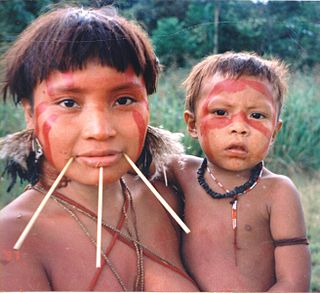
The Yanomami, also spelled Yąnomamö or Yanomama, are a group of approximately 35,000 indigenous people who live in some 200–250 villages in the Amazon rainforest on the border between Venezuela and Brazil.
The Yanomami people are an indigenous group who live in the Amazon Rainforest along the borders of Venezuela and Brazil. There are estimated to be only approximately 35,000 indigenous people remaining. They are interfluvial Indians who live in small villages along the Mavaca and Orinoco Rivers, with each village consisting of a single shabono, or communal dwelling. Largely uncontacted by the outside world, the Yanomami have been affected by illnesses introduced by gold miners since the 1980s. Anthropological studies have emphasized that the Yanomami are a violent people, and although this can be true, the women of the Yanomami culture generally abstain from violence and warfare. Although males dominate the Yanomami culture, Yanomami women play an important role in sustaining their lifestyle.

Secrets of the Tribe is a 2010 Brazilian documentary film by director José Padilha.
Kenneth Good is an anthropologist most noted for his work among the Yanomami and his account of his experiences with them: Into the Heart: One Man’s Pursuit of Love and Knowledge Among the Yanomami. While researching and living with the group in Venezuela, Good married a Yanomami woman named Yarima, who emigrated to the United States with Good when he returned home. Their three children were raised in the United States, but Yarima, finding adapting to life in the United States too difficult, returned to her village when the children were young.
Linda Helen Connor is an Australian anthropologist. She is Emeritus Professor of Anthropology at the University of Sydney.

Yanomamö: The Fierce People is a 1968 book by American cultural anthropologist Napoleon Chagnon. It is an ethnographic study of the Yanomami people of the Amazon.
References
- ↑ "Tim Asch & Napoleon Chagnon: Dodoth Morning". www.der.org. Retrieved 2007-03-30.[ dead link ]
- 1 2 3 4 5 6 7 8 9 10 11 12 13 14 15 16 17 18 19 20 21 22 23 24 25 26 27 28 der.org, Timothy Asch bio and filmography, Retrieved 10-25-2008
- ↑ "Tim Asch & Napoleon Chagnon: The Feast". www.der.org. Retrieved 2007-02-15.
- ↑ "Tim Asch & Napoleon Chagnon: Yanomamo: A Multidisciplinary Study". www.der.org. Retrieved 2007-03-30.
- ↑ "Tim Asch & Napoleon Chagnon: Ocamo Is My Town". www.der.org. Retrieved 2007-03-30.
- ↑ "Tim Asch & Napoleon Chagnon: A Man and His Wife Weave a Hammock". www.der.org. Retrieved 2007-03-30.
- ↑ Ruby, Jay. 1995. "Out of Sync: The Cinema of Tim Asch." Visual Anthropology Review, Volume 11, Number 1, Spring.
- ↑ "Tim Asch & Napoleon Chagnon: A Man Called "Bee": Studying the Yanomamo". www.der.org. Archived from the original on 2007-02-03. Retrieved 2007-02-15.
- 1 2 siris-archives.si.edu, Smithsonian Institution research Information Service "Archives, Manuscripts, Photographs Catalog", "Bride service 84.16.3 1975", Retrieved 10-25-2008
- ↑ anth.ucsb.edu Archived 2008-08-20 at the Wayback Machine , Documentary Educational Resources: YANOMAMÖ FILMOGRAPHY, Retrieved 10-25-2008
- 1 2 movierevie.ws, DVD Movie Reviews: Movie Reviews for Bride Service 1975, Retrieved 10-25-2008
- 1 2 der.org, Documentary Films: Bride service, retrieved 10-25-2008
- ↑ facets.org Archived 2008-12-03 at the Wayback Machine , Facets Multimedia, film synopsis, Retrieved 10-25-2008