Luigi Nava | |
|---|---|
| | |
| Born | June 13, 1851 Turin, Piedmont, Kingdom of Sardinia |
| Died | July 9, 1928 (aged 77) Alessandria, Piedmont, Italy |
| Allegiance | |
| Branch | |
| Years of service | 1870–1921 |
| Rank | |
| Commands held | 4th Army |
| Battles/wars | Italo-Ethiopian War of 1887–1889 |
| Alma mater | Royal Academy of Turin |
Luigi Nava (1851-1928) was an Italian General of the Army who participated in the First Italo-Ethiopian War and World War I. He participated in the Italian colonial campaign in the Horn of Africa which lead to his participation at the Battle of Adwa, where he was wounded and taken prisoner by the Abyssinians. Having become Lieutenant General, at the action of the general mobilization of 1915 he was appointed commander of the 4th Army but was dismissed from the command four months after Italy entered the war. [1]
He was born in Turin on June 13, 1851, as the son of Giacomo Antonio and Elisabetta Salino. He entered the Royal Academy of Turin on September 22, 1867, and graduated with the rank of second lieutenant of the General Staff of the artillery in July 1870. He was promoted to lieutenant on July 25, 1872, and served in the 3rd Field Artillery Regiment, where he became aide-major in the 2nd. In 1874, he began to attend the Scuola di applicazione , for the positions of Staff but he left in 1877. Nava was promoted to captain in August 1878 and he passed through the Staff Corps and served first in the Alessandria Division and then in the command of the III Corps. He became major in October 1885, serving as battalion commander in the 4th Infantry Regiment "Piedmont".
After the Battle of Dogali, [2] fought on January 26, 1887, [3] the new head of government Francesco Crispi [4] decided to continue the hostilities by sending an expeditionary force of 20,000 men, of which he became assigned to the command of the special corps, as Chief of Staff of the African troops. Starting from October of the same year, he participated in some war operations in the context of the Italo-Ethiopian War of 1887–1889, including the Battle of Saati, as commander of the Bersaglieri battalion of the 1st Regiment "Hunters of Africa". [4] He returned to Italy in May 1888 to serve first at the 7th, and then at the 9th Army Corps. In November 1889, he was promoted to lieutenant colonel, serving as Chief of Staff of the Milan Division.
In May 1890 he returned to Eritrea as a lieutenant colonel of staff, under the orders of General Alessandro Asinari di San Marzano, participating in the 1890–91 campaign as an officer assigned to the governor. He returned to Italy in April 1892 to be promoted to colonel on November 23, 1893. In January 1894, he became commander of the 40th Infantry Regiment "Bologna", then stationed in Milan. He returned to Eritrea in time to participate in the First Italo-Ethiopian War. [5] He was assigned as the commander of the 5th Infantry Regiment of Africa, to the III Brigade of General Giuseppe Ellena. [6] He reached the theater of operations on January 12, 1896, in time to take part in the Battle of Adwa, where he tried in vain to block [7] the road to the enemy advance [8] with a company of Alpini troops and the 16th Battalion of the 5th Infantry Regiment. [8] Nava was then wounded by a spear blow and he was taken prisoner by Ras Mengesha Yohannes, who, before releasing him, reserved him a preferential treatment. [8] For his service in Adwa, he obtained the Knight's Cross of the Military Order of Savoy. [9]
In December 1897, he became honorary adjutant of King Umberto I. After his period in the service of the King, he returned to the General Staff, serving for three years as a military attaché at the Italian Embassy in Vienna. On April 19, 1900, he was elevated to the rank of major general and assumed command of the "Acqui" Brigade which he maintained until September 1906. He then assumed command of the Military Academy of Modena and on April 10, 1907, he was promoted to lieutenant general. From 1909 to 1910, he was in command of the 15th Division in Florence and from September 30, 1910, of the 11th Army Corps in Bari. From 17 December 1911 to 1 October 1914 he was commander of the 6th Army Corps in Bologna, and on August 30, he received the designation of possible army commander in case of war under Giovanni Giolitti.
With the Italian entry into World War I, on May 24, 1915, he assumed command of the 4th Army, [10] with its headquarters in Vittorio Veneto, which deployed its forces from Passo Cereda to Monte Peralba on a front of about 75 km. General Luigi Cadorna, supreme commander of the Royal Italian Army, began an offensive against Austria-Hungary [11] starting with the conquest of the forts of Sexten, Landro and Valparola. [11] The first objective of the operations was to take possession of the Toblach node on the right and on the left of the hills surrounding the Sella group. [11]
His army failed to fulfill expectations, and he stood out, indeed, as the most wait-and-see of the Italian army commanders. [1] At the end of June 1915, he requested the exemption of the subordinate general Pietro Marini, whose fault was having imprudently occupied the saddle of the Sasso di Stria and Cadorna, who did not share the esteem of which his subordinate was almost unanimously accredited, accepted the request. However, on September 25, of the same year Cadorna also exonerated him, replacing him with General Mario Nicolis di Robilant. [1]
The official motivation was that: "In the first fifteen days of operations he did not act with promptness and energy, exploiting his superiority of forces, and he exercised the command with insufficient decision." [1] In 1916, Nava was entrusted with the Presidency of the Central Health Commission, which he maintained until February 1917. From March 1, of the same year he was placed in the position of auxiliary service. In April 1918, he asked the new supreme commander of the army, General Armando Diaz, to be readmitted to the command of a mobilized unit. However, this proved to be almost impossible given the assignment previously carried out, and the lack of army commands available in the face of the abundance of other officers that wanted to lead them.
In June 1919, he left active service, passing through the reserve and dedicating himself to the drafting of two volumes of memoirs, [12] to which he entrusted the defense of his work, in particular against the accusations made by General Luigi Capello, who accused him of the excessive delay in the attack operations of the 4th army and of not having occupied the Cortina d'Ampezzo basin before the 13th day of the war. To the accusations, he replied by arguing the delay and the numerical insufficiency of the siege artillery park that had been made available to him, without which it was criminally unrealistic to face the permanent works and field defenses prepared by the Austrians in Cadore and in the Ampezzano area.
The two volumes, like other polemical writings by generals exonerated during the First World War, did not have much circulation. On June 2, 1921, he was definitively retired due to his service length and enrolled in the roles of the reserve, where in November 1924 he was nominated as army general, with seniority from February 1 of the previous year. Two years later, he also managed to have the partial revision of his exemption provision, which recognized him as active service from March 1, 1917, to June 11, 1919. He died in Alessandria on July 9, 1928.
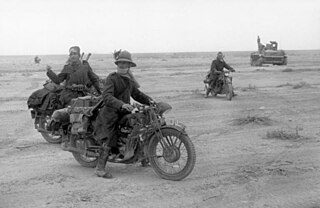
The 1st Army was a Royal Italian Army field army, in World War I, facing Austro-Hungarian and German forces, and in World War II, fighting on the North African front.
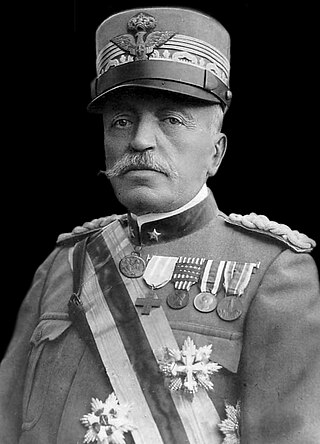
Marshal of Italy Luigi Cadorna, was an Italian general, Marshal of Italy and Count, most famous for being the Chief of Staff of the Italian Army from 1914 until 1917 during World War I. During this period he acquired a reputation for rigid discipline and the harsh treatment of his troops. Cadorna achieved successes at the battles of Asiago and Gorizia but, following a major defeat at the Battle of Caporetto in late 1917, he was relieved as Chief of Staff.
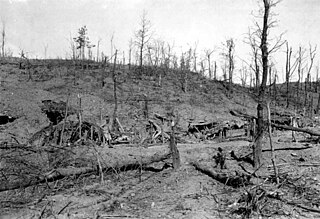
The Battle of Asiago(Battle of the Plateaux) or the Südtirol Offensive (in Italian: Battaglia degli Altipiani), nicknamed Strafexpedition ("Punitive expedition") by the Austro-Hungarian forces, was a major counteroffensive launched by the Austro-Hungarians on the territory of Vicentine Alps in the Italian Front on 15 May 1916, during World War I. It was an "unexpected" attack that took place near Asiago in the province of Vicenza (now in northeast Italy, then on the Italian side of the border between the Kingdom of Italy and Austria-Hungary) after the Fifth Battle of the Isonzo (March 1916).
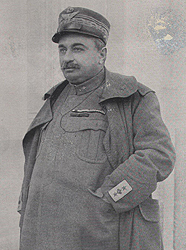
Luigi Capello was an Italian general, distinguished in both the Italo-Turkish War (1911–12) and World War I.
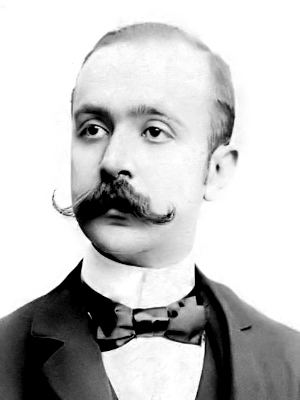
Federico De Roberto was an Italian writer, who became well known for his historical novel I Viceré (1894), translated as The Viceroys.
Raffaele Cadorna Jr. was an Italian general who fought during World War I and World War II. He is famous as one of the commanders of the Italian Resistance against German occupying forces in north Italy after 1943.
The Five Days of Milan was an insurrection and a major event in the Revolutionary Year of 1848 that started the First Italian War of Independence. On 18 March, a rebellion arose in the city of Milan which in five days of street fighting drove Marshal Radetzky and his Austrian soldiers from the city.

Albino Pierro was an Italian poet. He was famous for his works in Lucan dialect, and being nominated for the Nobel Prize for Literature.
The Brigate Garibaldi or Garibaldi Brigades were partisan units aligned with the Italian Communist Party active in the armed resistance against both German and Italian fascist forces during World War II.
The Cadorna Line, officially the Northern Frontier, was the Italian defensive system on the northern border facing Switzerland, designed and built between 1899 and 1918. Its purpose was to protect the Po Valley and its main industrial centres from an attack by France, Germany or Austria-Hungary violating Swiss neutrality.
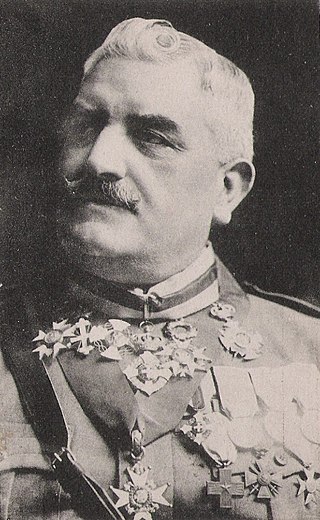
Giuseppe Pennella (1864-1925) was an Italian Lieutenant General who was a highly decorated officer of the Royal Italian Army. During the First World War he held very high positions, commanding in succession: the "Grenadiers of Sardinia" Brigade, 35th Division, XI Army Corps, 2nd Army, 8th Army and the XII Army Corps. At the head of the 35th Division he operated in the Macedonian front, but was exonerated from command at the request of the French general Sarrail who was commander of the Armée d'Orient, as both had a strong disagreement over command.
Vittorio Camerana was an Italian general who commanded the III Army Corps of World War I. At the end of the war, he was promoted to General of the Army Corps and decorated with the Grand Officer Cross of the Military Order of Savoy.
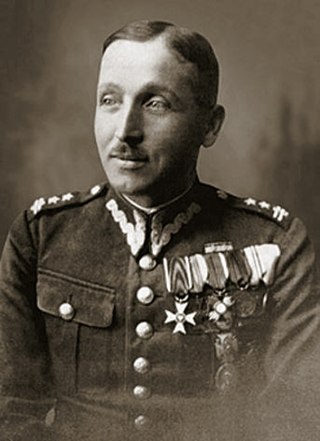
Ludwik Czyżewski was a Polish General during the Invasion of Poland during World War II. He commanded the 2nd Legions' Infantry Regiment during the Battle of Borowa Góra but was defeated in the battle. He was also a member of the Border Protection Corps as well as the Home Army before being posthumously promoted to Brigadier General in 1972 by the President-in-Exile, Stanisław Ostrowski.
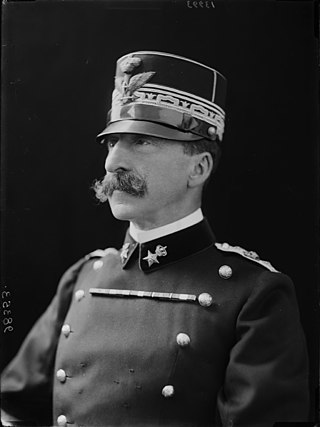
Ugo Pio Enrico Natale Brusati, was an Italian General who participated in the First Italo-Ethiopian War and World War I. He gained notability for his service at the Battle of Adwa as well as being the First Adjudant General of Vittorio Emanuele III on June 2, 1902 until October 23, 1917 when Luigi Cadorna forced him out of the office.
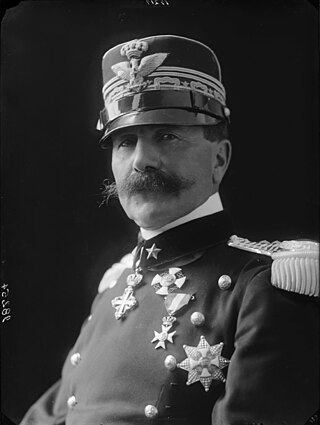
Roberto Brusati OSML OCI, was an Italian General of the Army who was an active participant in World War I. He was known for not having any military experience prior to the war and commanding the 1st Army before being dismissed from commanding the regiment on May 8, 1916, which was 8 days before the Battle of Asiago which was led by Field Marshal Franz Conrad von Hötzendorf.

Francesco De Rosa (1853-1896) was an Italian major of the First Italo-Ethiopian War. He commanded the 1st Artillery Brigade during the Battle of Adwa and was a posthumous recipient of the Gold Medal of Military Valor for his brave service in the battle before being killed in action.
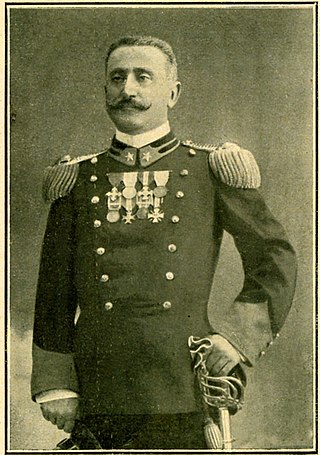
Luigi Agliardi was an Italian Major General during the late 19th and early 20th centuries. He was known for his extensive service, participating in the First Italo-Ethiopian War, the Boxer Rebellion and the Italo-Turkish War before his promotion to Major General in 1914. He was also known as a figure during the Red Week as he was taken prisoner by the socialists which caused a controversy within his military career.
Rinaldo Giver, known as Malerba, died 1345, was a German or Swiss condottiero.
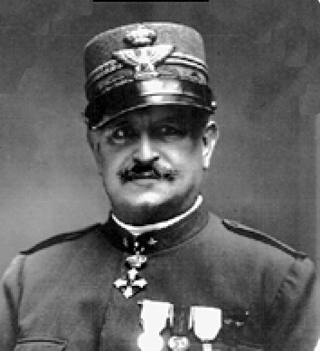
Paolo Morrone was an Italian general, politician and Minister of War in the second Salandra government and in the Boselli government. He was among the leading military figures of the First World War.
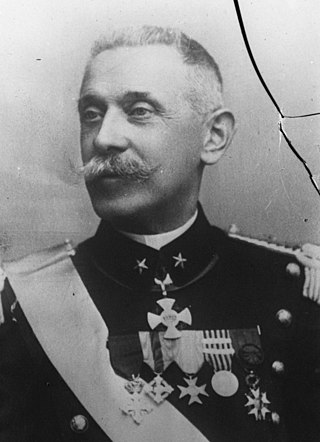
Vittorio Italico Zupelli also known as Vittorio Zupelli, Vittorio Zuppelli and as Elio Vittorio Italico Zupelli was an Italian general and politician. He was the first Istrian to be appointed general of the Royal Italian Army and to hold the position of minister of the Kingdom of Italy. He as Minister of War twice, once when Italy entered the First World War, and again at the time of the armistice in 1918.
{{cite book}}: CS1 maint: location missing publisher (link){{cite book}}: CS1 maint: location missing publisher (link){{cite book}}: CS1 maint: location missing publisher (link){{cite book}}: CS1 maint: location missing publisher (link){{cite book}}: CS1 maint: location missing publisher (link){{cite book}}: CS1 maint: location missing publisher (link){{cite book}}: CS1 maint: location missing publisher (link){{cite book}}: CS1 maint: location missing publisher (link)
Media related to Luigi Nava at Wikimedia Commons