This article needs additional citations for verification .(June 2016) (Learn how and when to remove this template message) |
| 37 mm Automatic Gun, M4 | |
|---|---|
| Type | Autocannon |
| Place of origin | United States |
| Service history | |
| In service | 1942 |
| Used by | United States Soviet Union |
| Wars | World War II |
| Production history | |
| Designer | John Browning |
| Designed | 1921-1938 |
| Manufacturer | Colt |
| Produced | 1939 |
| Specifications | |
| Weight | 213 lb (97 kg) |
| Length | 89.5 in (2.27 m) |
| Shell | 37x145mmR |
| Caliber | 37 mm (1.46 in) |
| Action | recoil operation |
| Recoil | 9⅝ in (245 mm) |
| Rate of fire | 150 rpm |
| Muzzle velocity | 2,000 ft/s (610 m/s) |
| Feed system | 30-round magazine |
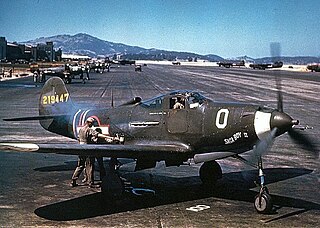
The 37 mm Automatic Gun, M4, known as the T9 during development, was a 37 mm (1.46 in) recoil-operated autocannon designed by Browning Arms Company. [1] The weapon, which was built by Colt, entered service in 1942. It was used in the Bell P-39 Airacobra and P-63 Kingcobra.
An autocannon or automatic cannon is a large, fully automatic, rapid-fire projectile weapon that fires armour-piercing or explosive shells, as opposed to the bullet fired by a machine gun. Autocannons often have a larger calibre than a machine gun, but are usually smaller than a field gun or other artillery. When used on its own, the word "autocannon" indicates a single-barrel weapon. When multiple rotating barrels are involved, the word "rotary" is added, and such a weapon is referred to as a "rotary autocannon". Modern autocannons are typically not single soldier-portable or stand-alone units, rather they are usually vehicle-mounted, aircraft-mounted, or boat-mounted, or even remote-operated as in some naval applications. As such, ammunition is typically fed from a belt to reduce reloading or for a faster rate of fire, but a magazine remains an option. They can use a variety of ammunition: common shells include high-explosive dual-purpose types (HEDP), any variety of armour-piercing (AP) types, such as composite rigid (APCR) or discarding sabot types (APDS).
John Moses Browning was an American firearms designer who developed many varieties of military and civilian firearms, cartridges, and gun mechanisms – many of which are still in use around the world. He made his first firearm at age 13 in his father's gun shop, and was awarded the first of his 128 firearm patents on October 7, 1879, at the age of 24. He is regarded as one of the most successful firearms designers of the 19th and 20th centuries, and pioneered the development of modern automatic and semi-automatic firearms.
Colt's Manufacturing Company, LLC is an American firearms manufacturer, founded in 1855 by Samuel Colt. It is the successor corporation to Colt's earlier firearms-making efforts, which started in 1836. Colt is known for the engineering, production, and marketing of firearms, most especially between the 1850s and World War I, when it was a dominating force in its industry and a seminal influence on manufacturing technology. Colt's earliest designs played a major role in the popularization of the revolver and the shift away from earlier single-shot pistols. Although Samuel Colt did not invent the revolver concept, his designs resulted in the first very successful ones.
Designed primarily as an anti-aircraft weapon, the gun had a muzzle velocity of 2,000 ft/s (610 m/s) and a cyclic rate of 150 rounds per minute. It was normally loaded with high-explosive shells, but could also be loaded with the M80 armor-piercing shell, which could penetrate 1 inch (25 mm) of armor plate at 500 yd (460 m). It was magazine-fed and could be fired manually or by remote control through a solenoid mounted on the rear of the gun.
Muzzle velocity is the speed of a projectile at the moment it leaves the muzzle of a gun. Muzzle velocities range from approximately 120 m/s (390 ft/s) to 370 m/s (1,200 ft/s) in black powder muskets, to more than 1,200 m/s (3,900 ft/s) in modern rifles with high-performance cartridges such as the .220 Swift and .204 Ruger, all the way to 1,700 m/s (5,600 ft/s) for tank guns firing kinetic energy penetrator ammunition. To simulate orbital debris impacts on spacecraft, NASA launches projectiles through light-gas guns at speeds up to 8,500 m/s (28,000 ft/s).
Military vehicles are commonly armoured to withstand the impact of shrapnel, bullets, missiles or shells, protecting the personnel inside from enemy fire. Such vehicles include armoured fighting vehicles like tanks, aircraft and ships.
A solenoid is a coil wound into a tightly packed helix. The term was invented in 1823 by André-Marie Ampère to designate a helical coil.
Recoil and counter-recoil were controlled hydraulically by means of a piston and spring combination connected to the recoiling mechanism and operating in an oil-filled recuperator cylinder mounted to the stationary trunnion block assembly. The recoiling mechanism of the gun included the tube and tube extension, recuperator piston and piston rod, lock frame assembly, driving spring assemblies, and the breechblock assembly. The nonrecoiling parts included the trunnion block group, the feed box and feeding mechanism, the recuperator cylinder and bushing, the back plate group, and the manual charger assembly.
Recoil is the backward movement of a gun when it is discharged. In technical terms, the recoil momentum acquired by the gun exactly balances the forward momentum of the projectile and exhaust gases (ejecta), according to Newton's third law, known as conservation of momentum. In hand-held small arms, the recoil momentum is transferred to the ground through the body of the shooter; while in heavier guns such as mounted machine guns or cannons, recoil momentum is transferred to the ground through the mount.
A breechblock is the part of the firearm action that closes the breech of a weapon at the moment of firing.
As the gun was originally designed, ammunition could be fed by a 5-round clip, a 15-round link belt, or a non-disintegrating 30-round endless belt magazine. The 30-round endless belt version was used exclusively in production. The M4 gun fed only from the left.
Ammunition is the material fired, scattered, dropped or detonated from any weapon. Ammunition is both expendable weapons and the component parts of other weapons that create the effect on a target. Nearly all mechanical weapons require some form of ammunition to operate.
The 30-round endless belt magazine was given the designation M6; it had an oval-shaped framework (nicknamed a "horsecollar magazine" from its shape) providing a track for the endless belt. [2] [3] [4]
Initial loading and cocking of the gun were accomplished manually. A safety feature incorporated in the design of the trigger mechanism prevented firing the round until the breech-block assembly was in the battery position.
The breech was locked and unlocked by recoil action which brings the operating level guide pins against cams to raise and lower the breechblock. The function of the breechblock was to assist in the final chambering of the round, close the breech, and actuate the trigger trip. It also provided a mounting for the firing pin.
The lock frame was retracted by recoil action during automatic firing and is forced forward by the driving springs. The major function of the lock frame assembly was to force the cartridge into the chamber, actuate the breech block, fire the round by means of the hammer striking the firing pin, extract the cartridge case from the chamber, and operate the ejector.
The back plate assembly, by absorbing the energy of the lock frame, reduced the shock against the carrier pin as the lock frame was hatched to the rear.
The driving spring assemblies held the lock frame against the carrier dog until the carrier was released by carrier catch which was pivoted by the incoming round. The springs then drove the lock frame assembly forward to operate the ejector, chamber the round and raise the breech block.
Initial extraction occurred during recoil. Extraction, ejection, feeding and loading were accomplished during counter-recoil. If the trigger was held in the firing position, the gun would continue to fire automatically until the magazine was empty.
The 37 mm cannon was disliked by pilots for its drooping trajectory.
The only standard aircraft armed with the M4 to see service were the Bell P-39 Airacobra and the derivative P-63 Kingcobra. It was used as a limited standard aircraft in North Africa and the Pacific theater by the USAAF and Allied air forces.
The Bell P-39 Airacobra was one of the principal American fighter aircraft in service when the United States entered World War II. The P-39 was used by the Soviet Air Force, and enabled individual Soviet pilots to collect the highest number of kills attributed to any U.S. fighter type flown by any pilot in any conflict. Other major users of the type included the Free French, the Royal Air Force, the United States Army Air Forces, and the Italian Co-Belligerent Air Force.
The Bell P-63 Kingcobra is an American fighter aircraft developed by Bell Aircraft in World War II from the Bell P-39 Airacobra in an attempt to correct that aircraft's deficiencies. Although the P-63 was not accepted for combat use by the United States Army Air Forces, it was adopted by the Soviet Air Force.
The experimental XP-58 "Chain Lightning" was a larger, more heavily armed version of the P-38 Lightning equipped with quadruple M4 cannons instead of M2 heavy machine guns in its nose. Its original purpose (like the German Bf 110) was to destroy formations of bombers, but it was later re-envisioned as a ground-attack plane. The drooping arc of fire was unfamiliar for American pilots, and the four M4s were replaced with a single 75mm M5 cannon and a pair of .50 heavy machine guns.
The M4 37 mm (1.46 in) automatic cannon was mounted on numerous U.S. Navy PT boats as deck guns, beginning with the Solomon Islands campaign. Primary targets were the landing barges being used to move supplies down the island chain at night. At first, they were cannibalized from crashed P-39s at Henderson Field, and due to their success as an anti-barge weapon were used for the rest of the war. The M4s were initially mounted on a simple pedestal mount (often built at the front lines) with the standard horseshoe endless-belt feed being used. Later, an improved pedestal mount was designed for original equipment mountings on the boats. Handgrips of several configurations were used with various sights being tried. Most PT boat gunners used tracers to sight the fall of their shot. Beginning in 1944, the M9 model 37 mm (1.46 in) cannon was installed at the builders' boatyard as standard equipment.
During World War II the United States supplied the Soviet Air Forces with the M4-equipped P-39 Airacobra and P-63 King Cobra. The U.S did not supply M80 armor-piercing rounds for these Lend-Lease aircraft—instead, the Soviets received 1,232,991 M54 high-explosive rounds. The M4 was sometimes used against soft ground targets but was primarily for air-to-air combat on the Eastern Front at which duty it was highly effective. The Soviets did not use the P-39 for tank-busting. [5] Soviet pilots appreciated the M4's reliability but complained of its low rate of fire (three rounds per second) and small magazine size (30 rounds). [6]
A machine gun is a fully automatic mounted or portable firearm designed to fire rifle cartridges in rapid succession from an ammunition belt or magazine for the purpose of suppressive fire. Not all fully automatic firearms are machine guns. Submachine guns, rifles, assault rifles, battle rifles, shotguns, pistols or cannons may be capable of fully automatic fire, but are not designed for sustained fire. As a class of military rapid-fire guns, machine guns are fully automatic weapons designed to be used as support weapons and generally used when attached to a mount- or fired from the ground on a bipod or tripod. Many machine guns also use belt feeding and open bolt operation, features not normally found on rifles.
In firearms terminology, an action is the mechanism of a breech-loading weapon that handles the ammunition or the method by which that mechanism works. Actions are technically not present on muzzleloaders, as all are single-shot weapons with a closed off breech. Instead, the ignition mechanism is referred to
The MG 42 is a 7.92×57mm Mauser general-purpose machine gun designed in Nazi Germany and used extensively by the Wehrmacht and the Waffen-SS during the second half of World War II. It was intended to replace the earlier MG 34, which was more expensive and took much longer to produce, but both weapons were produced until the end of the war.
The General Electric GAU-8/A Avenger is a 30 mm hydraulically driven seven-barrel Gatling-style autocannon that is typically mounted in the United States Air Force's Fairchild Republic A-10 Thunderbolt II. Designed specifically for the anti-tank role, the Avenger delivers very powerful rounds at a high rate of fire. The GAU-8/A is also used in the Goalkeeper CIWS ship weapon system, which provides defense against short-range threats such as highly maneuverable missiles, aircraft, and fast maneuvering surface vessels.
A revolver cannon is a type of autocannon, commonly used as an aircraft gun. It uses a cylinder with multiple chambers, like those of a revolver handgun, to speed up the loading-firing-ejection cycle. Some examples are also power-driven, to further speed the loading process. Unlike a rotary cannon, a revolver cannon has only a single barrel, thus its spun weight is lower. Automatic revolver cannon have been produced by many different manufacturers.
The Royal Ordnance L7 is the basic model of the United Kingdom's most successful tank gun. The L7 is a 105 mm L/52 rifled design by the Royal Ordnance Factories intended for use in armoured fighting vehicles, replacing the earlier 20-pounder (84 mm) tank gun mounted on the Centurion tank. The successful L7 gun has been fitted on many armored vehicles including the British Centurion, the German Leopard 1 and early variants of the US M1 Abrams.
The HS.404 is an autocannon originally designed and produced by French company Hispano-Suiza in the mid-1930s. It was widely used as an aircraft, naval and land-based weapon by French, British, American and other military services, particularly during World War II. The cannon is also referred to as Birkigt type 404, after its designer Marc Birkigt and later versions based on British development are known as 20 mm Hispano.
Blowback is a system of operation for self-loading firearms that obtains energy from the motion of the cartridge case as it is pushed to the rear by expanding gas created by the ignition of the propellant charge.
The MG FF was a drum-fed, blowback-operated, 20 mm aircraft autocannon, developed in 1936 by Ikaria Werke Berlin of Germany. It was a derivative of the Swiss Oerlikon FF F cannon, with the Oerlikon FF design itself a development of the Imperial German World War I Becker 20 mm cannon, and was designed to be used in space-limited, fixed mountings such as inside aircraft wings, although it saw use as both an offensive and a defensive weapon, in both fixed and flexible format. It saw widespread use in those roles by the German Luftwaffe, particularly during the early stages of World War II, although from 1941 onwards it was gradually replaced by the Mauser firm's 20 mm MG 151/20. MG FF stands for Maschinengewehr Flügel Fest, which translates into "machine gun, wing, fixed"; this reflects the fact that in Luftwaffe practice guns of 20 mm or less were designated as "machine guns" (maschinengewehr) as opposed to larger "machine cannons", or autocannons, which were "MK", for maschinenkanone The "wing, fixed" part reflects the fact that the primary motivation behind its design was to create a 20 mm calibe weapon that was compact and light enough to be mounted in the wings of aircraft, especially fighters.
The ShKAS is a 7.62 mm calibre machine gun widely used by Soviet aircraft in the 1930s and during World War II. It was designed by Boris Shpitalniy and Irinarkh Komaritsky and entered production in 1934. ShKAS was used in the majority of Soviet fighters and bombers and served as the basis for the ShVAK cannon.
The Mark 12 5"/38 caliber gun was a United States naval gun. The gun was installed into Single Purpose and Dual Purpose mounts used primarily by the US Navy. On these 5" mounts, Single Purpose (SP) means that the mount is limited to 35° elevation with no provision for AA shell fuze setters, and is designed to fire at surface targets only. Dual Purpose (DP) means that it is designed to be effective against both surface and aircraft targets because it can elevate to 85° and has on mount AA shell fuze setters. The 38 caliber barrel was a mid-length compromise between the previous United States standard 5"/51 low-angle gun and 5"/25 anti-aircraft gun. United States naval gun terminology indicates the gun fired a projectile 5 inches (127 mm) in diameter, and the barrel was 38 calibers long, making the 5"/38 dual purpose midway in barrel length between the 5"/51 surface-to-surface and the 5"/25 anti-aircraft guns. The increased barrel length provided greatly improved performance in both anti-aircraft and anti-surface roles compared to the 5"/25 gun. However, except for the barrel length and the use of semi-fixed ammunition, the 5"/38 gun was derived from the 5"/25 gun. Both weapons had power ramming, which enabled rapid fire at high angles against aircraft. The 5"/38 entered service on USS Farragut, commissioned in 1934. The base ring mount, which improved the effective rate of fire, entered service on USS Gridley, commissioned in 1937.

The MK 101 is the designation of a 30 mm autocannon used in German combat aircraft during World War II. Although accurate and powerful, with a high muzzle velocity, it was very heavy, with a low rate of fire, which limited its production.
25 mm automatic air defense gun M1940 (72-K) was a Soviet 25 mm caliber anti-aircraft gun used during the Great Patriotic War. The gun was developed from the end of 1939 to the beginning of 1940 at 8th Kalinin Artillery Plant under the guidance of its Chief Designer Mikhail Loginov, supervised by Lev Loktev. The cannon was given the factory code 72-K before being accepted into service by the Red Army as the 25 mm automatic air defense gun M1940.
The Royal Ordnance L11A5 is a 120 mm L/55 rifled tank gun design. It was the first of NATO's 120mm Main Battle Tank guns which became the standard calibre for Western tanks in the later period of the Cold War. By 2005, a total of 3,012 L11 guns were produced. List price was US $227,000 (1990).
The 45 mm anti-aircraft gun (21-K) was a Soviet design adapted from the 45 mm anti-tank gun M1932 (19-K). This was a copy of a 3.7 cm (1.5 in) German weapon designed by Rheinmetall that was sold to the Soviets before Hitler came to power in 1933 that had been enlarged to 45 mm (1.8 in) to reuse a large stock of old 47mm ammunition. It was used by the Soviet Navy to equip almost all of their ships from 1934 as its primary light anti-aircraft gun until replaced by the fully automatic 37 mm 70-K gun from 1942 to 1943. It was used in World War II and during the Cold War as the Soviets exported their World War II-era ships to their friends and allies. However it was not very effective as its slow rate of fire and lack of a time fuze required a direct hit to damage targets.
The 1.59-inch Breech-Loading Vickers Q.F. Gun, Mk II was a British light artillery piece designed during World War I. Originally intended for use in trench warfare, it was instead tested for air-to-air and air-to-ground use by aircraft. Although it fired shells and had no capability to launch rockets, it was widely but misleadingly known as the "Vickers-Crayford rocket gun."
The M1919 Browning is a .30 caliber medium machine gun that was widely used during the 20th century, especially during World War II, the Korean War, and the Vietnam War. The M1919 saw service as a light infantry, coaxial, mounted, aircraft, and anti-aircraft machine gun by the U.S. and many other countries. Many M1919s were rechambered for the new 7.62×51mm NATO round and remain in service to this day.
The 3-inch gun M1903 and its predecessors the M1898 and M1902 were rapid fire breech-loading artillery guns with a 360-degree traverse. In some references they are called "15-pounders" due to their projectile weight. They were originally emplaced from 1899 to 1917 and served until shortly after World War II. These 3-inch guns were placed to provide fire to protect underwater mines and nets against minesweepers, and also to protect against motor torpedo boats. In some documentation they are called "mine defense guns". The 3-inch guns were mounted on pedestal mounts that bolted into a concrete emplacement that provided cover and safety for the gun's crew.
The MK 115 was an autocannon developed in Germany in late World War II by Rheinmetall-Borsig for use in aircraft. It was an unusual development in that although it employed a locked breech, it also used a funnel to allow some of the propellant gases to escape out the rear in order to reduce recoil when firing, essentially being an automatic recoilless rifle. The MK 115 was chambered for a 5.5 cm round, but used a partially combustible cartridge, leaving only the base of the cartridge to eject. The MK 115 was a gas-operated, belt-fed weapon, and its breechblock used a swinging lock mechanism. It had a rifled barrel with an 8°30′ twist. A single prototype in the late stages of development was captured by the Western allies.