Politics in North Macedonia occur within the framework of a parliamentary representative democratic republic, whereby the Prime Minister is the head of government, and of a multi-party system. Executive power is exercised by the government. Legislative power is vested in both the government and parliament. The Judiciary is independent of the executive and the legislature. The Economist Intelligence Unit has rated North Macedonia as "hybrid regime" in 2016.
The National Liberation Army, also known as the Macedonian UÇK, is a militant organization that operated in North Macedonia in 2001 and was closely associated with the Kosovo Liberation Army (KLA).

Greater Albania is an irredentist concept of lands that are considered to form the national homeland by many Albanians, based on claims on the present-day or historical presence of Albanian populations in those areas. In addition to the existing Republic of Albania, the term incorporates claims to regions in the neighbouring states, the areas include Kosovo and the Preševo Valley of Serbia, territories in southern Montenegro, northwestern Greece, and a part of western Republic of North Macedonia.
Albanians are the largest ethnic minority in the Republic of North Macedonia. Of the 2,022,547 citizens of North Macedonia, 509,083, or 25.2%, are Albanian according to the national census of 2002. The Albanian minority is concentrated mostly in the western, north-western and partially middle area of the country with small communities located in the south-west. The largest Albanian communities are in the municipalities of Tetovo, Gostivar (66.7%), Debar (58.1%), Struga (56.8%), Kičevo (54.5%), Kumanovo (25.8%) and Skopje (20.4%).

The Breakup of Yugoslavia occurred as a result of a series of political upheavals and conflicts during the early 1990s. After a period of political and economic crisis in the 1980s, constituent republics of the Socialist Federal Republic of Yugoslavia split apart, but the unresolved issues caused bitter inter-ethnic Yugoslav wars. The wars primarily affected Bosnia and Herzegovina, neighboring parts of Croatia and some years later, Kosovo.
A referendum on a proposed draft of the new Serbian constitution was held on October 28 and 29 October 2006 and resulted in the draft constitution being approved by the Serbian electorate. The constitution is Serbia's first as an independent state since the Kingdom of Serbia's 1903 constitution. Over 6.6 million people were entitled to vote in the national referendum.
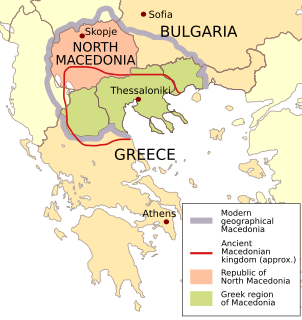
The use of the name "Macedonia" was disputed between the Southeast European countries of Greece and North Macedonia. Pertinent to its background is an early 20th-century multifaceted dispute and armed conflict that formed part of the background to the Balkan Wars. The specific naming dispute, although an existing issue in Yugoslav–Greek relations since World War II, was reignited after the breakup of Yugoslavia and the newly gained independence of the former Socialist Republic of Macedonia in 1991. Since then, it was an ongoing issue in bilateral and international relations until it was settled with the Prespa agreement in June 2018, the subsequent ratification by the Macedonian and Greek parliaments in late 2018 and early 2019, and the official renaming of Macedonia to North Macedonia in February 2019.

The Republic of Ilirida is a proposed state declared twice by politician Nevzat Halili, once in 1992 and once in 2014. The idea has been declared unconstitutional by the Macedonian government. The secessionist concept of Ilirida emerged in the early 1990s and was advocated by some Albanian politicians as a solution to concerns and disputes the Albanian community had regarding constitutional recognition and minority rights within Macedonia.
The World Macedonian Congress is a non-formal parliament of the ethnic Macedonians. It consider itself as an organization fighting and demanding for more human rights to ethnic Macedonians on an international level, but is seen as an ultranationalist organization by independent researchers and media. It is officially registered as a non-governmental organization based in the Republic of North Macedonia. The organization was registered during the fall of communism, on 15 September 1990 by Todor Petrov, who is also the president of the organization. Closely related to the World Macedonian Congress are certain Macedonian organizations in the neighboring countries of North Macedonia from whom with larger importance, the Macedonian Party in Albania, the OMO Ilinden in Bulgaria, and the Democratic Party of the Macedonians in Kosovo founded by the organization’s member Ismail Boyda.
North Macedonia, officially the Republic of North Macedonia, is a country in the Balkan Peninsula in Southeast Europe. It is one of the successor states of the former Yugoslavia, from which it declared independence in September 1991 under the name Republic of Macedonia.

A constitutional referendum was held in the Republic of the Congo on 20 January 2002, with results showed over 87% voted in favour with a voter turnout of 77.5%.
Agim Rrahman Krasniqi is an ethnic Albanian former insurgent leader based in the village of Kondovo near Skopje, the capital of Republic of Macedonia.
Todor Petrov is a Macedonian nationalist political activist. He is president of the World Macedonian Congress (WMC). Petrov is a councilor in the electorate of Gazi Baba.

A referendum on minority rights was held in Slovenia on 4 April 2004. Voters were asked whether they approved government proposals to restore basic rights to ethnic minorities who had been erased from the citizen registry in 1992. The proposal was rejected by 96.05% of voters, with a turnout of 31.55%.

The 2012 Republic of Macedonia inter-ethnic violence started in early 2012 and involved ethnic Macedonians and Albanians of the Republic of Macedonia.
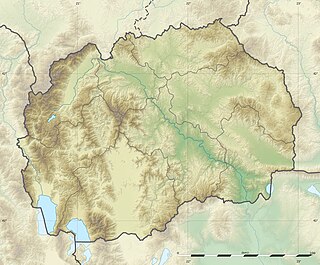
A shootout which erupted during a police raid between police forces and an armed group identifying as the National Liberation Army (NLA) occurred on 9 May 2015 in the northern Macedonian town of Kumanovo. During the shootings, eight Macedonian policemen and 10 of the militants were killed, while 37 officers were wounded and hospitalized. The shooting ended on 10 May 2015, in an operation by the Macedonian police and armed forces, in which 28 men were arrested and charged with "terrorism-related charges" by the Macedonian authorities.

The Bosniac National Council is a representative body of the Bosniak national minority in Serbia. It was founded as the Muslim National Council of Sandžak (MNVS) on 11 May 1991. Its first and current president is Sulejman Ugljanin. Until 2003, the Bosniac National Council was called the Bosniac National Council of Sandžak (BNVS), after which it took its current name.
Albanian nationalism in North Macedonia came about during the Albanian nationalist movement which emerged as a response to the Eastern Crisis (1878) and proposed partitioning of Ottoman Albanian inhabited lands in the Balkans among neighbouring countries. During the remainder of the late Ottoman period various disagreements culminated between Albanian nationalists and the Ottoman Empire over socio-cultural rights. The Balkan Wars (1912-13) ending with Ottoman defeat, Serbian and later Yugoslav sovereignty over the area generated an Albanian nationalism that has become distinct to Macedonia stressing Albanian language, culture and identity within the context of state and sociopolitical rights. Pan-Albanian sentiments are also present and historically have been achieved only once when western Macedonia was united by Italian Axis forces to their protectorate of Albania during the Second World War.

A referendum was held in the Republic of Macedonia on 30 September 2018, with voters asked whether they supported EU and NATO membership by accepting the Prespa agreement between Macedonia and Greece in June 2018, which aimed to settle the 27-year naming dispute, which had prevented Macedonia from joining both the European Union and NATO. Despite 94% of voters voting in favour, voter turnout was less than the 50 percent threshold required to validate the results.