
The Liberal Party of Macedonia is a liberal party in North Macedonia. The party is a member of the Alliance of Liberals and Democrats for Europe Party, and is currently led by Ivon Velickovski.

Parliamentary elections were held alongside presidential elections in Croatia on 2 August 1992, the first after independence and under the new constitution. All 138 seats in the Chamber of Representatives were up for election. The result was a victory for the Croatian Democratic Union, which won an absolute majority of 85 seats. Voter turnout was 75.6%.

Parliamentary elections were held in Macedonia on 18 October 1998, with a second round on 1 November. VMRO-DPMNE emerged as the largest party, winning 49 of the 120 seats, and later formed a coalition government with Democratic Alternative and the Democratic Party of Albanians.

Parliamentary elections were held in Hungary on 9 April 2006, with a second round of voting in 110 of the 176 single-member constituencies on 23 April. The Hungarian Socialist Party emerged as the largest party in the National Assembly with 186 of the 386 seats, and continued the coalition government with the Alliance of Free Democrats. It marked the first time a government had been re-elected since the end of Communist rule.

Parliamentary elections were held in Macedonia on 15 September 2002. The result was a victory for the Together for Macedonia, an alliance of the Social Democratic Union of Macedonia, the Liberal Democratic Party, the Democratic Party of Turks, the Democratic League of Bosniaks, the United Party of Romas in Macedonia, the Democratic Party of Serbs, the Democratic Union of Vlachs, the Workers-Peasant Party, the Socialist Christian Party of Macedonia and the Green Party of Macedonia, which won 60 of the 120 seats in the Assembly.

Constitutional Assembly elections were held in the newly independent Republic of Montenegro on 10 September 2006. Prime Minister Milo Đukanović's Coalition for a European Montenegro, at whose core was the Democratic Party of Socialists, won 39 seats in the 81 seat parliament with the vote near fully counted. The opposition blocs together received 34 seats. There were 484,430 eligible voters.

Legislative elections were held in Romania on 30 November 2008. The Democratic Liberal Party (PDL) won most seats in both the Chamber of Deputies and the Senate, although the alliance headed by the Social Democratic Party (PSD) won a fractionally higher vote share. The two parties subsequently formed a governing coalition with Emil Boc of the PDL as Prime Minister.
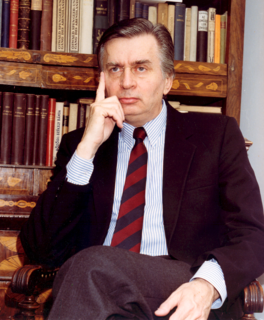
The 1990 Hungarian parliamentary elections were held in Hungary on 25 March 1990, with a second round of voting taking place in all but five single member constituencies on 8 April. They were the first completely free and competitive elections to be held in the country since 1945, and only the second free elections in the country's history. The conservative, nationalist Hungarian Democratic Forum (MDF) beat the liberal and more internationalist Alliance of Free Democrats, which had spearheaded opposition to Communist rule in 1989, to become the largest party in parliament. The Hungarian Socialist Party, the former Communist party, suffered a crushing defeat, winning only 33 seats for fourth place.

Parliamentary elections were held in Lithuania in two stages on 20 October and 10 November 1996. All 141 seats in the Seimas were up for election; 70 based on proportional party lists and 71 in single member constituencies. Where no candidate gained more than 50% of the vote on 20 October, a run-off was held on 10 November.
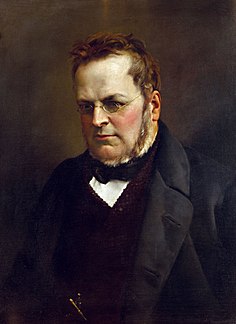
General elections were held in Italy on 27 January 1861, with a second round on 3 February. The newly elected Parliament first convened in Turin on 4 March 1861, where, thirteen days later, it declared the unification of the country as the Kingdom of Italy.

Parliamentary elections were held in Latvia on 6 and 7 October 1928. The Latvian Social Democratic Workers' Party remained the largest party, winning 25 of the 100 seats.

General elections were held in Liechtenstein on 11 March 1918, with a second round on 18 March. They were the first elections held in the country contested by political parties, as the Christian-Social People's Party and Progressive Citizens' Party had been founded that year. The Progressive Citizens' Party emerged as the largest in the Landtag, winning seven of the 12 elected seats.
Parliamentary elections were held in the Socialist Republic of Macedonia on 11 November 1990, with a second round on 25 November. They were the first competitive elections in the country's history. VMRO-DPMNE emerged as the largest party, winning 38 of the 120 seats.

Parliamentary elections were held in Romania on 2 March 1969. The Front of Socialist Unity, which had been formed a year earlier to replace the People's Democratic Front, was the only organization that contested the election; no prospective candidate could run for office without the Front's approval. Like the People's Democratic Front, the Front of Socialist Unity was dominated by the Romanian Communist Party. The Front won all 465 seats in the Great National Assembly.
Parliamentary elections were held in Romania on 9 March 1975. The Front of Socialist Unity, dominated by the Romanian Communist Party and including other mass organisations, was the only organisation that contested the election. No prospective candidate could run for office without the Front's approval. The Front won all 349 seats in the Great National Assembly.

The Social Democratic Party of Macedonia is a political party in North Macedonia.
The Party for the Full Emancipation of the Roma of Macedonia is a political party in North Macedonia representing the Roma minority.
The Democratic Party was a political party in Macedonia.
The Democratic Party was a political party in Macedonia.
Parliamentary elections were held in Ivory Coast on 18 December 2016. The new constitution, which was approved in a referendum in October, reduced the term for the 255 members of the National Assembly from five to four years.


