The politics of Armenia take place in the framework of the parliamentary representative democratic republic of Armenia, whereby the President of Armenia is the head of state and the Prime Minister of Armenia the head of government, and of a multi-party system. Executive power is exercised by the President and the Government. Legislative power is vested in both the Government and Parliament.

A monarchy is a form of government in which a single person holds supreme authority in ruling a country, also performing ceremonial duties and embodying the country's national identity. Although some monarchs are elected, in most cases, the monarch's position is inherited and lasts until death or abdication. In these cases, the royal family or members of the dynasty usually serve in official capacities as well. The governing power of the monarch may vary from purely symbolic, to partial and restricted, to completely autocratic.
Republicanism in Australia is a movement to change Australia's system of government from a constitutional monarchy to a republic. Republicanism was first espoused in Australia before Federation in 1901. After a period of decline after Federation, the movement again became prominent at the end of the 20th century after successive legal and socio-cultural changes loosened Australia's ties with the United Kingdom.
In Australian history, the term Constitutional Convention refers to four distinct gatherings.

The Australian Republic Movement (ARM) is a non-partisan member-based organisation campaigning for Australia to become an independent republic with an Australian as head of state. Australian constitutional law has provided since Federation in 1901 that the monarch of the United Kingdom is also the monarch of Australia. The Australian monarch is generally understood to be the head of state, although regal functions are ordinarily performed by a Governor-General and state Governors.

The current Constitution of France was adopted on 4 October 1958. It is typically called the Constitution of the Fifth Republic, and replaced that of the Fourth Republic dating from 1946. Charles de Gaulle was the main driving force in introducing the new constitution and inaugurating the Fifth Republic, while the text was drafted by Michel Debré. Since then the constitution has been amended twenty-four times, through 2008.

The President of the Hellenic Republic, colloquially referred to in English as the President of Greece, is the head of state of Greece. The President is elected by the Hellenic Parliament, and his role is mostly ceremonial since the 1986 constitutional reform. The office was formally established by the Constitution of Greece in 1975, but has antecedents in the Second Hellenic Republic of 1924–1935 and the republic established by the Greek military junta in 1973–1974. The incumbent, since 2015, is Prokopis Pavlopoulos, serving his first term in office.

Elections in Azerbaijan gives information on election and election results in Azerbaijan.
Elections in Benin take place within the framework of a multi-party democracy and a presidential system. Both the President and the National Assembly are directly elected by voters, with elections organised by the Autonomous National Electoral Commission (CENA).

The Australian republic referendum held on 6 November 1999 was a two-question referendum to amend the Constitution of Australia. The first question asked whether Australia should become a republic with a President appointed by Parliament following a bi-partisan appointment model which had been approved by a half-elected, half-appointed Constitutional Convention held in Canberra in February 1998. The second question, generally deemed to be far less important politically, asked whether Australia should alter the Constitution to insert a preamble. For some years opinion polls had suggested that a majority of the electorate favoured a republic. Nonetheless, the republic referendum was defeated due to division among republicans on the method proposed for selection of the president and dissident republicans subsequently supporting the no campaign.

The current Constitution of the Syrian Arab Republic was adopted on 26 February 2012, replacing one that had been in force since 13 March 1973. The current constitution delineates the basic function of that state's government. Among other things, it determines Syria's character to be Arab, democratic, and republican. Further, in line with pan-Arab ideology, it describes the country as a region of the wider Arab world and its people as an integral part of the Arab nation.
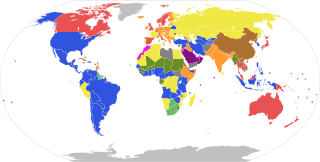
A parliamentary republic is a republic that operates under a parliamentary system of government where the executive branch derives its legitimacy from and is accountable to the legislature. There are a number of variations of parliamentary republics. Most have a clear differentiation between the head of government and the head of state, with the head of government holding real power, much like constitutional monarchies. Some have combined the roles of head of state and head of government, much like presidential systems, but with a dependency upon parliamentary power.

Over the centuries, Turkey has had many constitutions and can be characterized by the steady establishment of a nation-state, democratization and recognition of international law.
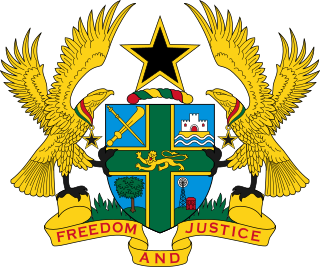
A constitutional referendum was held in Ghana on 27 April 1960. The main issue was a change in the country's status from a constitutional monarchy with Elizabeth II as head of state, to a republic with a presidential system of government.

A constitutional referendum was held in Tuvalu on 30 April 2008. The referendum sought to abolish the monarchy of Tuvalu and establish the country as a republic. Had the referendum passed, the new president would have been indirectly elected by the Parliament of Tuvalu.
A constitutional referendum was held in the Maldives on 17 and 18 April 1952. The new constitution would convert the country from a monarchy to a republic.
The 1993 Brazilian constitutional referendum was held on April 21, 1993 to determine the form of government of the country. After the re-democratization of Brazil, an article in the new Constitution determined the holding of a referendum for voters to decide if the country should have a republican or a monarchical form of Government, and if the system of Government should be that of a presidential Executive or that of parliamentary government.
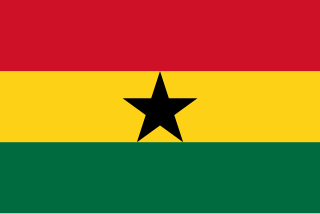
Ghana was a dominion within the Commonwealth of Nations between 6 March 1957 and 1 July 1960, before it became the Republic of Ghana. It was the first western African country to achieve independence.

The 1998 Australian Constitutional Convention was a Constitutional Convention which gathered at Old Parliament House, Canberra from 2 to 3 February 1998. It was called by the Howard Government to discuss whether Australia should become a republic. The convention concluded with "in principle support" for an Australian republic and proposed a model involving appointment of the head of state by Parliament. The model was put to a referendum in November 1999 and rejected by the Australian electorate.
A semi-parliamentary system is a classification of systems of government proposed by Maurice Duverger, in which citizens directly elect at the same time the legislature and the prime minister, possibly with an electoral law ensuring the existence of a parliamentary majority for the prime minister-elect. As in a parliamentary system, the prime minister is responsible to the legislature and can be dismissed by it: this however effectively causes a snap election for both the prime minister and the legislature.