Related Research Articles

Gilbert de Clare, 6th Earl of Hertford, 7th Earl of Gloucester was a powerful English noble. He was also known as "Red" Gilbert de Clare or "The Red Earl", probably because of his hair colour or fiery temper in battle. He held the Lordship of Glamorgan which was one of the most powerful and wealthy of the Welsh Marcher Lordships as well as over 200 English manors.

Henry Hyde, 2nd Earl of Clarendon, PC was an English aristocrat and politician. He held high office at the beginning of the reign of his brother-in-law, King James II.
Sir John de Benstede KB (c.1275 –1323/4) was a prominent member of the English royal household in the late 13th and early 14th century. He was Prebendary of Sandiacre from 3 February 1297 until, presumably, 1308, when he married. He was also King's Secretary, and he served variously as keeper of the Great Seal and controller of the wardrobe. He also served as Chancellor of the Exchequer from 1305 to 1306, and as a royal judge from 1309 onwards.

Leiston Abbey outside the town of Leiston, Suffolk, England, was a religious house of Canons Regular following the Premonstratensian rule, dedicated to St Mary. Founded in c. 1183 by Ranulf de Glanville, Chief Justiciar to King Henry II (1180-1189), it was originally built on a marshland isle near the sea, and was called "St Mary de Insula". Around 1363 the abbey suffered so much from flooding that a new site was chosen and it was rebuilt further inland for its patron, Robert de Ufford, 1st Earl of Suffolk (1298-1369). However, there was a great fire in c. 1379 and further rebuilding was necessary.

Sir John Pratt (1657–1725) was an English judge and politician. He was Lord Chief Justice of England from 15 May 1718 until 2 March 1725. He was appointed as an interim Chancellor of the Exchequer on 2 February 1721 until 3 April 1721.

Earl of Downe was a title in the Peerage of Ireland. It was created on 16 October 1628 for Sir William Pope, 1st Baronet. He had already been created a Baronet, of Wilcote in the County of Oxford, in the Baronetage of England on 29 June 1611 and was made Baron Pope at the same time as he was granted the earldom, also in the Peerage of Ireland. He was succeeded by his grandson, the second Earl. He was the son of Sir William Pope. Lord Downe had no sons and was succeeded by his uncle, the third Earl. The titles became extinct on the death of the fourth Earl on 18 May 1668.

Sir William de Shareshull KB (1289/1290–1370) was an English lawyer and Chief Justice of the King's Bench from 26 October 1350 to 5 July 1361. He achieved prominence under the administration of Edward III of England.

William Bateman was a medieval Bishop of Norwich.

Sir Owen Hopton was an English provincial landowner, administrator and MP, and was Lieutenant of the Tower of London from c. 1570 to 1590.

Sir William Craven was an English merchant who was Lord Mayor of London in 1610. It has been noted that the story of Dick Whittington has some similarities to Craven's career, though the story was first published before Craven became Lord Mayor.

Alan Percy (c.1480-1560) was an English churchman and academic, Master of St John's College, Cambridge, and later Master of Trinity College, Arundel which he surrendered to Henry VIII in 1545.
Sir John York or Yorke (c.1490-1569) was an English merchant and landowner who became Master of the Mint and a Member of Parliament.
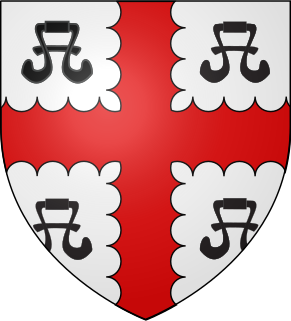
John de Bourchier was an English Judge of the Common Pleas and the earliest ancestor, about whose life substantial details are known, of the noble and prolific Bourchier family, which in its various branches later held the titles Barons Bourchier, Counts of Eu, Viscounts Bourchier, Earls of Essex, Barons Berners, Barons FitzWarin and Earls of Bath.

Alexander de Baliol, Baron Balliol, Lord of Cavers was an Anglo-Scottish noble. He served at one time as Chamberlain of Scotland.
Richard Northalis was an English-born cleric and judge who spent much of his life in Ireland. He held the offices of Bishop of Ossory, Archbishop of Dublin and Lord Chancellor of Ireland. For the last decade of his life he was one of the English Crown's most trusted advisers on Irish affairs.
Thomas Fisher or Hawkins, was an English politician.
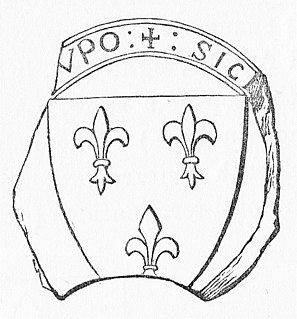
William I de Cantilupe 1st feudal baron of Eaton (Bray) in Bedfordshire, England, was an Anglo-Norman royal administrator who served as steward of the household to King John and as Baron of the Exchequer.
Michael Belet was an English judge, sheriff of Worcestershire 1176-81 and again in 1184, of Wiltshire 1180-82, of Leicestershire and Warwickshire in conjunction with Ralph Glanvill 1185-87, and alone 1189-00. He appears as a justice itinerant for Warwickshire and Leicestershire in 1177, in the following year for Lincolnshire, and in 1179, on the redistribution of circuits which then took place, he was assigned for the eastern circuit.
George Porter (1622?–1683) was a royalist army officer of the First English Civil War.
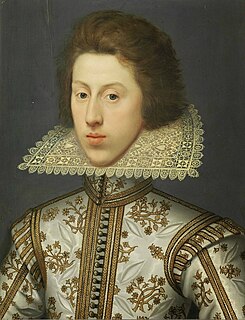
Thomas Pope, 2nd Earl of Downe (1622–1660) was an English nobleman and Royalist.
References
- . Dictionary of National Biography . London: Smith, Elder & Co. 1885–1900.
- Attribution
 This article incorporates text from a publication now in the public domain : "Belet, Michael (fl.1238)". Dictionary of National Biography . London: Smith, Elder & Co. 1885–1900.